 Apple Podcasts
 YouTube
 Spotify
 Overcast
 Audible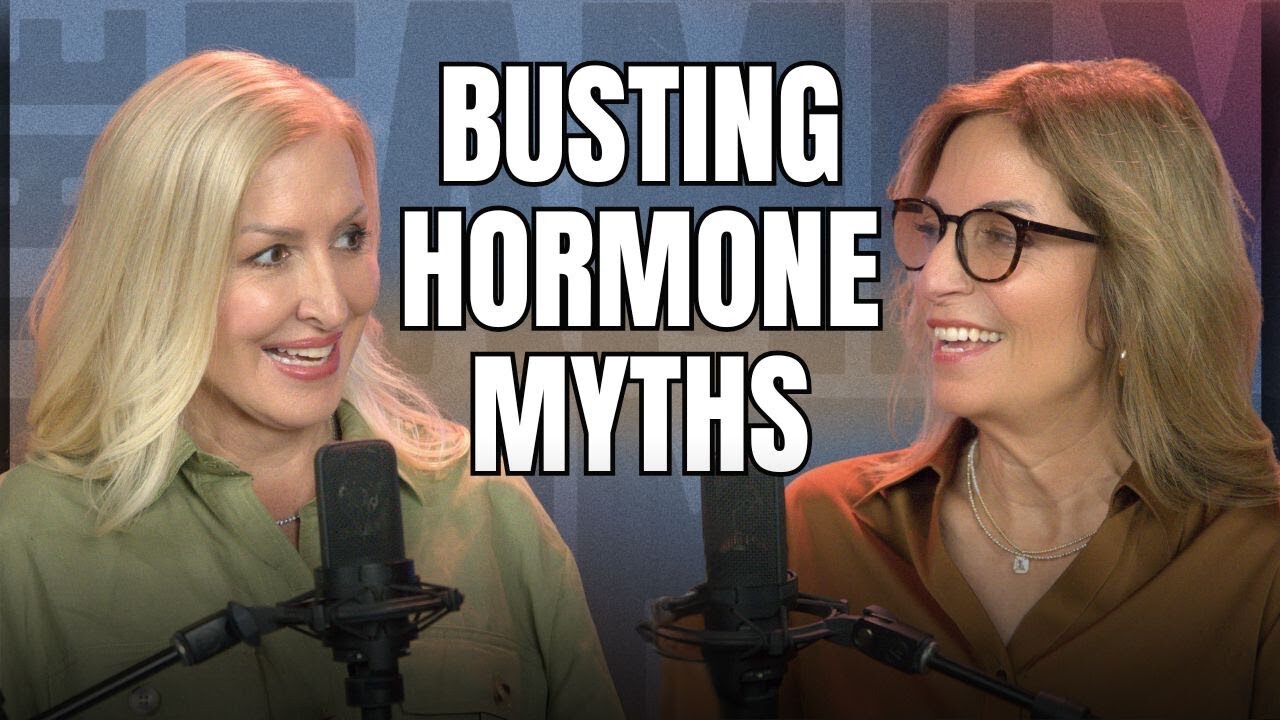
In this important and hard-hitting episode, Mary Alessi and her longtime friend Mory Martinez dive deep into the hidden health crisis affecting women from their 20s onward.






Has the medical establishment missed the boat when it comes to women's health?
In this important and hard-hitting episode, Mary Alessi and her longtime friend Mory Martinez dive deep into the hidden crisis affecting women from their 20s onward. They unpack the impact of hormones on everything from energy and mood to heart and bone health, sharing personal stories about early menopause, misdiagnoses, and the confusion surrounding hot flashes and migraines.
You’ll pick up practical tips on how diet, sugar, sleep, and strength training are major players in hormone harmony—and why starting to pay attention in your 20s or 30s can change your future. Mary Alessi and Mory Martinez serve up the best resources, the doctors and tests you need, plus a dose of hope and encouragement. Take control, advocate for your health, and pass the wisdom along!
For more resources mentioned in this episode, visit Metro Life Church's Hormone Harmony Hub.
Tap to Access
Disclaimer: This content has been made available for informational and educational purposes only. This episode is not intended to be a substitute for professional medical advice, diagnosis, or treatment. Always seek the advice of your physician or other qualified health provider with any questions you may have regarding a medical condition.
Join our Podience Textline!
You can connect with us via text to ask questions and get updates!
Text FAMILY to 302-524-0800
Get our TFB Newsletter
Join our TFB Newsletter and get more inside news from the Alessis + tips and strategies for a happier family!
Get free access to the newsletter
Support the Family Business
- Follow Us on Instagram and Facebook
- Subscribe on YouTube
- Leave a review
Listen to the Alessi sisters' daily devotional podcast
My Morning Devotional
Join our family business every week as we talk about life, and help you build a great future with your family, no matter what business you are in.
New episodes are uploaded every Wednesday!
More Resources
Get your copy of the new book by Steve Alessi, “Forty-Two: A Guide to Finishing Well when You Thought You Were Finished”
Connect with Us on YouTube
Don't forget to LIKE and SUBSCRIBE to our YouTube channel!
Follow Us on Social!
Learn More about Metro Life Church:
Mary Alessi:
But we have to understand as women, that throws off our endocrine system. It throws off our hormones. And we've got to be mindful of that in our 20s because our 40s, 50s and 60s and 70s matter. And if you don't want to be spending your 60s and 70s in the hospital, back up and start getting it together in your 20s. Well, hello and welcome to another episode of the Family Business with the Alessi's. Today you are going to hear from me. Steve is not in the podcast booth, but I have a friend of mine that is. And we're just going to talk about things that are very important to us.
Mary Alessi:
And I want all of our listeners to know that this particular conversation is not a one and done. This is a conversation that we're continually dealing with and we'll continue to deal with it. So we're going to talk about it, we're going to get into it today. I'm going to remain a little mysterious about it until I get through with my opening comments because I don't want you to turn this off. This is a very important conversation. But I also want to say thank you to our audience who so faithfully listens and watches and downloads. Thank you. Thank you for the staying on for the long play because in this last year we started incorporating longer play podcasts and guess what, you like them, you're listening to them.
Mary Alessi:
Thank you for doing that. Thank you for sharing them, for letting other people know about the podcast. And our family is growing because we are closing in on really over a million viewers and views on our YouTube. That's huge. We want to double that this year. I think we can. This conversation today might help us do that. And also if you're not following, if you're a new listener, follow, subscribe to our channel.
Mary Alessi:
That helps us so much. It brings it up to the people for people to see it. It'll bring it up to the top of their YouTube channel and suggestions. That's the word I'm trying to find. It will be suggested to more people, so make sure you share all our episodes. But can I just say, if there's a woman in your life, we really want you to share this episode because we really believe. And I'm in the podcast booth with my lifetime friend, longtime lifetime friend, Maury Martinez. Some of you know her, some of you, she's going to be new to you, but she and I have been friends for 30 plus years, raised our kids side by side, going to school together.
Mary Alessi:
We've done the things all of the Things we've done together. And. And the big topic of conversation that is continuous every single day, all the time, is the one about hormone health.
Mory Martinez:
Yes.
Mary Alessi:
And I invited you. I asked you to come in the room today. We've done other things. We have a website that we are. You've taken the lead on. I say we, but you've really taken the charge on this because this is a very personal subject for you because your health has been at risk because of hormones, and you are a deep diver, which I love that about you. And. And we've together learned a lot.
Mary Alessi:
You have done tremendous amounts of research, and so many women that are in our circle are being helped. So I said, listen, before the year's out, or actually from now till, whatever, this podcast is going to set up there for people to share. This is a conversation we're going to keep coming back to because it's dire. This is very, very important. It is life and death, and we're going to talk about hormone health today. So we're just going to chat like we do all the time.
Mory Martinez:
All the time.
Mary Alessi:
Because it's important.
Mory Martinez:
Yeah. And I think.
Mary Alessi:
Let's just start there. The importance of hormone health, and you tell your story that brought us to this point. Why is hormone research, understanding it, knowing it, why has that been so important for you?
Mory Martinez:
Okay, so, first of all, thank you for having me. And this is a topic, like you said, I'm very passionate about because it has affected my health. And I'm not a person, when something goes wrong in my life, to just sit back and say, well, it is what it is.
Mary Alessi:
Right.
Mory Martinez:
I'm a person that I need to fix everything. If you.
Mary Alessi:
They only knew.
Mory Martinez:
So regarding just a little bit of my backstory real quick, at 44 years of age, my dad passed away. And because I.
Mary Alessi:
You were 44.
Mory Martinez:
I was 44. My dad passes away. I am 44. And because my body, which I've learned now, does not handle stress well.
Mary Alessi:
Yeah.
Mory Martinez:
I went through a premature menopause, and most people say that's impossible. You're only 44 years old, that you went into menopause. You know, there had to be something else. No, it was menopause. I went to the doctor, they did the blood work, and they said, you're not going to get another period. And I said, I just had one six weeks ago. There's no way I'm not going to get another period. And sure enough, I never got another period.
Mary Alessi:
Wow.
Mory Martinez:
So I.
Mary Alessi:
Which is young, which is not what. We are not taught that. That's even a possibility.
Mory Martinez:
Right.
Mary Alessi:
And just to interject, I told my mother in law that, and she said, that's not possible. You got it wrong. There's no way menopause lasts years. And I, and I questioned myself. I'm like, well, maybe I heard that wrong, but it is true.
Mory Martinez:
It can happen. It's called a traumatic menopause. It's not common, but it does happen. So it happened to. And then years following that, there were little markers and little moments where my health changed. And nobody was recognizing that it was because I was depleted of hormones. And everybody was saying, oh, suddenly her blood pressure's a little higher or suddenly she's having. Well, not suddenly.
Mory Martinez:
I was suddenly having crazy hot flashes. I was at work and I couldn't.
Mary Alessi:
Stop perspiring and normal conversations. I would be talking and I'd be.
Mory Martinez:
In a staff meeting and I'd be so embarrassed because I'd be in front of Pastor Steve and I'm trying to wipe off the sweat just dripping down my face. So we went on a journey, you and I, like, what can we do to better our health and what can we do to prevent these hot flashes?
Mary Alessi:
It was just hot flashes.
Mory Martinez:
But what we didn't know at that time was hot flashes was my body telling me something is really wrong.
Mary Alessi:
That's right.
Mory Martinez:
So what we tried to do do, how do we minimize those hot flashes? What supplements can we take to just cut the edge off and help me feel a little bit better, make my mind feel a little bit better, be a little more clear? And the big thing that was going on was my sleep became so disruptive that I was not able to sleep more than three to four hours at a time and maximum five to six hours in the course of a night. So when we look at that, and no doctor that I was going to was saying, this is hormones.
Mary Alessi:
Right?
Mory Martinez:
Okay, so I'm going to fast forward to just March this year now. I have been diagnosed with a heart condition that I am aggressively trying to reverse. I don't want to maintain, I don't want to take medication. Right to the point that it got so serious sitting across from a doctor that is holding a pacemaker in her hand and telling me that I need to get it implanted in the next 30 days.
Mary Alessi:
Yeah, that was tough news.
Mory Martinez:
That was tough news. So I'm looking at her and as we're having this conversation, I know that God brought that woman into my life for this particular reason. She, at the end of the appointment said, wait a minute, what are you doing? For hormone replacement therapy. And I said, oh, I dabbled into it in the last five years, done a little bit of this, a little bit that. She goes, oh, this is why you are in the state that you are in. Your body has been depleted from estrogen for over 10 years, and you need to get on hormone replacement therapy.
Mary Alessi:
That's crazy. Immediately.
Mory Martinez:
So what I've learned in my research is that 12 months after a woman finishes her last period, her estrogen, which was put in her body to protect her heart, to protect her bones, to protect her gut, to protect her brain, it depletes that estrogen by 50 to 80%.
Mary Alessi:
Wow.
Mory Martinez:
So that means by 45, I had half of my estrogen.
Mary Alessi:
Wow.
Mory Martinez:
Half. But here I am trying to put creams and trying to take little supplements to stop a hot flash. All those years, my bone health wasn't being protected, my heart wasn't being protected, and nobody was realizing it. Right. Except they're telling me, oh, your cholesterol's high. But guess what? A woman's cholesterol goes up 20% immediately after losing her estrogen. So, oh, let's put you on a statin. No, I don't want to get on a statin.
Mory Martinez:
What's going on? So there was so much misinformation for 10 years, and then suddenly I get a health crisis, and one doctor was brought into my life to say it was because you didn't have enough estrogen.
Mary Alessi:
Golly.
Mory Martinez:
So now, talk about deep diving. I am reading all the books. I'm listening to all the podcasts, and Pastor Mary. It's not easy. No, it's not.
Mary Alessi:
No, it's not.
Mory Martinez:
There's not a formula. And that's what all the women that we have spoken to, because like you mentioned at the beginning, women are saying, well, how do you find the doctor? And we'll talk about that later. You know, what tests are you supposed to take? Well, we have a resource for that. You know, what is my next step? Well, guess what? Your next step is going to be hard.
Mary Alessi:
Yeah, sure. You.
Mory Martinez:
They. We have made incredible strides in our country to put this in the forefront of women's health.
Mary Alessi:
Right.
Mory Martinez:
Being looked at differently.
Mary Alessi:
Yeah.
Mory Martinez:
It's not just about our ovaries and our uterus. It's about our health overall. And. And thank God, changes are coming. And I'm grateful that for our daughters, they're not going to have to worry about this. No. But for us, we were told hormones were bad.
Mary Alessi:
Right.
Mory Martinez:
Because of a study that happened in 2002 that said they put A black box warning on hormones saying that it would give you heart attack, stroke and cancer.
Mary Alessi:
Yeah.
Mory Martinez:
But that information was wrong.
Mary Alessi:
It was wrong.
Mory Martinez:
And now just. It took to this year, 2025 for that Black box warning to be removed. Actually just got removed.
Mary Alessi:
It just got removed. And a couple months ago, I want to say this because I want those that are listening and those that will listen to this to know one of the other things that we've learned, you and me in this process, is don't tune out and think if you're in your 20s and 30s, this is a conversation for something you'll deal with later if you have problems. Because the way we were raised, our poor mothers and grandmothers, they had no resources at all. And when hormones were made available to them, they were told it's cancer causing. So they were terrified. They stayed away.
Mory Martinez:
Terrified.
Mary Alessi:
So much terrified. So even doctors, well, I don't know. I don't know. And then they started having heart problems. And if they gained any weight at all. So menopause for us as young women was you have hot flashes because you don't get your period anymore. And in place of your period, you have hot flashes. Okay, Lie.
Mary Alessi:
That is not true. No, that's a symptom that something's wrong. Because you are in menopause, your body screaming. Your body is screaming for something's wrong. So then the moods. If our mothers went crazy. Oh, it was. She went through midlife crisis.
Mary Alessi:
Let's call it what it is. Yeah, midlife crisis. That's what our mothers were told. You're going through midlife crisis. If they started going, if they went through a divorce and they left your dad during that season or your dad left them.
Mory Martinez:
Right.
Mary Alessi:
It had nothing to do with their health. It was a midlife crisis that your mother was going through. Exactly. Another lie. Yeah. So one of the things that we are both talking a lot about is the importance for our 20 year old girls who sadly are already dealing with gut health problems, already looking like menopausal women. We see a lot of the girls around us who are large around the middle. That is a symptom of something.
Mary Alessi:
That's a symptom of something. Something's wrong, something's wrong. They need to figure it out right now. And you and I aren't afraid to get up to speak up and say, we're telling you this not because we want you skinny, we're telling you this because we want you healthy.
Mory Martinez:
Healthy.
Mary Alessi:
And if you have too many high highs and too many low lows and you Are not in the middle enough, or if you don't get your period and feel like a massive letdown in your emotions to feel good at least for two weeks. And you're always running on tired, eating too much sugar. You're feeding the symptoms. We're here to tell you you gotta stop right now. This is not just for women who are going through menopause. This is a hormonal health crisis. And we wanna speak to the 20 somethings, the 30 somethings, because you don't find these things out until you have a health issue. And sadly, in our culture right now, with the way Americans eat and the way Americans don't take care of themselves, I'm sorry, but we don't, we do things in extremes.
Mory Martinez:
We don't.
Mary Alessi:
We do not. We're eating croissants laced with chocolate for breakfast.
Mory Martinez:
Sounds delicious.
Mary Alessi:
It's incredible. But we have to understand as women, that throws off our endocrine system. It throws off our hormones. And we've got to be mindful of that in our 20s because our 40s, 50s and 60s and 70s matter. And if you don't want to be spending your 60s and 70s in the hospital, back up and start getting it together in your 20s. I want us to kind of talk about what we tell our daughters who 20s and 30s.
Mory Martinez:
Yeah. And you know, you hit it. Sugar is the culprit.
Mary Alessi:
It's the devil.
Mory Martinez:
It's the devil. It's the main ingredient in our food that is wreaking havoc. It is, it's wreaking havoc because if we like I've always been estrogen dominant, so how does that look? So I want to share this with the 20s and 30 year old. So in my 20s and 30s, what that looked like was I always had fibrocystic breast tissue. So every year when I got a mammogram done, they would put up the slides, the X rays from year to year, the images to see what was going on because it was such dense tissue. Well, hello, that is a warning sign. I have too much estrogen. And nobody was telling me limit to sugar.
Mary Alessi:
Right.
Mory Martinez:
Nobody was telling me that. So I wake up in the morning and I have my cup of coffee with that delicious creamer and that sugar in it. And I have just fed the estrogen to have a party that day.
Mary Alessi:
That's right.
Mory Martinez:
Okay, so sugar is the culprit, number one.
Mary Alessi:
And all we know to check is our mood and our fatigue. That's all we know. So if we're only mood and we were moody, which was a Sign. But we were never taught that that's something that is happening deeper, that is gonna have a residual effect that we'll have to deal with later.
Mory Martinez:
Right. So then there was a sign right there. Now, the other thing that we have dealt with that our moms didn't deal with was the over processed foods that we have been exposed to.
Mary Alessi:
Oh, my gosh, you're so good.
Mory Martinez:
So we raised our kids. I mean, I was doing Kraft Macaroni cheese Hamburger Helper. I mean, these were tools in my kitchen that made me an incredible mom. But I was feeding horrible things that were quick and convenient. I wasn't making fresh vegetables. Now my mom made fresh food for me.
Mary Alessi:
My mom did, too.
Mory Martinez:
Your mom made fresh food for you. But we bought into this lie that we have to have it all and do it all. And, oh, here's a solution. A quick way to provide your family dinner, which is we were poisoning them. And then I now have a daughter who is 12 years old, she is overweight, and she. Me. You walk me through that, right?
Mary Alessi:
Yeah.
Mory Martinez:
Fighting being overweight and then you. And then, you know, limiting her meals in an unhealthy way.
Mary Alessi:
Right.
Mory Martinez:
And then now we're on the other side of it because we're educated and we know better.
Mary Alessi:
That's right.
Mory Martinez:
So I want to have this conversation because we have a baby boom at this church.
Mary Alessi:
We sure do.
Mory Martinez:
Good Lord. And I want these young moms to know that first and foremost, they should be limiting sugar and they should be giving their kids whole foods.
Mary Alessi:
Okay, can I say something about that really quick? Because it just came to me. Stephanie's with us right now with the two toddlers. And something that I do appreciate, and I watch her, is she would rather not just put pastas and breads in front of them. She'd almost rather they not eat at all.
Mory Martinez:
Yeah.
Mary Alessi:
And wait for them to be hungry and eat what's in front of them. And I've noticed that even my other. My daughter in law, Rachelle, is doing the same thing. And as a mother, us growing up, oh, my God, they've got to eat. They've got to eat. They're running around on an empty tank.
Mory Martinez:
Yeah.
Mary Alessi:
It's almost better that they're in fasting.
Mory Martinez:
Yes.
Mary Alessi:
Even toddlers. Because they know when they're hungry, then when they're hungry, they'll eat that chicken and broccoli that's in front of.
Mory Martinez:
Exactly.
Mary Alessi:
Rather than making pasta, what will they eat? Because I've got to get something on their stomach. The reality is.
Mory Martinez:
No, you don't well, it's not just getting something in their stomach is. I think that moms have the mindset that we got to avoid the tantrums.
Mary Alessi:
That too.
Mory Martinez:
So we gotta avoid the tantrums. So let's get something quick. Let's get them a bar, let's get them a snack. I don't know about you, but I'm watching this generation. They have so many snacks.
Mary Alessi:
They do.
Mory Martinez:
I didn't grow up on snacks.
Mary Alessi:
Apple?
Mory Martinez:
No, an apple.
Mary Alessi:
An apple was your snack. And there was no. We had no package, nothing.
Mory Martinez:
It's crazy. And I see these young moms still doing, making the mistakes that we made in the kitchen. Now they're making it all day long. They have a backpack of snacks from, I'm sorry, Target and Walmart that are very convenient to throw in kids mouths.
Mary Alessi:
That's true.
Mory Martinez:
Don't even get me started on goldfish. The amount of processed.
Mary Alessi:
They're horrible.
Mory Martinez:
They're the devil as well. So I say all that to say I want to also. I don't want to just talk to women in their 50s and 60s. I want to talk to the young moms and the women in their 20s and 30s. Make better decisions for your family and break the cycle. Stop right now. Feeding your children over processed foods, convenient snacks.
Mary Alessi:
That's right.
Mory Martinez:
And you know, this is hard too. You're gonna have to deal with the tantrums.
Mary Alessi:
That's right.
Mory Martinez:
And like Stephanie does, you know, don't put the pasta in the bread, the croissant. Give them protein based meal with fiber.
Mary Alessi:
That's it.
Mory Martinez:
That's it. That's that simple. And if you teach them at a young age, you're gonna set up your daughter for success as they go through puberty, get their period, go through becoming a young woman and a married woman into their childbearing years. You are setting the foundation now. So.
Mary Alessi:
Well, that's. And the, the. I remember being a young mom and Lauren and Gabby were the two that would not eat the process. They didn't like it. They didn't like boxed Kraft Mac and cheese. They did not like. I'm trying to think, oh, chicken nuggets. To this day they don't, they've never.
Mary Alessi:
I don't know what the difference was about the two of them, except they were very, very active. Very physically active. My son, different story because he's a, he's a male. You know, it's different. But he was chicken nuggets and Velveeta Mac and cheese or the box craft. So was Gabby. And if I just compared their childhoods. Gabby struggled getting chubby.
Mory Martinez:
Yeah.
Mary Alessi:
And the other two were as skinny as a rail.
Mory Martinez:
Yeah.
Mary Alessi:
And what they would want, they would cry. If I would say I made Mac and cheese for everybody. I or I made an easy spaghetti, they would cry. They did not want that. They loved it. When I would make grilled chicken and broccoli and grapes or whatever, those two loved it. So the truth was I could look at it and judge the situation. They were always thin and Gabby struggled.
Mary Alessi:
It was what they were eating. And I would just give in to Gabby because I felt bad. She was my youngest and there's something.
Mory Martinez:
About us as mom that's another trap.
Mary Alessi:
It is. But we also love seeing them eat. And when I would just see her shovel in that Mac and cheese and be so happy.
Mory Martinez:
Happy.
Mary Alessi:
Yes. But she'll tell you to this day she wishes that I had been tougher with her and not done the Nestle's Toll House cookies on Monday nights and been tougher with her because the others, even to this day, it's just interesting to me. I definitely have a litmus test. I can go back and compare my four kids to who struggle with their weight and what I made and the two that did not and would not eat that. And so I think we need to be honest as moms. We also need to create an environment that it's not just about right now. It's the long term effects. Which leads me to this.
Mary Alessi:
Migraines, seizures, things happen in their bodies. And it's not all linked to food. It's not all linked to food because everybody's body's different.
Mory Martinez:
Most of it is linked to hormones. Exactly.
Mary Alessi:
To hormones. Exactly.
Mory Martinez:
And the food is feeding the hormones.
Mary Alessi:
Yes, it is.
Mory Martinez:
So if you don't get the food right and you don't get the rest right, which is a sleeping component. Right. Your hormones are going to go crazy on you and you're going to get crazy. So.
Mary Alessi:
But I'm hearing so many young women have severe migraines, severe crippling migraines in their kidneys. Again.
Mory Martinez:
That's something that their body is screaming that something is wrong again.
Mary Alessi:
But they're not told Maury to go get their blood drawn.
Mory Martinez:
So this is, so this is what I have learned in these past few years. Most of you know I have a son in law that's a cardiac thoracic surgeon. And so I go to him and ask him every time I'm around him. I'm constantly asking him questions. He's being trained to do one Thing to protect the heart and the lung.
Mary Alessi:
That's it.
Mory Martinez:
So if you go to him and you have a heart issue or if your daughter has migraines or somebody you know that has migraines, you have migraines, go to the doctor. That doctor is only going to deal with the headaches.
Mary Alessi:
Right. And neurology, not the reason or the.
Mory Martinez:
Routine, not going to look at your whole body. So that's how doctors are trained. And forget nutrition. And like I said, my son in law is a doctor. I love doctors. Doctors have a place. I want to make that very clear. But the biggest advocate for your health is not your doctor, it's you.
Mary Alessi:
Yes.
Mory Martinez:
That's not your doctor. You've got to start with your doctor. You got to get wisdom from your doctor, get a second opinion if needed. But you have to realize that going for the headache or going for the palpitation of the heart or going for whatever the case may be, that doctor is going to address one thing and not your whole body.
Mary Alessi:
That's right.
Mory Martinez:
So which brings us to the subject, like, how do I get the support? How do I find the right doctor? What are the resources? Because women are frustrated. They are, they're frustrated. They're going to their gynecologist. And most gynecologists are still saying, oh, we don't do hormone replacement therapy. Okay, so then you gotta go to a functional medicine doctor. And it's gonna cost you three to five hundred dollars out of pocket per visit.
Mary Alessi:
Right.
Mory Martinez:
Most women we know cannot afford that.
Mary Alessi:
That's right.
Mory Martinez:
So what can they do so that it goes back to. There are resources out there.
Mary Alessi:
There are.
Mory Martinez:
We have created a webpage that we're gonna put on the screen here. We're gonna link on this PO that you can go into and see. First of all, what test should you take? If you are having problems in perimenopause and in menopause, what test should you take? We have a list there. Take it to your doctor. And I got a trick. Pastor Mary, your doctor may tell you, okay, oh, you have palpitations of your heart. That's normal. That's the season that you're in.
Mory Martinez:
That's your hormones. You're just going to get through it. The minute you say, I have history in that, my mom has history and she has issues, the doctor said, oh, maybe we should test you.
Mary Alessi:
Wow.
Mory Martinez:
Don't be afraid to tell your doctor, even if you're, you know, exaggerating a little bit to say, listen, we have history in my family. I have aunts and uncles I have, my dad and I want to get this tested. Guess what? Now insurance is going to.
Mary Alessi:
There you go.
Mory Martinez:
Because the doctor is going to recommend going to, is going to document that there's history and it's got to get tested. That's a little trick I've learned from doctors that I speak to, because most doctors will say, nah, you'll get through it, suffer through it. Okay, so on that website, there's going to be a list of tests that you need to take. There's also going to be a list of people that are certified in menopause, and not just in menopause and pre menopause, which is new. This is new thing. So you could put in your zip code and you're going to get a list of doctors. Some are going to take insurance and some are not going to take insurance. Again, this is not going to be easy.
Mory Martinez:
You're going to have to do your research and find the right doctor for you. Okay? So once you get to the doctor, you're going to have to go through all of these tests and you're going to get a better picture. But when should you start testing? Okay. Because most women start testing when we're our age.
Mary Alessi:
That's right. You stop having your period, having your period.
Mory Martinez:
You start feeling all these symptoms, these things are manifesting and you're like, oh, I need to start checking my cholesterol. I need to start checking my blood pressure is elevated. There's a reason for that.
Mary Alessi:
That's right.
Mory Martinez:
Estrogen dropped and my cholesterol went up naturally. It's not what I'm eating. I can work out all I want. I can eat all the vegetables I want. And my cholesterol was still up. So what can we do as the follow up on that? What can we do as women? When do we start? Okay, the consensus today, in 2025 is that you start getting your baseline at 35 years of age.
Mary Alessi:
Yep.
Mory Martinez:
You don't wait till 50.
Mary Alessi:
Absolutely.
Mory Martinez:
You don't.
Mary Alessi:
You.
Mory Martinez:
You do it while you still have estrogen in you.
Mary Alessi:
Wow. Yeah.
Mory Martinez:
You don't do it.
Mary Alessi:
That makes total sense.
Mory Martinez:
Yeah. You don't do it when estrogen starts depleting because now your baseline isn't real.
Mary Alessi:
Right. You don't know when that started, when that happened.
Mory Martinez:
So what does that mean? The big test? You do your DEXA scan for your bones, get Your baseline at 35 years of age, find out where your bone density is and what's normal, go do your lipid panel and get your cholesterol test Your triglycerides that also sore when you go through menopause, get these tests done. I'm trying to think of what some other tests are. If you think on some. But get these big tests done that are normally done. Your hormone panel. Oh, my gosh, that's a big one.
Mary Alessi:
That's huge. That's.
Mory Martinez:
Find out where you are at 35 and then see where you are at 40, and then 45, and then the doctor can honestly say, okay, you are in perimenopause. What happens is people don't normally test until they have the symptoms.
Mary Alessi:
So here's the other thing that I've experienced because I went through infertility in my 20s. I already knew that I had a hormonal imbalance because of the fact that I wasn't getting regular periods. Doctors had to give me the specialist. I had to go to an infertility specialist. I had to pay some out of pocket insurance covered some of it because I did have endometriosis. And it was very painful when I would have my periods. The whole thing. Well, I'm talking to my girls the other day and they're mentioning a couple of the women in our church who are pregnant or having babies, but also have suffered with endometriosis, which made them have very painful pregnancies.
Mary Alessi:
They'd feel more pain, whatever. Well, my pain is personal. My symptoms are personal. Yours are too, unless we talk about it. I just think that's my situation. That's your situation. But the truth is, it's a lot more common than we realize. However, women don't share it as much with each other, and we don't realize it until we've hit the wall 20 years later.
Mary Alessi:
So for my girls, something that I'm telling them right now, and they're, you know, the pressure's on their generation. They're feeling it a lot because of TikTok and social media.
Mory Martinez:
The word's getting out.
Mary Alessi:
The word's getting out. But what we also wanna do while we're doing this and why you and I are having this conversation is we wanna help eliminate some of the wasted care or the wasted supplements or the wasted insight that that's not really gonna. I mean, that's like a fad or a trend right now that somebody's gonna take this supplement. You'll make money. No, don't do any of that. There's basic things that you could do, but we also say it is important for you to budget this. This is your future health.
Mory Martinez:
Yes, yes.
Mary Alessi:
So if you need to take A little extra money out right now to go get this panel done. If you're 35. Most of the 35 year old girls we know are still having babies, which is something we talked about before we came in the room. How even that timeline throws off the care and the menopause season because so many young women, they're going to have babies in their 40s and in their three year old, they're going through menopause.
Mory Martinez:
Yeah. So let's talk about that because we did talk about that earlier in that a lot of our kids are having kids later and in our generation. I had my first at 21. You were right there as well.
Mary Alessi:
Yeah, 24.
Mory Martinez:
So we got married younger and we have babies younger.
Mary Alessi:
Right.
Mory Martinez:
So why is this important? Because for you and I, who are approaching that 60 number.
Mary Alessi:
Yes, we are.
Mory Martinez:
We want to be strong in our 70s because our kids might be having babies later.
Mary Alessi:
That's right.
Mory Martinez:
We want to have strength in our bodies. And so we want our daughters also to be strong as they get older for their babies and grandbabies. So it's important to note that because of that timeline has been delayed in our society that we have to be even more proactive on keeping our strength. Which leads me into the importance of strength training and this whole perimenopause, menopause. I joke. We have this telegram chat where sometimes I go on there, I'm like, I'm out for a walk and I got my weighted vest and I'm just amazed how women don't know whatever weight vest is, it's all over social media. If you don't have one, you, you're behind. Right.
Mory Martinez:
And you know, for many years we thought, oh, if we pick up five or 10 pound weights, we're good and that's going to help our bones. And it's not doing squat for our bones. We need to be doing squats. Speaking of squats, 25 to 30 pound weights.
Mary Alessi:
We need to be, that's a fact.
Mory Martinez:
We need to be carrying heavy things at our age so that we can carry those grandbabies who are coming a little bit later. I want to carry them. I don't want my, my back to be out every time my grandkids are around or every time I spend a weekend with them or you're hurting because.
Mary Alessi:
You were just with them and your back's killing you.
Mory Martinez:
I don't want to sleep with the heating pad.
Mary Alessi:
No, no, no.
Mory Martinez:
How unattractive is that to my husband that I just laid out a heating pad because I was with the grandkids for a week and now my back is shot. I want to change that. But that starts in your 30s, that you do the heavy weights. You don't fall for the cardio, the five pound weights. It's about carrying heavy things and continuing that for a lifetime.
Mary Alessi:
My mom's 84 and she fell five years ago at a Macy's shopping for shoes. 79 years old and she fell. Broke her shoulder and her hip. All of that was because of horrible bone health. The following year she had actually, it was in reverse. Was in reverse. She had a bipulmonary embolism. Embolism or whatever that is.
Mary Alessi:
They're blood clots in her legs. She'd never been in the hospital other than having my sister and I 50 something years ago. So my mother has been the epitome of health. But what she's hated is now, as she's gotten older and bone health has been bad, she just started stooping over. So she's really struggled. Well then when she had the fall and the long story of recovery and all of that, my mom fought back hard. And normally in your 80s, which we will all be there unless we get hit by a car, that age is coming. She found out through that season the importance of a physical trainer.
Mary Alessi:
So she. I noticed this. I was just with her. Is already standing up straighter. Something that she thought was irreversible.
Mory Martinez:
Can I just say something here? It's never too late. Never. This is important.
Mary Alessi:
Never. So she has got the physical therapist that comes and helps her get her equilibrium back. Because as you get older, you're afraid I'm gonna foul.
Mory Martinez:
Balance is a big issue. It's a big indicator.
Mary Alessi:
Exactly, exactly. So if you're terrified that if you fall you're going to break a bone, that's scary. You need to develop your bone health. Yes. She's 84 and we immediately, when we're younger than that, we turn that off and say, well, that's not me yet. Okay, rewind. In my own story. Bone health.
Mary Alessi:
Bone health. Bone health. Bone health. Right. I know this is an issue with my mother, which means it's going to be an issue with me. Hereditary. I've worked out, not probably as consistently, but over the years I have. Still though, you can't stop.
Mary Alessi:
You've got to stay with it and lift heavy weights. But I was on the phone with Dr. Caroline, who is a functional medicine doctor.
Mory Martinez:
Functional medicine doctor who's an MD, MD. Yeah.
Mary Alessi:
And I'm on the phone with her setting up an appointment this Was three or four years ago.
Mory Martinez:
I just remember this story.
Mary Alessi:
I've never broken a bone in my life. Never broken a bone.
Mory Martinez:
Yeah.
Mary Alessi:
I'm standing at. In the other campus carpet, big tennis shoes on. I'm on the phone with her. This is. As God is my witness, this happens.
Mory Martinez:
You were also multitasking, which is something that women are very guilty of. And we need to slow down and stop multitasking. Continue.
Mary Alessi:
Oh, it was ridiculous, what I was trying to say.
Mory Martinez:
I saw this in action, so it was horrible.
Mary Alessi:
It was horrible. And there were boxes everywhere because we were doing something that day at the campus. And I'm on the phone, and she said, when was the last time you had a DEXA scan? I want you to come in and get a DEXA scan now. I've got my cell phone in my hand. And I said, oh, yeah, I'm gonna set up. Hang on. And I start to walk back to the office. It was like the devil tripped me.
Mary Alessi:
It was like he stuck his leg out.
Mory Martinez:
Exactly.
Mary Alessi:
I never saw it coming. Tripped me. I. My shoulder went into the front of the platform. And I knew immediately. I didn't even think I hit that hard, but the pain was so severe, I knew that I had done something serious. Now, it was a fracture in my arm here, but here was the reality of that. It was a wake up call, because that was not a car accident.
Mary Alessi:
I didn't fall off a ladder. I didn't even fall that far. I was just walking. Boom, hit fracture. That should have been a sprain, but it was a fracture. And it made me stop and say, okay, that is it. That's just a little taste of what could be worse. And either my pride, because I don't want to be old.
Mary Alessi:
I don't want to be considered fragile. I don't want to be my mom. Okay, wait a minute. I'm heading that direction anyway. Stop being so dang prideful. And. And you are getting older, Mary. You are.
Mary Alessi:
Take care of your health. Everybody's getting older. And I am just so grateful that my mother at 84 is modeling now that she's gonna go out as strong as she can, as healthy as she can, and that's the right mindset. And not trying to hold onto our youth by ignoring that there might be something that is screaming for our attention.
Mory Martinez:
Yes. And you know, your mom is a very good indicator. So two things here. First of all, let me back up. And estrogen protects your bones. So when we go back to.
Mary Alessi:
And your heart. And your heart, but stay on the.
Mory Martinez:
Bones and Your gut. But we're talking about bones right now. Estrogen protects your bones. So when I go back to tell you from the time that you had your last period and your estrogen going down 50 to 80%, that's the average. You have now lost that much protection on your bone. I talked about the heart, but it's also on your bone. So an indicator for you to know that you need help or you need to really be paying attention to this. Is your mom.
Mory Martinez:
Has she had a fracture in her lifetime and is she shrinking?
Mary Alessi:
Right.
Mory Martinez:
Oh, yes. My mom got so small at the end, and she. And she was very active as well, just like your mom was. But she didn't have the education like we are having now as to how to protect her bone health. But my mom was to able tiny. And remember, she had that hip issue.
Mary Alessi:
That's right.
Mory Martinez:
For the last 10 years. We saw it, and she refused to go to the doctor. And we saw it get worse and worse. Like what it took for her to get out of bed, what it took to get her in a car and out of a car. And she would blame it on her sciatica.
Mary Alessi:
Yeah.
Mory Martinez:
It was her bones. And when we finally got in the. In the hospital for another reason and they did a bone scan, they were like, oh, my gosh, she is fully osteo. Osteoporosis. She is not osteopenia, which is the precursor to osteoporosis. So if you go and get your DEXA scan and your number is at least a one, that means you're already in osteopenia.
Mary Alessi:
Right.
Mory Martinez:
You need to start taking that seriously.
Mary Alessi:
That's right.
Mory Martinez:
Because guess what? Osteopenia is reversible, and so is osteoporosis. And the number one way, they are reversible. They're reversible.
Mary Alessi:
I've done it. Yes, I've done it.
Mory Martinez:
So I still have to work on the bottom of my spine because I had a fracture as well. But my hips are going down in number because of what I'm doing. Because they said it was right there, borderline with the hips and then the spine. We went to the doctor at the same time. We got all these tests. So my story's funny. I get the results from the doctor on a Thursday here at the church saying, hey, you're osteopenia on your spine. And Saturday I fracture a between my L4 and my L5.
Mory Martinez:
I remember, and I'm like, wow, that doctor was pathetic. That happened so fast.
Mary Alessi:
Stop talking to your doctor on the phone. Go make an appointment.
Mory Martinez:
Yeah, go make an appointment. And lift up weights.
Mary Alessi:
So lift weights.
Mory Martinez:
And all I was doing was lifting my bed so that David could put a rug under my bed. And I fractured a vertebrae. So I'm working on that part of my body. But my. I just wanted to tell you there's hope. Even if you get a bad report that you're in ostopenia or you're borderline to osteoporosis, they want to put you on these shots and all of these things, you might have to get to that point. There is a point when you try everything else and if you can't reverse it, you need medical intervention.
Mary Alessi:
Absolutely.
Mory Martinez:
But let's prevent that.
Mary Alessi:
I agree.
Mory Martinez:
Let's be proactive and do what we need to do to not get to that place. And estrogen plays a big role, huge role in protecting your bones.
Mary Alessi:
Huge role. Steve and I have gone and we've had this conversation and in regards to, should our 20 something year old daughters get a blood panel and find out where their hormones are? Too much testosterone not enough.
Mory Martinez:
I say yes.
Mary Alessi:
I say yes too. And what we battle sometimes is that our old 80s mentality of oh, you're young, you're healthy. If you're young and thin, you're healthy. Or even if you're young and not thin, you're healthy, you're young, you're young, none of that affects you till after a certain age. Well, that's totally untrue. It's a myth. And I think it goes back to what we said in the beginning. The foods that we've eaten and the foods that we ate when we were pregnant with them.
Mary Alessi:
Okay, so all of that has an effect. And that's not to put fear, it's just a reality. Let's be mindful. Both Lauren and Gabby have dealt with seizures and been on seizure meds. And Gabby's off her meds. Lauren is weaning off her meds, but.
Mory Martinez:
She'S, she's going to be off.
Mary Alessi:
She's gonna be off. We're believing that, that. But now she has been hyper focused the last few years on gut health and she is so good about saying, I've eaten a lot of butter, even natural butter. I'm noticing I get acne on my neck. I'm going to find out what that is. So she is so good about tracing from the probable symptom to the cause. And she'll test it and she'll try it. I'm not eating that.
Mary Alessi:
I'm eating this. So she's, she's not the type of person that eats emotionally. You know, she won't come in at the end of the day and had a bad mood. I'm gonna make cookies. She's just not.
Mory Martinez:
She's very, very in tune with her body.
Mary Alessi:
But because she's had to be because of the seizures and she wants to get off. But for the average girl who isn't on any kind of medication, and maybe she has a headache once in a while, but she gets her period every single month. She's not in a childbearing season of her life. She doesn't have a boyfriend, she doesn't have a girlfriend. Should she at some point go without a symptom and get blood work? Because we know doctors don't want to do any of that until you have a problem.
Mory Martinez:
Right. Well, let's just talk about some things that are not even a problem. So. Or people dismiss them as a problem. So, okay. I was a teenager in my twenties, before I had babies. It wasn't me, but I hear this all the time. I had irregular periods and people think, oh, that's normal.
Mory Martinez:
They're just, they were just built that way. It's not normal. Irregular period or not getting your period is unhealthy. Heavy periods are unhealthy. That is again your body screaming that something's wrong.
Mary Alessi:
That's right.
Mory Martinez:
So I go back to yes to testing early, yes to looking at things that maybe society has dismissed that are normal, that are not normal. What I say no to is falling into this trap and you touched upon it for a minute and I want to just reiterate it that girls are falling into this trap with TikTok and Instagram being sold all of these miracle supplements that are going to change. The truth is a 20, 30 and 40 year old should not be taking supplements.
Mary Alessi:
No at all.
Mory Martinez:
They should be eating a better diet. They should be sleeping. They should prioritize their health with exercise, movement and weight bearing. They shouldn't be taking now our age because we made those mistakes at 20, 30 and 40. I currently have a pocket full of supplements in my. Literally in my pants. So at lunch I'm going to take my, my omega 3s, my CoQ10, my anti inflammation, my anti inflammatory supplement because I didn't eat properly at 20, 30 and 40. So what the girls should be doing is testing.
Mory Martinez:
They should be eating better, they should be prioritizing sleep. What they should not be doing is throwing money at supplements or miracle cures because it's not going to help them. They need to look back at simple things that they can change to better their health and balance their hormones.
Mary Alessi:
And when we go. I remember when Stephanie and Rochelle, they were getting married within the same four months. I took them both to my gynecologist. I have told them since. Find a gynecologist now that they've had babies, that does what you want them to do, that answers your questions or will do the things that you request. I love my doctor. I've been with him for 30 years. He's more.
Mary Alessi:
He's older, he's transitioning. And I noticed they just want patients to come in, go out, don't have any problems. Birth, babies, it's over.
Mory Martinez:
Right. Okay.
Mary Alessi:
And I've. I've told my girls, don't do that. Don't follow my lead. You go find a doctor. You. Because the only doctor most girls will.
Mory Martinez:
See is their gynecologist. That's it.
Mary Alessi:
So.
Mory Martinez:
And they're only looking at the ovaries and the uterus. That's it. They're not looking at the heart. Well, but here's what gut.
Mary Alessi:
Okay. Because here's what we do. Tell me this is not true. We go in, we fill out the form. Fill out the form. Right. We don't want to fill out the form because it takes about an hour to fill it out. So we resent that.
Mary Alessi:
But then what do we have to fill out? Your mom's health, Any cancer, any. Your grandmother's health, any cancer, Your father's side, all that. But we take pride in saying either we don't know if we don't know the history, or we take pride in just being I'm healthy. We just want the doctor to know I'm healthy because I want to get out of here.
Mory Martinez:
Right. Right.
Mary Alessi:
We don't. We have not emphasized the importance of not being sick, but the importance of being your own best doctor.
Mory Martinez:
Yes.
Mary Alessi:
And it's sometimes important to flag that doctor to get him to take you seriously. To say, my grandmother had cancer.
Mory Martinez:
Yes.
Mary Alessi:
My father had heart issues. And if they didn't, don't lie, obviously.
Mory Martinez:
But we have to be honest.
Mary Alessi:
We have to tell the truth for our own health and our children's health. Yes.
Mory Martinez:
And I think that what happens when with people of faith is that we feel that if we document it, we put it out there.
Mary Alessi:
Right.
Mory Martinez:
And now we just gave the devil.
Mary Alessi:
A tool to use against us.
Mory Martinez:
A tool to use against us. And that's a lie.
Mary Alessi:
That's a lie.
Mory Martinez:
We have to be honest anyway. But as we close, I want to put some tools in the Hands of the women listening to this podcast. First of all, share this podcast.
Mary Alessi:
Please share it.
Mory Martinez:
Second, there are two people that every woman, no matter what her age is, should be following on Instagram. And the first one is Dr. Maria Marie Mary Claire Haver. That's her name, Mary Claire Haver. And she's the woman that wrote the book Estrogen Matters. And she has a podcast, which is phenomenal. She talks to women of all ages. And she's written subsequent books that are phenomenal as well.
Mary Alessi:
Good.
Mory Martinez:
You have to read her books, right? If you're 30 or older, you need to be reading her books. You need to educate yourself. The other woman that everyone should follow is Dr. Vonda Wright, and she is a leading orthopedic surgeon. First of all, most women, the orthopedic surgeon in this world is like, tiny. The amount, handful amount of women that are that kind of doctor. And she is a woman that has also gone through her menopause, gone through the wrong channels and has learned so much. And she has a book called Unbreakable that is gold.
Mory Martinez:
So you need to start with Dr. Mary Claire's books, because that'll teach you the foundation. And then Dr. Vonda Wright's book is going to teach you what to do next. That's for me and you.
Mary Alessi:
Yeah, yeah, yeah.
Mory Martinez:
What to do next. How do I reverse this? How do I get this better? How do I set myself up for my 60s, 70s, and 80s? I want to be your mom.
Mary Alessi:
Oh, I want to be my mom.
Mory Martinez:
I want to be my mom. She never stopped in her 90s.
Mary Alessi:
And I want to add one more point. My daughter Lauren wrote a book called Did God Make Me Crazy? And it walks you through from the ages of 12. It's definitely for the younger girls. I highly recommend you get that book.
Mory Martinez:
It's coming out soon.
Mary Alessi:
It's coming out soon. By the time some people listen to this, it will already be out. But that is definitely going to be. It's actually like a workbook at the same time where you can go through it and answer these questions with your daughter. So that's going to be a great resource.
Mory Martinez:
And then finally, we have a website, metrolifechurch.com hormoneharmony. And if you go on that website, everything we talked about today, all the links, all the resources are there to empower women as to what to do for their next.
Mary Alessi:
Yeah. And I, I know that we have slide presentations there. You have all this information, so please go through it. If you have a question, let us know. Talk to us. Put it in the Comments section. We will stay very active. No matter how long this stays up on our page, we will make sure we take care of this particular episode because this is something that's ongoing and it matters to us.
Mory Martinez:
It's not the last conversation.
Mary Alessi:
No, no, no, no. There's going to be many. But we know that many of you might want to know right now. What do I do? Okay. What do you do right now for your hormones?
Mory Martinez:
What do I do? Okay, so this has been a process and not an easy one. I go back to that. So I've been on progesterone for five years. Progesterone is. Progesterone is taken orally and it's taken at night. It's a little. A little pill. The other things, when it comes to estrogen and testosterone, there's different ways of receiving those.
Mory Martinez:
You can receive them through creams, you can receive them through patches for the estrogen, and you can also receive them orally or through pellets.
Mary Alessi:
Right.
Mory Martinez:
Okay. So for me, personally, my body is hypersensitive, and I do the creams. Why do I do that? You heard at the beginning of this podcast, I'm a control freak, and I need to know that if I see that my body is hyperreacting to the cream that I'm putting on, I'm going to pull back on the amount of cream. So for me, a pellet that's going to dispense a certain amount of hormone for me is not for me. But we have friends that are on pallets, and they.
Mary Alessi:
They love it.
Mory Martinez:
They don't think about it. Yes, it's in their bodies. It's doing the job. But you can also do a patch, which you've had success with patches.
Mary Alessi:
So I love the patch. But I will give you this. I'll tell you this. This is how the industry works, because you said the word industry and then you corrected it, but it is an industry. And when I started getting the patch from my gynecologist, because when I went to get a checkup, he saw it on me, he goes, where do you get that? I can get that for you. I can get that for you. And I thought, man, it always goes back to money, but whatever. And I love my doctor.
Mory Martinez:
Yes.
Mary Alessi:
But, you know, when I was getting it from a homeopathic doctor, more natural, they would want to recommend another test after, like, three months to make sure that the levels were right. I just got from cvs. Do you want to stay on automated delivery, like, ongoing forever? Well, my doctor's not calling me, saying You've been on this 0.05.
Mory Martinez:
No, you better speak up and you better get tested at 30 days. And then every 90 days exactly once you get on hormone.
Mary Alessi:
So I got, I went to CVS to pick up what I thought was one month's supply. They gave me four boxes.
Mory Martinez:
Yes, they gave you nine.
Mary Alessi:
Then asked me, do you want to keep going? And I'm like, well, when is the doctor's gonna put that on me? Just like the doctor puts it on you to get the mammograms.
Mory Martinez:
The mammogram.
Mary Alessi:
Right. That's on you. Yeah.
Mory Martinez:
They give you the prescription, you're on your own. Yeah. You may or may not do it.
Mary Alessi:
But that goes back to what we said. The power is in my hands. Just like it's in my hands to tell my gynecologist, I don't feel well. Something's off. I want this blood panel. The books can help women understand what to ask for. The language is there. You've done the research as well as some of the links that we have.
Mory Martinez:
Attached to the website, on the website.
Mary Alessi:
So we cannot encourage you to go more to do that. Is there anything else you want to say?
Mory Martinez:
No, we just want the next generation to know better so they could do better. That's it.
Mary Alessi:
That's right.
Mory Martinez:
If we have gone through all of this, it was to set them up for better success.
Mary Alessi:
Absolutely.
Mory Martinez:
And like I said, it's never too late, no matter what your age, to start and do something different.
Mary Alessi:
It's never too late.
Mory Martinez:
Nope.
Mary Alessi:
And we hope that somebody's listening to this right now, that it is just. It's like we're throwing the Hail Mary for them, to help them, no matter what season they're in. If your heart's giving you problems and you are not living, living your fullest life. And you, you've got grandkids around you. This is for you. Yes. Go and get checked. Well, Maury, let's keep talking.
Mory Martinez:
We will.
Mary Alessi:
Let's keep sharing. Thank you for joining us for another episode with the family business with the Alessi's. Please share this podcast with the women in your life, maybe even the men in your life, so that they can understand that it's more than just a moody wife. It's more than just she's struggling with her monthly.
Mory Martinez:
Yeah.
Mary Alessi:
There are things happening so that you can also educate yourself to help her. Thanks for listening. Thanks so much for joining the family business today. If you enjoyed this episode, make sure to follow or subscribe, share it with a friend and leave us a review. We appreciate your support and can't wait to have you join us next time, because family is everybody's business.