 Apple Podcasts
 YouTube
 Spotify
 Overcast
 Audible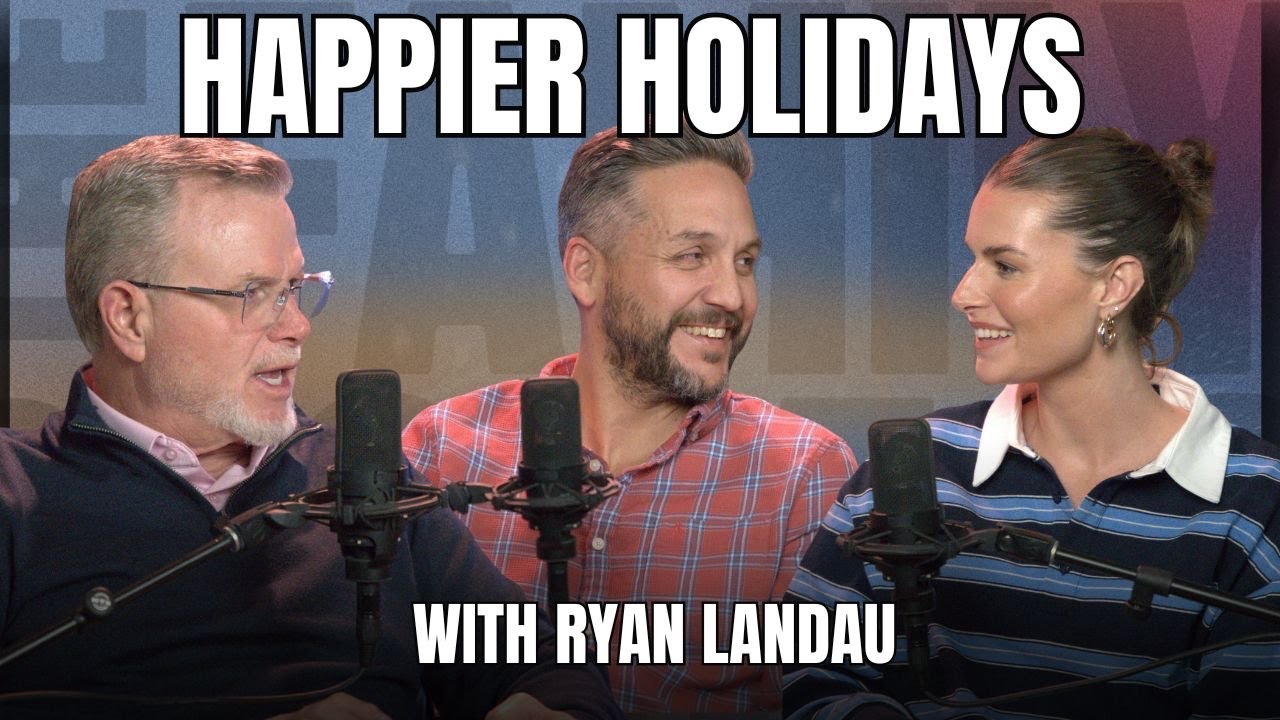
Are the holidays bringing more emotional chaos than cheer into your life? Join Steve Alessi, Lauren Alessi, and licensed mental health counselor Ryan Landau as they unpack the real challenges of holiday stress, seasonal mood swings, and family drama.


Are the holidays bringing more emotional chaos than cheer into your life?
Join Steve Alessi, Lauren Alessi, and licensed mental health counselor Ryan Landau as they unpack the real challenges of holiday stress, seasonal mood swings, and family drama.
You'll get key insights on seasonal affective disorder, financial anxiety, loneliness, and the unique pressures men and women face during this time of year - as well as practical tips for setting boundaries, finding community, and staying intentional—even when family relationships get tricky.
You’ll learn how small shifts like slowing down, budgeting, and focusing on others can dissolve stress and create joyful memories.
With candid stories and professional insights, the conversation breaks down why it’s perfectly normal to feel overwhelmed and how to navigate tough moments with more awareness, connection, and self-care.
Join our Podience Textline!
You can connect with us via text to ask questions and get updates!
Text FAMILY to 302-524-0800
Get our TFB Newsletter
Join our TFB Newsletter and get more inside news from the Alessis + tips and strategies for a happier family!
Get free access to the newsletter
Support the Family Business
- Follow Us on Instagram and Facebook
- Subscribe on YouTube
- Leave a review
Listen to the Alessi sisters' daily devotional podcast
My Morning Devotional
Join our family business every week as we talk about life, and help you build a great future with your family, no matter what business you are in.
New episodes are uploaded every Wednesday!
More Resources
Get your copy of the new book by Steve Alessi, “Forty-Two: A Guide to Finishing Well when You Thought You Were Finished”
Connect with Us on YouTube
Don't forget to LIKE and SUBSCRIBE to our YouTube channel!
Follow Us on Social!
Learn More about Metro Life Church:
Steve Alessi:
Well, you're not sad, you know, you just, you just gotta recognize that this is something that with the highs and the lows, the stress, especially at the end of the year, the stress of getting things done, you're going to close the office at a certain time. You want to be able to go have family members come to town. So much of this is just part of the season. Hello and welcome. Welcome to another episode of the Family Business with the Alessi's. I am Steve Alessi and today I have some guests that are in the podcast booth with us. So I'm very excited that you are joining us as our pawdience out there. Listen, you're growing.
Steve Alessi:
Thanks for helping get the word out. If you like this episode, which I think you are, it's gonna be very helpful. I know you know about four or five people that you could send this episode to, so do that. We are over 1 million views on YouTube. Thank you for making that happen. Here we are in season eight and we've got well over 200 episodes recorded. So good things are happening. Thanks for being here with me.
Steve Alessi:
I actually have in the podcast booth my daughter Lauren, who is with us, but I also have a guest by the name of Ryan Landau. And I think you're going to like what we bring to the table. So we're going to be talking about helping people deal with the challenges or the emotions that come up, whether it's during the holidays, whether it's during seasonal changes of people's lives and so forth. So I'm not the counselor, you two have the education. So first, if you will, Ryan, introduce yourself, tell our audience who you are. And then I'm going to come back to I think a pretty cute story.
Ryan Landau:
All right, thanks pastor for having me on. My name is Ryan Land. I'm a licensed mental health counselor. I practice, I share my practice with my wife. We work out of Coral Gables, Florida. I started my journey working, I interned at the hospital. So I kind of have that experience too. I spent a year at the hospital with acute psychiatric care and then decided I wanted to go do something very different.
Ryan Landau:
And I went into co founding a company where we used neuroscience technology and psychological well being techniques to help people live better lives naturally. And then in the last few years our focus, which has kind of just started happening naturally, has been focusing a lot on men and men's health and in particular relationships as well. Like, you know, a lot of men are coming to me cause they're in, you know, they want to work on themselves, which is great. It's huge. It's a big shift. I came across a study in 2018, and I said a prayer, and I was like, I need to see more men. Because at the time, I was only seeing primarily women. It was only them that they were reaching out.
Ryan Landau:
So, anyways, my last few years, I've spent a lot of time working with, really, people are doing really well for themselves in many ways, successful in a lot of different areas and struggling with mental health issues and relationship health issues, which are all tied together.
Steve Alessi:
Right, right. Well, I appreciate that because, as you know, Lauren has the training, the skill, the heart for this very same line of work. And it works. It complements what we do in our church so well. Now, she's probably the least heard because she's not crazy about getting up behind the pulpit and on the platform and preaching. But when she does speak, especially on this subject matter, it comes with a boom. You know, we can really sense, okay, this is so needed. And so she brings a level of that to the ministry that helps balance what we do.
Steve Alessi:
We may do it publicly, but she helps us as well as yourself with a practice like you have, you help us behind closed doors. And there was a time in the church world, man. Well, if you ever talked about a counselor or a therapist, you know, there was something demonically influencing your life. But it's. It's so needed. So I'm grateful over the years for the counselors and therapists that have been able to help me navigate through some seasons of my life. So I'm all in for it now. Would you like to say hi to everybody?
Lauren Alessi:
Sure. Hello, everyone. Thank you, dad, for. For that introduction. My name is Lauren Alessia. I'm a registered clinical or mental health counselor in the state of Florida. So similar degree. He's licensed, so he has a lot more hours and work put in.
Lauren Alessi:
Um, but, yeah, I love what I do. My focus right now, funny enough, is on women's studies and women's hormones. Actually, I'm working on a study for that. So where you focus on men. I love the biopsychosocial development part of a woman and her development and her life. So I feel like we have a great balance here of men and women and their lives.
Steve Alessi:
And she's got a book she's working out, so she's going to let that thing be released later in mid-2026.
Lauren Alessi:
Yeah.
Steve Alessi:
Good conversation to have. Probably your wife would love.
Ryan Landau:
I was just gonna say.
Steve Alessi:
Yeah, yeah.
Ryan Landau:
Huge.
Lauren Alessi:
Yeah.
Ryan Landau:
And it's a growing. I feel like it's a very Needed.
Lauren Alessi:
Yes.
Ryan Landau:
I mean, you would know better than I. But from what I. From what I. From the conversations I had with my wife, it's like a very growing need. Yeah, very growing.
Steve Alessi:
Yeah.
Lauren Alessi:
Yeah.
Ryan Landau:
Very desperate.
Steve Alessi:
All right, Ryan, so somehow I came across you on social media, so saw you were coming to the church, and either it was a follow or one of the suggested follows. So I see your deal on Instagram, which we'll make sure all of this. You gotta. I think you do your own podcast, too.
Ryan Landau:
Yeah, I don't. I do footage. I've been on a few as of late.
Steve Alessi:
Yeah. Okay. Yeah, so we'll make sure we get all that in the podcast notes there. Ap. So I'm looking and I'm like, okay, this is great. And I already mentioned to Lauren, I think at that time, hey, Lauren, there's someone else that can do this. I'd love to be able to get him as a man in the booth with us so we can discuss these things. So then I'm down at the Dadeland campus, and I go over to this guy.
Steve Alessi:
I said, hey, listen, Ryan, I can't wait to get you in the podcast booth with me. And the guy's just kind of looking at me. He's just kind of looking at me, and he lets me go through my whole spiel, and he says, my name's not Ron. I'm like, oh, shoot. We laughed and laughed. He's in real estate, but he looks to me look just like you. And so that was like, all right, let's get this resolved and get the right guy in here. So, all right, so here we are.
Steve Alessi:
We're at different seasons of life, and people are just going to be going through some challenges. So what are some of the things lo, you can help me pitch this?
Lauren Alessi:
Yeah, for sure.
Steve Alessi:
You guys, I'm just here to try to listen. So what are the things people are going to be dealing with right now? We're holiday season, different seasons of life. What is it they're going to be facing and how can we help them through it?
Lauren Alessi:
Yeah. And I think one thing we'd love to start discussing, especially with you, Ryan, especially with men, because that doesn't get discussed enough. And I think even in marriages is the whole when the seasons change. And we discussed this on a podcast, I think, two years ago, the whole sad disorder, seasonal affective disorder, and how people don't realize how when the seasons change, you know, the pressure of the holidays, pressure of family, even the time change, not as much sun, like how that really does affect you. And people can just push through and not realize, oh, this is actually affecting me mentally and emotionally. But we just kind of want to open that up again.
Steve Alessi:
Yeah.
Lauren Alessi:
Kind of talk about that, how that may affect men, how that may affect them and their marriages and their families, because maybe they don't recognize that that's a struggle for them. So. So what would you say to a man listening who's maybe heard that for the first time and hasn't put that together?
Ryan Landau:
Well, I would say to him, first and foremost, there's work to do. Right. Like, I think that's as obvious as that is. I still don't think it's a, you know, a common thing that. And a natural thing that men think about, Right. Women, you know, it's common. I feel like it's more common today to say, hey, I'm going to see my therapist. It's becoming more common.
Ryan Landau:
So that's huge, right? It's that. That. That men are saying, yeah, I'm going to see a therapist. You know, I had a. I have a guy that's been working with me for a little over a year, and, wow, he's really. He's really come a long way. And he said to me when he started dating again, he says, I asked him, I go, do you. Do you tow women you're dating that you've seen a therapist? And he says all the time.
Ryan Landau:
And I said, what's the feedback? And they said they love it. And so I think. I mean, so depending on where you're at, right? Like, if you're in my season, where you're married, kids, you own and operate a business, a practice, I think that the biggest thing to start doing is start kind of slowing down, right. And sort of reevaluating where, you know, we were seeing a couple this morning, and, you know, one of the things we had to just suggest is just reevaluate your priorities, right? We have to just. We have to shift. And it wasn't that they were doing anything wrong. It was just that they. They're struggling to shift into this new season, right? Marriage, kids, new house.
Ryan Landau:
You know, they both have demanding jobs, entrepreneurs, and they're doing really well for themselves. And there's just. There's so many years of operating a certain way that the wiring, the term we like to use when we just say we're wired a certain way, the natural automatic inclination is to say, I just got to stick this out. I just got to see this through. I just got to push forward. I just got to do more. And I Think that the first thing I would say is just let's slow down, take a deep breath, and let's reevaluate why we're doing the things we're doing and how we're doing the things we're doing. Right? I think we're just.
Ryan Landau:
I think we get into this kind of robotic mode, right? And we just say, oh, I got another deal to close. You know, like I said, many of the men that I work with are very, very intelligent, very successful, and they're really exhausted. Like, they're really exhausted. Like, they can't even make time for the stuff that matters to them most. Right. And why is that? And so I think we got to start thinking differently. We got to start showing up differently. We got to start reevaluating.
Ryan Landau:
The first thing I did when I met, like, a few months into dating my wife, I was part of a startup, and I was on a call on a Sunday, and so she said to me, so let me get this straight, you know, you work seven days a week? And she, like, immediately, like, gave me that stare of concern, like, how's it. How's this going to work out? And on that same day, I put myself out of office on all Sundays going forward. And I was in a, you know, obviously in a. In a position of privilege that I could do that. And it was still like, my. There was still some resistance there, but it was just really simple. Like, hey, how am I going to make time for this new person that I just met that I want to invest in?
Steve Alessi:
Right.
Ryan Landau:
And a relationship that I want to invest in if I don't take a moment to really reevaluate? So I think reevaluating our priorities, reevaluating how we're doing the things we're doing, why we're doing the things we're doing, getting switching off of, like, switching out of, like, automatic mode into, like, let's be intentional about our time.
Steve Alessi:
Yep.
Ryan Landau:
You know, I love that.
Lauren Alessi:
And I will also say what's very interesting is women are very similar, but in a different area. So. And I was. I was just talking about this while working on the study, the project. And this is not a trying to promote it. It's just to show how similar men and women are. But they're very different. But women just, okay, kids are getting ready to go to school.
Lauren Alessi:
Drop them off at school. Okay. Go to work. Okay. Get the groceries. Okay. Make dinner. Okay.
Lauren Alessi:
Like, making sure everything's good. And then a major life change happens. And then they're like, why am I so emotional. Why am I so why is everything hitting me all at once and there's not this slowing down and evaluating how much is really going on. And then when you look internally how much is going on and how many changes are happening. And there's never like this exhale moment of. Let me just evaluate for a second. I can't tell you how many girls I've sat with that are young moms, that they're like, why do I feel this way? Why do I feel so emotional? And I'm like, well, how long ago did you have your baby? Six months ago.
Lauren Alessi:
Well, your body just went through a major life change. Your brain is going through a major life change. Of course that's going to catch up to you. And then, you know, we're recording this now and it's during the holidays and you think about how many women and men are going through these changes, thinking it's normal and then are trying to catch up to the holidays, trying to catch up to everybody else around them, Please their family members, please their in laws, please their friends. And they just kind of feel like in a whirlwind. And there's never this moment of just exhaling and just evaluating everything. Like, I've been through a lot this past year. My body's been through a lot this past year.
Lauren Alessi:
My brain's through a lot. So, yeah, it's very interesting how men and women are alike. There's never that moment of, let me evaluate what I've really gone through this whole year.
Steve Alessi:
How much of this, I mean, can a person just kind of put away as just being normal? Because there's nothing wrong with you.
Ryan Landau:
Right?
Steve Alessi:
Right. You're going through the seasonal effectiveness disorder. Okay. Right. Sad. Well, you're not sad. You just gotta recognize that this is something that with the highs and the lows, the stress, especially at the end of the year, the stress of getting things done, you're gonna close the office at a certain time, you want to be able to go, have family members come to town. So much of this is just part of the season.
Steve Alessi:
Doesn't mean that something's wrong with me. Right?
Ryan Landau:
Yeah.
Steve Alessi:
Yeah. Because that in itself could be liberating.
Ryan Landau:
Yeah. We say often in our house, it's just a season. Absolutely. Absolutely. Yeah. I mean, this too shall pass 100%. And can we do things different? Right. Because if we're entering into new seasons, what I see, and I'm really glad you brought that up, that women.
Ryan Landau:
Cause I think the exhaustion goes both ways. I wasn't in any way shape or form trying to imply that women aren't exhausted. No, they are. They're just as exhausted, if not more.
Lauren Alessi:
Yeah, yeah, yeah.
Ryan Landau:
And there's a lot of. There's a lot of. That's a separate show. But so. But yeah, I think there is just. We have to, you know, Lauren, hit on something like, there's such a lack of education around, like, what, even the brain. I spent a lot of time studying in the first 10 years in practice because I was in this, like, neuroscience sort of, like, section of psychology. And there's such a lack of education around what the nervous system can handle.
Ryan Landau:
Right. And so we take on more and we take on more and, you know, we're not even paying attention to the signals. Yeah, right. I think it might have been touched on in your previous podcast of where you touched on sad that not all anxiety is bad anxiety.
Lauren Alessi:
Yeah, right.
Ryan Landau:
It's a signaling of our system. It's saying, hey, buddy, you've been on three to four hours of sleep for a week. You really need to slow down, shut things down for the weekend. Maybe you need to call off or postpone or reschedule. Something. I've had to learn in my journey as a husband and as a father and as a practitioner that boundaries are really necessary. We have to learn how to pick and choose. There's only so much of us to go around.
Ryan Landau:
Right. And I may want to be at everything, but I may not be able to. Right. Or if I'm going to be, I want to be able to be at the ones where I can be the most present, I can be engaged, I can enjoy myself. And so I think I've had to learn how to also do that, really put limits and boundaries and educate myself on what is the nervous system capable of doing, what is it not capable of doing. My wife and I are much more likely to get into a little something in the evening after we're both spent. Right. And we got trained in imago therapy.
Ryan Landau:
And at some point they came on the founders and they said after 6 o', clock, there's no talk of finances or anything of the nature. You put off topics that are highly stressful until you refresh for the next day so that we can begin the day on you and afresh. And I'm definitely not the same person that, you know, 7:00am after a good night's rest that I am at 7:00pm, you know.
Steve Alessi:
Yeah, yeah, yeah. So here we're getting into the holidays. How do people deal with loneliness during the holidays? Because that's definitely a challenge. With, I don't know, half of our church may be married, half may be single. Yeah. Just where we're at. So I think we've got more and more singles in South Florida today than almost married people. That's going to cause quite a bit of anxiety as they get ready to look at what happens for the holidays.
Steve Alessi:
So how are they dealing with this, though?
Lauren Alessi:
Well, funny enough, when we were communicating about this podcast, we both agreed how important community is.
Ryan Landau:
Yeah.
Lauren Alessi:
And community can look different for everybody. Maybe some people are listening and they're not part of a local church, but even just saying, like, okay, I'm part of a fitness community, being intentional about being a part of that fitness community. I don't think it's in today's day and age with, I would say, especially people my age, it's not innate in us to say, I'm intentionally going to go to this event where there's going to be people and socialize and network. That's not really a normal thing. I would say maybe it was back in the day. I don't know. I didn't live through those times. Just because socializing is through social media, it's easy to DM somebody.
Lauren Alessi:
It's very easy for people to go on a dating app. You pick somebody, you go on a single date, and then it's done. But being intentional about finding a community, whether that's in a church, whether that's in a exercise, like a run club. Run clubs are all the rage now for some reason. But just surrounding yourself with community, because here's the thing, you could be a single person and very lonely. You could be a family and be lonely because maybe you faced grief. Maybe you're like, we just feel alone because we're together, but we don't communicate. And you have a family around you, but you don't.
Lauren Alessi:
So just kind of being intentional with the community around you. And if I would say, even if you're in a family and you feel lonely, then being intentional with the time you have together and saying, okay, if you're facing grief during the holidays, let's talk about the loved one we lost. Let's be intentional about our time together. Because that doesn't come to people's minds that you can have a massive family and still feel very, very lonely. So just being intentional about the convers you're having, that was one thing you always did that. I was very grateful for that. It may have been uncomfortable, but, okay, guys, at this dinner table, we're going to have this talk, and it's going to be a little bit serious and it's going to be a little bit deep, but we're going to have the conversation that's very, very important for people, for young people to feel like they're a part of something, to feel like they're a part of a family and not just, okay, I'm just going to go to this person's might, my aunts, my second aunt's dinner that I don't really know. But I'm going.
Lauren Alessi:
But, yeah, I think it's important to just be intentional. Either you're taking the first step to join a community or being intentional with the community you have.
Steve Alessi:
Yeah. Ryan, speak to this for a minute. Because I am a fix it person. It's just thankfully, maybe that helps my calling. Right. But it's always been about that, which means fix it people aren't fun people, but they are like, let's get things done.
Ryan Landau:
Right.
Steve Alessi:
How important is it for the person who is saying, I'm lonely to not have that opinion, Poor me, I'm helpless. But instead being able to say, I can do something about this, like, let me. Let me move in the direction of some kind of connection.
Ryan Landau:
Yeah, it's incredibly important. It's funny, they have a name for it. They call it the drama triangle or the victim's triangle. And if we haven't worked on ourselves, which, for as trendy as it is, I still think that there's a lot to be desired in terms of people showing up and continuing to work on themselves and grow. That what you're talking about is just really part of the growth process where you can see how you have an option to move forward, to not live in that same story of yours. So I would say it's incredibly important. And if you've only ever done that for the last 10, 20, 30 years, it's going to feel like moving a mountain. Right.
Ryan Landau:
So we just got to start with doing something. I would say, as we like to say to our clients and even to each other, like, what do you want to. What can you do different today? Just like, what can you do? Just one small thing. Can you pick up the phone and maybe call someone? Right. Like in a world of social media, Right. Where we do connect this way, and yet there, I mean, numbers around loneliness, loneliness and isolation and suicide and mental health, it's just staggering. It's climbing. So I think we have to reevaluate what connection really looks like.
Ryan Landau:
A friend of mine recently told me that their daughter, in her application to a school, wrote about how Wonderful. It was that they had just suffered a trauma as a family, but that inside that trauma there was this opportunity to connect in ways that she remembered and has since desired since. It kind of like they kind of grew up and they've kind of been growing apart a little bit. And this trauma brought them together and this traumatic event brought them together. And so she put that in and when the mom read it, she was just, you know, bawling. She was like, wow. It was like so young people do desire, you know, and old people desire connection too, you know, as I was, as I was saying earlier, you know, and you just hit on it again. Lauren.
Ryan Landau:
Like there are people in relationship right now who feel more lonely maybe than some people that are just single.
Lauren Alessi:
Yeah.
Ryan Landau:
Because they don't know how to communicate. They haven't taken that first step. They haven't acknowledged that there is or accepted or leaned into the opportunity that there is to work on themselves. Stepping out of that. I can't do anything about it is a hard one and it's incredibly significant. It might be the first step.
Steve Alessi:
In many ways we would say there is such a need, especially in our family. Over the years, we knew that the holidays were going to be fun, but we also knew that we were here because we needed to help it, help others have fun in it and get help others get ministered to. So whether it was at church because we knew we were going to do a service, whether it was going to be an outreach because of the guy Tony Vilasuso in the church that was part of the leadership over at the Miami Rescue Mission for the Homeless, we knew that somewhere during the holiday we were going to, we were going to try to do something, especially when the kids are younger, to go pour into others so that the holidays just aren't about us. And when I do think of the elderly, we've got grandparents that sometimes we may look at and think, oh my gosh, I know with my mom, I gotta, when I'm with her, I'm walking with her. My focus is not always on my kids and the family and the grandkids. It's on her as well. And the conversation of my mother in law, when she's in the room, she hogs the conversation. Mary's mom, Surprising, right? Every side of the family would hog a conversation, but she's going to take up a lot of the oxygen in the room with her conversation.
Steve Alessi:
And it's okay for a minute to say this dinner doesn't have to be about me, really. The holiday, the getting together doesn't have to be about me. It may be almost is healthier thinking I can come to this time of season and say, how can I make it better for somebody else? And maybe that in itself, the principle is what I give away, then I get back in other areas. Maybe that in itself is a great way to deal with our loneliness, to be thinking, how can I make this better for somebody else's holiday? And surprisingly, wow, here's the gift.
Lauren Alessi:
A great small example is, and this has nothing to do with the holidays. This could just be in life. I was talking to a parent once about their teenager and they were expressing how their, their teenager was lonely. Totally normal. In high school, middle school, they're lonely, they don't have friends. And I said, okay, well, around your child's friends, what are they like? So they're explaining and I said, okay, do they invite friends? Yes, but they never come over, they never commit. And I said, well, what kind of friend is your child? She's a good friend. She's very nice.
Lauren Alessi:
She's very nice. And I said, well, is she the kind of friend that when she shows up to her friend group, is she bringing anything? She's like, what do you mean? Is she bringing a deck of cards? Is she bringing games? Is she bringing fun conversation? Or is she just there thinking about how nobody's thinking of her or nobody likes her? And the mom was like, that makes perfect sense. That makes total sense. And I'm like, next time give her a deck of cards. Let her be the friend that brings the deck of cards when she shows up to a sleepover with her friends. Yeah, let her be that friend that is always initiating fun times. Because it's easy. And I will say this, not from a professional perspective, just personally, it's very easy growing up in today's day and age to become self absorbed because it's just all about me.
Lauren Alessi:
Like social media is all about me, what I like, what my algorithms about me. And I don't even have social media. It's just like, that's today's day and age. So to snap out of it and say, this isn't about you, it's about others. That takes constant reminding. But be that person, the person that's like, okay, I'm going to go to the family dinner and make a fun game out of it. And it doesn't need to be about me. But I don't know, I'm going to bring a fun conversation topic.
Lauren Alessi:
So just simple things like that can make it intentional.
Steve Alessi:
I gotcha. We need to all right? The stress of money during the holidays, everybody's spending. Do you have a budget? What's a budget? Do you have enough to end the year? How much is going to be on credit card? You know, there's got to be a syndrome or something that hits a person in January when they have to pay for everything they spent money on in December. So how about that? Because that in itself puts constraints on you and you feel as though you may not be able to measure up or you don't have enough. You're all anxious about the money aspect. How do we deal with that, Ryan?
Ryan Landau:
Well, I mean, listen, the way we deal with it in our house, because it becomes a point for us, too, that we have to wrestle with. I would say that we prioritize. We go back to, okay, what are we spending? You know, like, everybody created their own giftful list. You heard about this, right? So you create a list and then you send it. And so. And then we sent that list to family members and we kind of like, you know, spread. Hey, if you wanna. This is their list, you know, so that it doesn't entirely fall on us.
Ryan Landau:
But I think there's, you know, I think we wanna slow down during the holidays, too. When did it become, you know, it's like. It's weird, right? We go into November and it's like, already it' like, buy, buy, buy, buy, buy. There's like. And I think we have to sort of detach ourselves a little bit, you know, and just be kind of create that. Like, we've been using the word intentional a lot. Like, okay, I'm not going to. It's easy to fall into, like, oh, I got to get this right? And then Black Friday comes, and, you know, before you know it, you're like, wait, we don't have enough to pay the bills.
Ryan Landau:
So I think, obviously, I'm going to state an obvious one, right? The budgeting for Christmas is probably a smart thing, unless you don't have to budget, and that's a different story. But most of us have to budget for Christmas. So I would kind of, you know, I think part of what we deal with is always, like, this lack of intention and allowing things to consume us versus planning. Can we plan for it? Can we sit down? Can we talk? Can we create a list? Can we say, hey, Pastor Steve, what do you want? You know, and then kind of put some guardrails around, like how we're going to do this? And then I would just reevaluate the list. Sometimes we give to people unconsciously and we're maybe coming from this place of. I think one of the things that might happen is when we gift from this place of wanting to reconcile something as opposed to really coming from the heart and in good intention. So there's a lot of nuances if we got into the nuances of it all. But I would say slow down, reevaluate.
Ryan Landau:
Let's prioritize what it is. Let's budget, let's create our list. Let's talk about it a little bit. It doesn't have to be this taboo thing, like, hey, yeah, this is good, and maybe we can afford a slightly bigger Christmas vacation this year. But I still want to be mindful of certain things and then doing some projecting and planning for that. I think the more we plan, the more we're intentional about it and the less we get sort of just like pulled into the, like, the stream of just being a blindless, you know, a blind, you know, unconscious consumer, which. And then you wake up and you're like, how much did I spend at the mall yesterday?
Steve Alessi:
Right. Yeah. So, yeah. What do you think, Lauren?
Lauren Alessi:
I mean, this. I'm that person that's like, I try to handle my finances, like, well, but I'm typical woman. I'm like, oh, my gosh. Usually with my money, I'm that person that's like, unconsciously spending. So I would just say I completely agree. I think it's something I would love to hear your take on, because you see so many men in relationships, so many men with, you know, family that they have to provide for. How do they handle that stress during the holidays? And also a lot of women. It can become an easy trap to fall into of comparison culture.
Lauren Alessi:
Right. Because maybe you are someone that has to budget this holiday, and then you see people in your schools or people taking vacations, and maybe you can't because you have to budget. So how would you suggest married couples or people in relationships to not fall into that pit of the comparison culture?
Ryan Landau:
The comparison culture could lead us down a rabbit hole. And that could be a separate podcast. Right. Because there's a lot there, and that's definitely a pathological pattern that you want to be mindful of. I think it's about understanding that more doesn't equal more. So just because we go out and we're more extravagant now doesn't necessarily mean that we're going to find more inner reward from our extravagant spending. I'm not saying that spending is bad, Right? Like, if you're intentional about it and you budgeted for it and you can afford it. That's wonderful.
Ryan Landau:
I think that what I see happen is, I see happen what we were just talking about, which is like a lack of communication, a lack of planning, and then wondering where it all went. And if there isn't connection or there already is something that's causing the relationship to be on a path of encountering issues down the road, or it's not strengthening, it's not thriving, it's barely surviving. And on the outside, it could look like they're doing incredibly well. And on the inside, they're really struggling, they're not connecting, they're not making time. I think one of the biggest issues is where do we create time for each other? When you're a high performer, a higher achiever, or a high provider, like you're, you're always working.
Steve Alessi:
Yeah.
Ryan Landau:
You know, how do you. There's no magic here. Right. You either, you either start reevaluating, start seeing where you can, you know, maybe cut back a little bit here or create maybe a date night or a night of connection, a night of planning there, or life is just going to happen and you're going to wake up one day and you're going to say, why are we having this problem? And we just kind of continue to brush it under the rug. So I think the more we can communicate, the more we can slow down. The problem I see with men is that they're going to go out and they need to be the providers and they're already good at it, so it's something that they know how to do, so they just go out and work more. But you're abandoning the relationship in the process and there's nobody that's going to be able to fix it except you, by you leaning in and stepping into doing the work and getting to know yourself, getting to know what's going on, getting familiar. So I think the money spending thing is definitely an issue.
Ryan Landau:
And I think what unfolds, what transpires, the problems it creates, may only be a symptom of what is sort of. What's sort of problematic, deeper and deeper rooted. When couples are talking and there's good conversation around what are we going to spend here, where are we going to invest there, things go pretty smoothly. It's not that there is never, not a point of contention or discussion, but things go much smoother than if we're being secretive about it or we're avoiding it or evading the topic. And so, I mean, so much of this goes back to good communication and getting vulnerable and saying, hey, listen I don't know that we have as much as we did last year. It's a season. Maybe we budget for 3,000 this season and when things are looking better next year, then, then, you know, we're a little bit, you know, more generous with our, you know, so.
Steve Alessi:
No, I'm glad you say that because conversations, everything. Got to talk about it. It's okay to ask questions. I Talked to my 87 year old mother Day. Mom, what do you want for Christmas? I just want to know. I want to know how to come to the table. I don't want to offend her by not giving her a big enough gift and I don't want to give her something she's not going to use. Mom, what do you want? Of course, nothing.
Ryan Landau:
Nothing.
Steve Alessi:
Conversations are good and it is good to be able to say, maybe this year we chill, let's set a budget, but not allow the pressure financially ruin the holidays. Because there's so much more than just gifts at the holidays. There's more money spent on food. There's more money spent on entertainment. There's more money spent on just services that are being provided for you. I just realized in the shower last night, I'm washing my hair. Oh, my gosh. I didn't tip my guy good enough who cut my hair last week to give him his Christmas gift.
Steve Alessi:
You know, so there's extra money always needed for those kind of things. But definitely be aware of it. Money's gonna be a stressor.
Lauren Alessi:
Yeah.
Steve Alessi:
And so is family drama. All right, big, big issue here. For the holidays, you're gonna be hanging out with people you don't want to hang out with people you probably haven't spent more than a week with all year long. And now you're going to be thrust into a couple of days spending time with them where there's going to be conflict. How are we dealing with that?
Ryan Landau:
You want to go? Lauren, you want to take that? I'll start. I'll start. Well, listen, I see a lot more people these days, Pastor, taking. Leaning into the power that they have to really be more mindful around who they're spending their time with during the holidays. I think historically there was a lot more feeling of obligation.
Steve Alessi:
Yep.
Ryan Landau:
Right. And you know, we haven't seen Aunt Sally, whatever, you know, we only see her once a year. Come on, let's get it to. And I don't know, I can't say if it's good or bad, healthy or unhealthy, but I'm starting to see a lot more people just say I just don't want to do it. I don't have it in me. I don't have the energy for it. You know, the pretending. So how do we manage it? You know, listen, I was one who was, you know, taught.
Ryan Landau:
You know, even if taught, maybe told. Right. You know, you went over and you spent a couple hours just because we only saw them once or twice a year. Right. And I saw the value in that. I did. And there were times I didn't want to be there, and, you know, I don't know. So what I would say is, if you're in a place where you're already depleted.
Steve Alessi:
Yeah.
Ryan Landau:
Okay. If you're in a place where you're already depleted, be extra mindful of how much time you spend and who you spend it with. There's nothing wrong with that. You're not a bad person, an evil person, for being mindful around where you want to spend your time and energy. This, you know, and I think there's that. That sense of, like, I don't know, built in guilt that we have, right? Like our parents, our grandparents, our aunts, our uncles, whoever it was, the guardian, someone telling us that, like, you have to go because you own. There's like this implicit guilt trip, if you will. And again, I see the value on both sides.
Ryan Landau:
So I'm not saying one is good or bad. I'm just going to say it's okay for you to be a bit more mindful and intentional about where you want to go, how much time you want to spend there, and who you want to spend it with, I don't see anything wrong with that.
Steve Alessi:
Yeah. Yeah.
Lauren Alessi:
And I'll also add, family can be interesting, especially if you only see them twice a year, because you can revisit who you were the last time you saw them. And if you're in a season of growth and doing better and you recognize this is taking me back to a place of my past, who I was, that I like, who I am now. I would just say be aware of that. And I think one thing that is kind of the common thing of this is, yes, intentionality, but also awareness. Like, be very aware of yourself. And if you're recognizing that, you know, hanging out with your brother or your sister is not keeping you in a place of growth and in a better place, then it's okay to say, you know what? I think maybe this year it might not be a good year for me to spend this season with them. And that has to be an internal, personal decision. No one can make that decision for you, but just aware of your own growth as a person.
Lauren Alessi:
And me and my siblings, we joke about it, but we're very close with each other. But when we all get together, it's like we're 15 again. But for some people, that can bring back a very negative place in their life. So just kind of being aware for that and aware of that and looking for that, I think is important.
Steve Alessi:
And if there's been trauma somewhere in those relationships that some people don't even know existed, secrets where it's just dysfunctional. You have to be so careful with it. I mean, I'm going to go. I don't know now if I'll see the family on the Alessi side, but the moment I step into some rooms, I'm Stevie, because Stevie was the little boy, you know, to this day. Met him for breakfast at Cracker Barrel a couple weeks ago. Stevie, how you doing? Stevie? So, yeah, you definitely need to be sensitive of it. Well, it is a big challenge for people, mental health issues, no doubt about it. Because, I mean, even my chaplain, one of my chaplain feeds the other day came up, somebody posted, they put it up for the end of the year and it's a feelings check in.
Steve Alessi:
So on the little document here, it says, I am feeling happy, I am feeling sick, I'm feeling scared, worried, sad, angry, confused, frustrated, nervous, lonely, confident. And then they gave a place for you to fill in your own feelings. And then they listed, I feel it in my head, my neck, or my shoulders, my arms and my hands, my heart, my stomach, my legs. And then if my feelings are making me stressed, I can try these tricks to feel my best. You can smile, you can help a friend. You can dance, have a dance party. You can use kind words. You can take three deep breaths, ask for help, relax and try again.
Steve Alessi:
Think of a happy place, and on and on. It's real.
Lauren Alessi:
Yeah.
Steve Alessi:
And then the other says, they post another one says, during the holidays it's okay. One, if you can't afford expensive gifts for loved ones. Two, to miss loved ones who are no longer with us and take their time to honor their memory. And they list about 12 different things that you would think people would be able to grasp because it's simple. But evidently it's not as simple as we think because they're having to actually intentionalize it and post it and saying, hey, this is going to be a tough season for you to navigate. And ultimately, I think that's what we're coming down to. As fun as the seasons are of life, they're Also going to be tough to navigate holiday season. Different seasons of people's lives.
Steve Alessi:
Even the season that change from fall to winter, the summer or spring, all of that. That's why, you know, funny thing is, people are more happier in spring. Why? New growth seasons, flowers. Yeah, it all accents new and people get start to feel better about it. Pretty crazy. Yeah. Well, what do you want to say before we end this thing, Lauren? I'll leave it up to you, then we'll come to you. Ryan, what do you want to say on the way out?
Lauren Alessi:
I would just say like a quick summarization of what. What I was saying before. Be intentional and be aware. I feel like when you look really closely at families that love being around together for the holidays, they do a great job of being intentional with each other. Like you were saying with your family. Like, I know our family is intentional about the budget, intentional about conversations, intentional about traditions. So just if you related with this episode in any way, just start thinking, how can I be intentional this, this season? And I think it'll help a lot.
Steve Alessi:
Ryan.
Ryan Landau:
I love it. I want to take a moment and just echo what you said, that if you are in a season of growth and things feel strange, it's okay to be extra protective of that. Because I think there is sort of this confusion that happens because you show up and all of a sudden you're not quite the person you were last. You're more assertive, more confident, more faithful. And that can be. That can just. That can throw people. And the connection that was once there, rooted in all kinds of interesting nuances and dynamics, might not be there.
Ryan Landau:
So I just wanted to echo that because that was a really good point you brought up. I would say ask yourself, take a deep breath. Ask yourself, you know, what am I doing? Why am I doing it? What can I do different? Like really, you know, we gotta. We're going at such a fast pace. And then the last thought that came to me was, we need to go on like a social media news diet.
Lauren Alessi:
It's true, right?
Ryan Landau:
We gotta go fast. Can we do some fasting from social media?
Steve Alessi:
Christopher's language, right?
Ryan Landau:
Seriously, can we do some fasting from. Because it's just all so in your face and then. And then you feel what's interesting. And I'm not talking to the people that use social media in a healthy way, in an intentional way. I'm speaking to the ones that just use it incessantly to check out, to escape, to numb and to compare. We're talking about. I mean, those things are all gonna aggravate those feelings of isolation, of overwhelm, of anxiety, of concern, worry, fear, and stress. Right.
Ryan Landau:
And so I would say, I would encourage everyone to adjust their settings. You know, it's a great way to say, you know, like, adjust their settings. Let's go on dnd, let's go on airplane mode, whatever it is, you know, like, I don't know. I told. I usually prime. I use my Instagram primarily for business now, but I told it to stop recommending Instagram as when you pull the screen down. I said stop recommending it as one of the things that I want to look at because I don't want to.
Steve Alessi:
Look at it anymore.
Ryan Landau:
You know, so there's a lot of different ways we can hack this thing that's now attached to us. I know it's so valuable. I know it's not going anywhere. I know we need to adjust and learn how to just help, you know, integrate into our lives in a healthy way. But I do believe it really intensifies the feeling if we're already feeling lonely, if we're already feeling anxious, if we're already feeling depressed, stressed, overwhelmed, and like, we're not good enough and all those things, like, it's only gonna. If you're not very intentional with your feed and what you're looking at and mindful about the time on there, it can really intensify those feelings.
Steve Alessi:
Well, I would say turn up a lot of good Christmas cheerful music. You got to listen to more of that during the holidays or, well, if you're not in the Christmas season, the holiday season, then listen to some good country music without getting depressed because he left you. And then I would say during the holidays, you definitely need to. Need to watch more movies like the Elf, Home alone, Home Alone 2, Home Alone 3. You gotta bring some entertainment and maybe even watch some cartoons, Christmas cartoons. Have fun, make it fun. And those are things that only you can control. You really can.
Steve Alessi:
But other things you're not going to control. The attitude of a family member that comes across, the finances that, you know, you're going to spend money, you're going to be able to pay for it. You'll figure out how to do. So don't let it pull you under and just recognize that everything is just for a season. For me, I always knew, Ryan, Sunday night was going to be the hardest time for me mentally, because on Sunday mornings we would just give, give, give, give, give. And then I knew the crash would come sometime Sunday afternoon. And I knew Sunday night don't give in to the dark thoughts. They'll be fine in a day or two.
Steve Alessi:
So always know yourself, you know, before you wreck yourself. And and it's good that you could then see I'm going to get through these holidays this season. I'm going to get through it and then there's something I can live for on the other side. And I would just say as we get ready even we're going to close out a year, go into a new year, man, the lessons, everything that we have gone through in 2025 could just be lessons because of what's about to happen in the next year ahead of us. If I can take the hard times, the hits, the failures where I lost it, if I can take that all as just lessons that I can learn from, then I know the next year is going to be even better. So I hope today you've been able to enjoy another season of the family business with the Alessi's. Hey, go enjoy your holidays. Go enjoy the season.
Steve Alessi:
Thanks again for being with us. Lolo and Ryan, appreciate your time with us. God bless you guys.
Lauren Alessi:
Thanks so much for joining the family business today. If you enjoyed this episode, make sure to follow or subscribe, share it with a friend and leave us a review. We appreciate your support and can't wait to have you join us next time because family is everybody's business.

Licensed Therapist
Ryan Landau is a Licensed Mental Health Counselor, high-performance coach, and relationship therapist with over 23 years in health and wellness, 15 of which have been focused in professional clinical practice. He specializes in helping high performers translate success into sustainable fulfillment while building relationships that strengthen their lives, leadership, and wellbeing.
Ryan combines therapy, EMDR, neuroscience, spiritual intelligence, and his own lived experience in recovery to help individuals and couples evolve into more grounded, capable, and connected versions of themselves.
He previously served as cofounder, COO, and consultant for a wellness tech company leveraging neurofeedback to tap into neuroplasticity for lasting behavioral change. Ryan and his wife—also a therapist—are now building a relationship-growth platform designed to help couples thrive in their partnership and marriage. He is also the author of the relationship and personal-growth newsletter Love Grows Us.