 Apple Podcasts
 YouTube
 Spotify
 Overcast
 Audible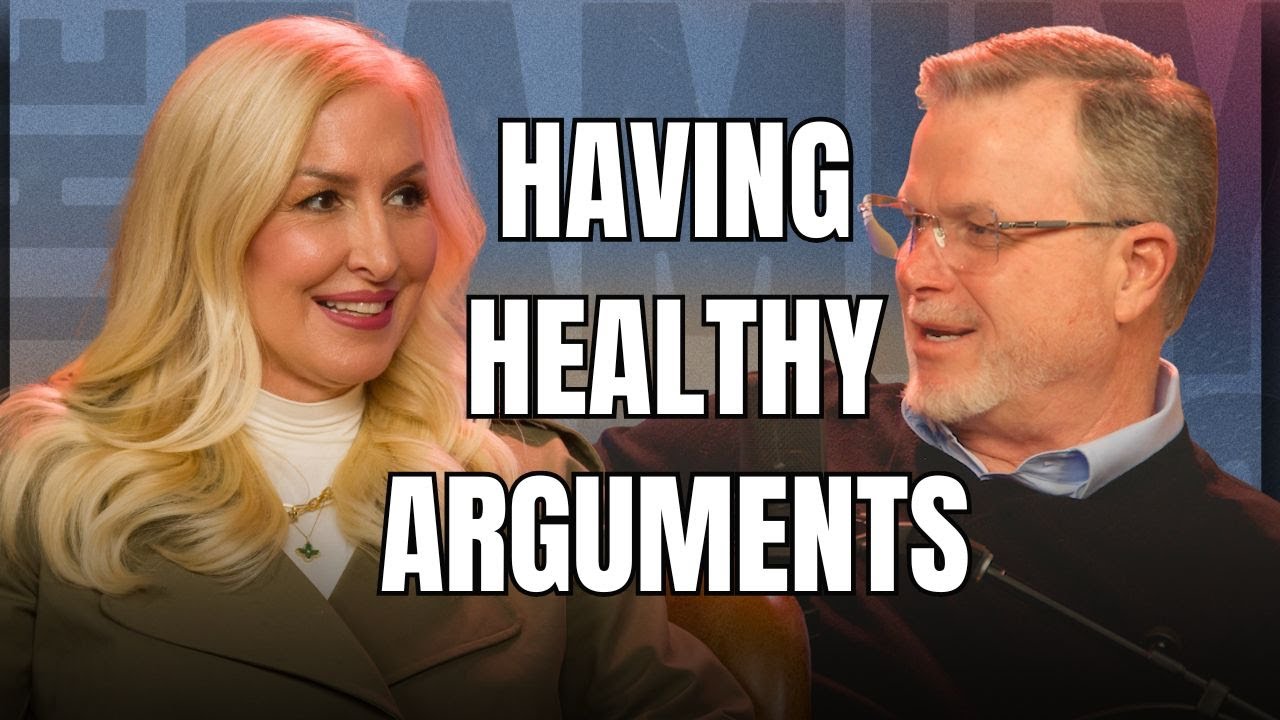
In this episode, we cover our best strategies for improving communication in marriage - so that even your arguments can be turned into opportunities to build a stronger relationship with your spouse.


In this episode, we cover our best strategies for improving communication in marriage - so that even your arguments can be turned into opportunities to build a stronger relationship with your spouse.
Communication challenges are at the heart of most relationship struggles, whether it's disagreements over chores, different ways of processing conflict, or mismatched expectations. Couples often find themselves in arguments that seem to go nowhere, but understanding each other's styles and showing empathy can transform these moments into opportunities for growth.
Join Steve and Mary Alessi as they offer practical marriage advice from nearly four decades of experience. They break down common misunderstandings, explain why "repair-rich" marriages thrive despite conflicts, and share ways to express your needs without triggering defensiveness. Learn how simple actions—like genuine apologies, recognizing your partner's strengths, and sharing the responsibility for household tasks—can create a healthier, happier home.
Whether you're a newlywed or a seasoned couple, you’ll get valuable tips on handling arguments, managing emotions, and supporting each other's value system.
JOIN THE FAMILY BUSINESS WITH OUR NEWSLETTER
Sign Up for Our Family Business Newsletter and get more inside news from the Alessis + tips and strategies for a happier family!
Get free access to the newsletter
TEXT THE FAMILY BUSINESS DIRECTLY
You can connect with us via text to ask family questions and get updates on The Family Business!
Text FAMILY to 302-524-0800
CONNECT WITH THE FAMILY BUSINESS
- Follow Us on Instagram and Facebook
- Subscribe on YouTube
- Leave a review
MORE PODCASTS YOU'LL ENJOY
Listen to the Alessi sisters' daily devotional podcast
My Morning Devotional
Follow Our New Podcast with Mary Alessi and her twin sister Martha Munizzi
Watch The Mary and Martha Show
Join our family business every week as we talk about life, and help you build a great future with your family, no matter what business you are in.
New episodes are uploaded every Wednesday!
More Resources
Get your copy of the new book by Steve Alessi, “Forty-Two: A Guide to Finishing Well when You Thought You Were Finished”
Connect with Us on YouTube
Don't forget to LIKE and SUBSCRIBE to our YouTube channel!
Follow Us on Social!
Learn More about Metro Life Church:
Mary Alessi:
We ladies would have talked for four hours over something so minor and minuscule, but we would have juiced all the.
Steve Alessi:
Juice out of it and never fixed it and not.
Mary Alessi:
But without the goal. It's not about fixing it.
Steve Alessi:
I know.
Mary Alessi:
It's about talking about it from every angle, from every vantage point, from every possibility.
Steve Alessi:
If a couple can sit there and just see the humor in communication alone, in the way that we both communicate alone, if we can just see the humor in it, then it would be so much easier for people.
Mary Alessi:
Well, hello and welcome to another episode of the Family Business with the Alessi's. I am Mary Alessi and I have the privilege again to be in the podcast booth with the one, the only, my husband of 38 years, Steve Alessi.
Steve Alessi:
Hola, muchachas.
Mary Alessi:
Good to be in the podcast booth, beginning of another year. And just to let everyone know, if you're watching on YouTube, please comment as we go along, especially on this topic. I'm kind of throwing Steve a curve ball too, because he kind of knows what we're going to talk about, but he's always ready, no matter what. I can throw him any topic and he's ready. So would you just do us a favor? Make sure you're following along, you're listening along and you're commenting along. And if there's something that we didn't say or maybe we touched on, but you would like us to go a little deeper, let us know in the comments section. We love to respond and just make more podcasts where we answer your questions or we kind of hit those topics. So we are an interactive podcast.
Mary Alessi:
We will respond to everything. Make sure as well, if you're listening on Spotify, on Apple Music, do the same. Stay in touch with us because we are a growing podcast, Steve.
Steve Alessi:
Yes, we are, Mary.
Mary Alessi:
We've been doing this now for several years and we are are just about to hit the 1 million views on YouTube right here. So that's huge for us.
Steve Alessi:
Yeah, who would have thought, right?
Mary Alessi:
So we're growing and a topic like we're going to talk about. Sorry.
Steve Alessi:
All right, we are being interrupted by Ashley over here. Is that our some Ashley moments? And she decided to get one for herself right in the door because we need to be on airplane.
Mary Alessi:
Airplane mode. I don't know if you guys watch Danny go. Are we good?
Steve Alessi:
Let's go.
Mary Alessi:
All right, so we'll just keep going.
Steve Alessi:
Go for it.
Mary Alessi:
We'll just keep going. We're a podcast, we can keep going. All right, now this is all about communication. So what Ashley did is actually the right thing to do. When you are in the middle of a moment, stop and be honest. So we're going to talk about that because I've gotten recently a couple of texts and DMs from different people asking for marriage counseling and just asking for overall advice on how to communicate with your partner. So there we go. That's what we're going to talk about today.
Mary Alessi:
Communication.
Steve Alessi:
Notice who's doing all the talking so far.
Mary Alessi:
The one who's good at communicating. Thank you.
Steve Alessi:
I will tell you, first off, for anybody that's struggling with communicating with their spouse right now, they got to give everybody just a break.
Mary Alessi:
That's very true.
Steve Alessi:
We've come off of the holidays and everything emotionally that that speaks to. We've been surrounded by families. Some of them were people we wanted to hang out with, some were people we had to tolerate, we didn't care to hang out with. But out of respect and tradition, you had to. And then you get home and you try to start the year off. You got kids going back to school. You're dealing with more traffic on the street and stress. You got the New Year's that's ahead of you.
Steve Alessi:
You've got all these resolutions. You've probably already failed and quit most of your New Year's resolutions. So you're detoxing still from some of the food. Maybe you're on a 21 day fast. You're in the middle of weaning yourself off of things. Nobody's feeling good right now.
Mary Alessi:
No, it's true.
Steve Alessi:
So we have to give ourselves some space to know that it's going to be tense, it's going to be a bit more stressful. You're starting a year off. You probably just got your, your notice that your Citibank bill or American Express bill is due from Christmas, from the holidays and you're having to pay for it all.
Mary Alessi:
That's very true.
Steve Alessi:
Yeah. So there's a lot of stress, a.
Mary Alessi:
Lot of internalizing too.
Steve Alessi:
Here's what we would say right now. Just take a chill pill, relax.
Mary Alessi:
Yeah.
Steve Alessi:
Get a glass of wine.
Mary Alessi:
Okay, well, no more wine because you're detoxing and you're trying to get the year started.
Steve Alessi:
Then drink some vodka, some hot tea.
Mary Alessi:
Not a hot toddy. No, none of that.
Steve Alessi:
And not us. And just relax for a minute.
Mary Alessi:
Yeah.
Steve Alessi:
And then, you know, you, you want to communicate because you want a better relationship, not because you want to be heard.
Mary Alessi:
Yeah.
Steve Alessi:
You want to communicate because you want to be able to just, you know, build a rapport with Your spouse.
Mary Alessi:
I put it into chat before we started because. What?
Steve Alessi:
I think Chad is a woman.
Mary Alessi:
By the way, my chat is not a woman.
Steve Alessi:
Yeah, it is. Because they have everything to say. They got an opinion about everything, so.
Mary Alessi:
Well, that's debatable. That sounds like a man to me. Okay. But I will. First of all, you know that you know. Okay, so you, you, you. Just for clarification, chat learns you. So however Chad is talking to you is how you would talk to you.
Mary Alessi:
Let's put it out there.
Steve Alessi:
I wonder why mine feels like a.
Mary Alessi:
Woman is so bossy.
Steve Alessi:
No, she's so sweet.
Mary Alessi:
Oh, my. Well, then you're doing it wrong.
Steve Alessi:
All right, so wait, wait, wait.
Mary Alessi:
So I put into chat, what are some of the main arguments that couples have? What are the topics? We have covered these same things. I don't know how many times in this podcast.
Steve Alessi:
So what are they?
Mary Alessi:
So we go into great detail on many podcasts about each and every one of these topics, but I'm just going to hit them really quick. Number one, it says communication styles. This is why people fight the most. They don't communicate the same way. Which I would say has been our issue. Still to this day is our issue. We struggle to communicate. Even though I feel like I know you better than you know yourself, and you think you know me better than you know yourself, I know myself, whatever that means.
Mary Alessi:
But we still will struggle. One person wants to talk things through immediately, and the other needs space or feeling unheard, interrupted, or misunderstood. Tone versus content. It's not what you said, it's how you said it. See, this is why I know chat knows me, because it just replied based on things I would say. So just so you know that chat learns you. Okay? That's the number one, number one argument that comes up between couples.
Steve Alessi:
Which is what?
Mary Alessi:
Communication styles.
Steve Alessi:
Communication styles. Yeah.
Mary Alessi:
One person wants to talk things through the other one.
Steve Alessi:
I thought you were gonna say that one feels like the other's not listening. Nothing.
Mary Alessi:
Well, that.
Steve Alessi:
What did you say?
Mary Alessi:
No, I did say that. I did say that other one needs faith. Feeling unheard, interrupted, or misunderstood. And then the one big one between you and me, tone versus content. It's not what you said, it's how you said it. You know how many times you bared it? Do you know how many times you buried it?
Steve Alessi:
Did you hear what I'm gonna go said?
Mary Alessi:
We're gonna go find.
Steve Alessi:
All right. You know what's funny?
Mary Alessi:
That spot in the podcast.
Steve Alessi:
You know what's funny is just last night I was sitting on the patio with somebody, another guy. And we're going over some plans for what we want to do with our business form and this came up. Really, it was so funny.
Mary Alessi:
I happened to know that person and their personality were having.
Steve Alessi:
Yeah. And it's just so common.
Mary Alessi:
Yeah, it is.
Steve Alessi:
Healthy relationships require communication. Right. So I actually said something to him and I think it's truth. All right. That a good argument is good for a couple.
Mary Alessi:
It is once in a while.
Steve Alessi:
It is once in a while. You just gotta.
Mary Alessi:
It's.
Steve Alessi:
It's like the pressure being let out of a container that's just filled with so much pressure.
Mary Alessi:
It's true.
Steve Alessi:
It's a little release valve.
Mary Alessi:
Right.
Steve Alessi:
So you know, you got to be careful. You have to be, you know, respectful. You can't just drag out, fight, slap her around, curse at one another.
Mary Alessi:
She can't kick him, emasculate.
Steve Alessi:
No, you can't do that in the argument. But to have a disagreement to where maybe, you know, I don't know, you don't talk to each other for a few hours or. I know the Bible says don't let the sun go down on your wrath, but it's okay. You turn over and back to back. You, you just, you, you, you fight.
Mary Alessi:
Right.
Steve Alessi:
And then you get away. And what's a little isolation? It's not bad. It's not bad. Little isolation.
Mary Alessi:
Yeah.
Steve Alessi:
Leave thoughts to yourself without those thoughts. Like you said in your message on the weekend, getting so mad at your spouse that you're going through a 12 round boxing match with, with the air. Yeah, you got to watch that. But a good argument's not, not the worst thing.
Mary Alessi:
No. Because sometimes it really helps you not only assimilate when you're frustrated about something, how that person responds to it, but you some, sometimes you hear yourself out loud, you've been processing this negativity or this frustration that might not even be correct. A lot of times it's not. And then the fight reveals, you hear yourself say stuff and you go, wait a minute, that's not what I mean. But it helps you assimilate some of your own pressures and fears and stresses. So it's healthy to have a partner that. And that's what marriage is. It helps you get to the place of peace and understanding that we all have seasons of frustration.
Mary Alessi:
We have moments, we have weeks of frustration. So arguments are good.
Steve Alessi:
So what do you think about the text arguing?
Mary Alessi:
You know, I think for some couples it's good. It does take tone out. It takes tone out. It works for us.
Steve Alessi:
I think I'm not for it, but I think it does. Let me see what you're saying.
Mary Alessi:
Why aren't you for it?
Steve Alessi:
Well, because, you know. Cause text can be read the wrong way.
Mary Alessi:
So what you're saying is you could assign wrong tone to it.
Steve Alessi:
No, no, there's. Well, there is no feeling to it. And so there's no facial expression, anything.
Mary Alessi:
Like that, which is sometimes good.
Steve Alessi:
Well, I think the. The last one you and I had, and you went there on text, I'm like, you know, maybe this isn't bad either. It's. It's. Let me see what she says, and let me say what I want to say without being interrupted. Right. Because we can communicate without being interrupted. Maybe what we read, we could if we try to remove our own emotions.
Steve Alessi:
Because that's the problem. You can always read into something in a text that isn't said, but you do that with an argument anyway.
Mary Alessi:
Yeah.
Steve Alessi:
You're. You're always like, that's not what I said. No, that's what I heard. You know?
Mary Alessi:
Right.
Steve Alessi:
And you're like, wait, wait. So you can do the same thing when it comes to the text fighting. I remember somebody telling me that he text with his text, fought with his wife, and this was years ago. And I'm like, that is the craziest thing. It's easy to do that. It's another thing to be able to look her in the eye and really try to speak your heart. But maybe when things are too tense, you can use that as like, okay, we're putting the landing gear down now. Let's start to bring this thing in for a close.
Steve Alessi:
Because from a man's perspective, we can get mad. And you know this. I'll get mad for a day or so, and then I can come off it.
Mary Alessi:
Right.
Steve Alessi:
And when I start to come off it, cooler heads, as they say, prevail. Yeah, a little text feed's not bad because now it breaks the ice. And now. Okay, I can. Now I'm angry. I haven't talked to her for a few hours. Now I can talk to her because we already kind of talked on text. Right, Right.
Mary Alessi:
But I think that texting is good when, you know, you want to reach resolve and you didn't make your point. Well. Or you made your point in anger and it wasn't heard. And you realize I could bring peace to this right now by putting a statement in my text that helps resolve this. So I think for y' all right there.
Steve Alessi:
No, I'm getting uncomfortable in here.
Mary Alessi:
It's a conversation I'm sure But I think for in the communication styles, if we approach it this way, one person wants to take things, talk things through immediately, and the other one needs space. So the person that wants to talk things through can be perceived by the one who wants to get some space from it as, you just want to ignore the problem. You don't want to face this, you don't want to hear me, you just want to move away from me. I've been that person that needed space because I don't want to have conflict. I think over the years, maybe we've exchanged roles a little bit there. It depends on the argument or whatever it is. But I do know with younger couples, the tendency for them to have this problem is really big and to not understand that. What does space mean to the person that wants space, and what does I want to talk about it right now mean to the person who wants to talk about it right now? Because we can easily misjudge each other's communication skills and feel berated by the person that wants to bring up the conflict.
Mary Alessi:
I want to address it because the person that needs space might be more passive aggressive. Does that make sense?
Steve Alessi:
Well, sometimes we go into an argument with solutions. I got to convince her that she's got to do this or she's got to agree when maybe we shouldn't be coming at it from that standpoint because we are married. So maybe the idea is we're creating an environment of safety, that it's okay to express yourself, even if I don't agree with you. I used to say to you all the time, ultimately, right. It's the old saying, opinions are like heads, everybody's got one. And to you, your opinion may be reality. And truth doesn't necessarily mean it's my reality and my truth. So I have to look at you and think, oh, gosh, I don't agree with this.
Steve Alessi:
But evidently it's real enough for her because she is willing to go to these measures to express it. And so whether it's through tears or through shouting or throwing things. No, whatever that is, it's evidently pretty real to you. So over the years, I've had to learn to say, gosh, you know, the old put. Let me put myself in her shoes for a minute. Yeah, maybe it came across that way. Maybe. Maybe I did it that way.
Steve Alessi:
That that's how you create a safe environment with the person that you're supposed to be married to for life.
Mary Alessi:
Right.
Steve Alessi:
And it's. It's got to be both. Both sides. I may not understand what he's saying. I may even disagree with what he's saying, but.
Mary Alessi:
Right.
Steve Alessi:
He is my husband. I better support him.
Mary Alessi:
Right.
Steve Alessi:
So let me figure out a way. Because for him to be this, you know, to bring it up in this environment like this, it must be something to him.
Mary Alessi:
Right.
Steve Alessi:
So the idea has to be not so much a solution. I'm going to fix her or fix him. As much as it's safety. I'm an open ear.
Mary Alessi:
Yeah.
Steve Alessi:
I'm an open heart.
Mary Alessi:
Yeah.
Steve Alessi:
So I'm okay to sit there and have this discussion with you. And it doesn't always have to turn into the argument, but if it is an argument, then shift your thinking. Instead of trying to be right, let me just listen, make it right for both of us.
Mary Alessi:
Well, I think that's key in relationships, is really listen to understand. You'll save yourself $2,000 in counseling if you just listen to your spouse to understand what they're trying to say and not put yourself in the middle of it. Now, I understand this goes on to say that some of the.
Steve Alessi:
No, no, no. You just said something. If you. If you want to do that, because that's a great, great point. Ask that simple question. Help me to understand what you're feeling.
Mary Alessi:
Right.
Steve Alessi:
Help me understand it or what you're saying. I don't. I don't see it. I don't feel it.
Mary Alessi:
Exactly.
Steve Alessi:
But if you help me understand it, maybe I will. Maybe it'll bring down my defenses. Because it is your reality.
Mary Alessi:
Right.
Steve Alessi:
It's gotta be your reality.
Mary Alessi:
That's what makes relationships work, is listening to understand and being patient with the other person. Now, I know that we have chronic problems in relationships sometimes where the communication is just. It's like, almost impossible to get to. And if both sides don't come into agreement with that, like, I love you and I want to understand you. I feel like everything's drama, or I feel like everything's anger, or I feel like everything's tears. We never can. Then you probably ought to go see a counselor or a communications coach or somebody that can help you get through, because that's a you problem. That's not the other person's problem.
Mary Alessi:
When you can't ever get the emotions out of it to say, let's talk about the problem. And I think one of the reasons that happens in couples is because going back to the two ways we process, the person that brings up the conflict in the moment tends to be more healthy emotionally. The person that needs space, sometimes it's good, sometimes that's healthy. But you need A little space. I don't want to lose it. I want to get my thoughts about me. Then we can come back together and discuss it. As long as the person who needs space is willing and ready to say, all right, let's talk about this.
Mary Alessi:
But not just, I don't want to talk about it anymore. Because the person that brings up the. The problem in the moment is the one that will get the resolve quicker. And let's move on. Let's discuss it. I didn't like the fact that, you know, I have my roles and responsibilities in the house. You have yours, and I happily do mine. But every time I try to bring up the fact that it bothers me that you didn't.
Mary Alessi:
This. I can't ever bring it up. Whatever. But the problem is when you store those conflicts up, when you store those things up, there he goes again. I asked him, and he didn't take the garbage out or there. That's another thing. And I never can't say anything. He left his coffee cup in the sink.
Mary Alessi:
And to you that might be something that matters. You've split the chores up, you've been honest, you've been open, and now you wait till four or five things pile up and in there is one serious thing and it piles up. And then you wait for that moment and you're triggered, and now all those things come out. Well, the truth is, that's not healthy. That's not fair to that person.
Steve Alessi:
Well, anytime you start with, you always exactly leave your cup in the sink, you always leave this. Don't take out the garbage or whatever fight words you lead with that. You're definitely wanting a fight.
Mary Alessi:
That's right.
Steve Alessi:
But I feel is a much better approach.
Mary Alessi:
Yes.
Steve Alessi:
I feel like I'm neglected. My feelings are not appreciated. When we've both gone to work all day and I come home and now I'm having to handle all the things in the kitchen. And the garbage is also my responsibility. Right. I feel like I'm not respected here. Sure. Instead of, you always leave it up to me to take out the garbage.
Mary Alessi:
There's other ways, too, that I think women should talk to men in that regard. And I think it's. I'd like your help. I'd love it if you would help me rather than pointing out the things they don't do or making everything a fight. There's just some things when you live with one another that you learn after a lot of years that you think different, you talk different, you process different, you look at the world differently, you look at Things of value differently, they have different values. The garbage to one party means if you don't take that garbage out, you don't love me. If you don't keep the kitchen clean to the level that I want it clean, and I've been clear about it, that is the ultimate disrespect. And you don't love me.
Mary Alessi:
And the other person's like, no, I just didn't do it. I'll do it tomorrow. I didn't feel like it. I didn't want to. And those are the breakdowns that can happen in relationships when it's expectation. But it's also kind of our own upbringing as to how we saw our parents communicate and how we saw our parents fight and what was important in our home and what wasn't important in our home. So you have to come together with setting a new expectation and a partnership and not just one way or the highway. There has to be equal service.
Mary Alessi:
And we've said this in our other podcast, that there are just things in our relationship, things that bugged you about me, that you've just had to say, that's Mary, and I'm not going to change it, but I'm going to focus on the things that she's gotten better at to make me happy. And I've had to say, that's Steve. That's how he processes. He gets irritated. He doesn't like that. That bothers him. So I'm going to do my best to serve that. Whether I think it's important or not, it doesn't matter.
Mary Alessi:
It's important to him. Because here's what I've noticed, that when I do the things that are important to you, they're simple, they're not complicated. The environment that it brings in the home, I want that and vice versa. The little things that you've done that you go, what in why does that make her happy? But it did, and you do more of it. Because we learn that that's not my language, that's not my communication skill, nor is it my expectation, but it's my partners, man, I tried it. It worked. Look at the piece.
Steve Alessi:
God really has a sense of humor. And you see it in marriage. He does, because he does put people together that are pretty opposite.
Mary Alessi:
I agree.
Steve Alessi:
It's crazy.
Mary Alessi:
It's funny.
Steve Alessi:
You know what can really shut down an argument? And I hate it. Because if I'm going to argue, I want to argue.
Mary Alessi:
Yeah.
Steve Alessi:
If I, like. If I get in the car on Sunday mornings and the gas tank is under a quarter and you were the last one driving the car. It makes me angry. And I'm going to say something to you and I'm going to go over it. I'm going to tell you how irresponsible it was of you to drive all around at the mall and then go get some food and not even look at the gas gauge one bit to bring it home, knowing we have to get up and go to church the next day. You did not think. And if I bring it up, I. Because I have this argument going on, I'm ready to give it to you.
Steve Alessi:
If I bring it up and say, mary, it's. You didn't get gas yesterday. And then my next go to is ready to just lay out this whole argument against you if you cut in right there, what you've learned to do, and just simply say, oh, I didn't. I'm sorry. I hate that because you just took away all the.
Mary Alessi:
I took the argument away.
Steve Alessi:
You did. Now it's like, shoot, she. It doesn't matter what I say. She already knows what I'm gonna say.
Mary Alessi:
And my dukes were up. I was ready to go.
Steve Alessi:
Oh, man. That was it. Yeah, it. You know when the Bible tells us to agree with your adversaries quickly.
Mary Alessi:
Yes, it's true.
Steve Alessi:
There's something to be said about that. A soft answer turns away wrath. There really is something to be said about it. Rather than having to go into a long excuse of why you did something right. Here's the reality is either we're going to show up to church with a little less gas in a quarter tank, or I'm going to stop and get gas. Nothing's. The outcome's not going to be the same. I just want to argue about it.
Steve Alessi:
I just want to express it because I'm angry. But boom, you will come in and you hit that thing with I'm sorry, I should have done it. It's like poo. The balloons popped. And it, oh, there's no problem.
Mary Alessi:
But because behind that I'm sorry is not lip service. Because for years, when you would go down that road and you wanted to. You love a good lecture and a good speech. You've always been that person. And. And I was like, gosh, I hate these lectures. I hate these speeches. Well, I started to really get convicted of.
Mary Alessi:
Is what he's asking absurd? Is it? Is it absurd? No. I've been out all day. Why didn't I think about the gas tank? I could support this. I could make it easy on him. He makes things easy on me. Not always, but When I say something bothers me or whatever, you try to do your best, I try to do my best. We're not expecting each other to be perfect and meet every expectation. We've applied grace to each other a lot.
Mary Alessi:
At the same time, after 38 years.
Steve Alessi:
Of marriage, it's come a long way. Yeah.
Mary Alessi:
Yeah. But we've been doing pretty good for a long time. Let me. Let me finish this, though. But when I come in, the mindset of not, I'm sorry, so you won't lecture me, doesn't work. You can read through that. But when I take enough of an initiative that I did fill up the gas a few times, and I show that it's a value to you and it's a value to me, and it is. That's important that you're not the only one carrying the load.
Mary Alessi:
If I've been out all day, we have a couple cars, so it's not like I should be this little queen princess that a lot of girls today think they need to be. And the husband takes care of all of that. I don't know if you've seen it on social media, but that's not fair. There are contributions that we both make to the household to lighten the load. And when I started looking at it from that perspective, when I didn't think of it, I go, oh, I felt it like, I can't believe I didn't get gas in the car. More than just letting you down, it wasn't just a Steve problem. It was a value, shared value. And then I would be more mindful.
Mary Alessi:
But I noticed then that you were always more gracious about that stuff. You stopped giving so many lectures.
Steve Alessi:
You know what I think the difference is? It's like me trying to win an argument with logic. It never works because it makes you feel bad. Empathy goes a whole long way. So when you sit back and just.
Mary Alessi:
Say, I messed up, you're right. It's like it mattered to you.
Steve Alessi:
It really did at that point. And as much as I wanted to argue, it's like, doggone it, she. She knows what I'm feeling.
Mary Alessi:
Right.
Steve Alessi:
She. She just forgot she missed it.
Mary Alessi:
Exactly.
Steve Alessi:
This one.
Mary Alessi:
But we're on the same page here.
Steve Alessi:
Yeah.
Mary Alessi:
And you.
Steve Alessi:
You need time rather than logic, Steve. You know, I was so busy. I had the kids. I did this and that and the other.
Mary Alessi:
Because in your mind, it's excuses Comes across.
Steve Alessi:
Yeah. As an excuse.
Mary Alessi:
Well, that took me a while to learn, and I hope our young couples can learn that very quickly. Maybe. You know, I don't know.
Steve Alessi:
Well, I had to learn it, too.
Mary Alessi:
Yeah.
Steve Alessi:
And the way that I. Like, like in the past, there was one word you always needed to move on. What was that word?
Mary Alessi:
I'm sorry.
Steve Alessi:
Yeah.
Mary Alessi:
Two words.
Steve Alessi:
Thank you. Sorry was the word.
Mary Alessi:
No, three words. I'm so sorry. No, I'm just kidding.
Steve Alessi:
But sorry was a big deal. Yeah. And I hated to say I'm sorry because to me, it was like, that's just lip service. I'm going to show you that I'm sorry. And if you're going to say sorry, I want you to show me.
Mary Alessi:
Right.
Steve Alessi:
Actions speak louder than words. And it was so stupid. Right. Though there's truth to that. But the other part of it has been all right, instead of just and I'm sorry. And by the way, if you're sorry, you don't say if I hurt you.
Mary Alessi:
Right.
Steve Alessi:
The fact that the person's hurt already shows you you hurt them. So you're sorry for hurting them for saying it. Don't. If I. That that's a cop out. All right. But what I was trying to say there is we. We've got to the place where when there is a heavy argument, we ultimately something else that starts to turn you away from the anger or the defensiveness of having to defend your position because you do feel like maybe your feelings are not appreciated and respected.
Steve Alessi:
What turns it around now is me looking at you saying, baby, you're my wife. I don't want to hurt you.
Mary Alessi:
Right.
Steve Alessi:
That right there. I can see the shift in just your facial expression where you're tense with a locked jaw, ready to fight. The moment I say that, it all of a sudden causes you to release that, and it puts us back on the same page rather than on opposite ends of this thing.
Mary Alessi:
Yeah.
Steve Alessi:
Now we're back together because it is a matter of, you're my wife. I don't want to hurt you. I really don't. I don't want you upset. Not from me. You can be upset from your kids. You can be upset from your job. You can be upset from your boss, not me.
Mary Alessi:
Right.
Steve Alessi:
I don't want to upset you. I really don't. Saying that right there comes across as very empathetic, because the reality is you should not want to be arguing with the person that you say you love the most.
Mary Alessi:
Yeah.
Steve Alessi:
That's the one place you should feel at peace.
Mary Alessi:
Yeah.
Steve Alessi:
All right. So I just know from. From my perspective, you know, somebody says, or you said, steve, the older you get, the less confrontational you become. One wisdom.
Mary Alessi:
Right.
Steve Alessi:
But two Quite frankly, I'm tired of fighting.
Mary Alessi:
Yeah.
Steve Alessi:
I got too much on my plate all day long at the job, dealing with the things that we deal with.
Mary Alessi:
Yeah.
Steve Alessi:
I just. I get tired of now coming home. Why do I want to fight at home?
Mary Alessi:
Yeah.
Steve Alessi:
And that's complicated for you and I because we work together all the time.
Mary Alessi:
Yeah.
Steve Alessi:
So my buddy last night that I'm talking to on the porch, he's like, you know, I made a decision last year. I'm just not going to argue with you. As he. He's. I'm not going to do it. And you can get mad and say what you want to say, but I'm not going to argue. Now, that could either be seen as you keep your spouse in some level of. Of tied up.
Steve Alessi:
They're hostage to their own anger and stuff because you're not willing to discuss it. You'll. You'll cause them to get even madder because they need a response from you, or it gives them permission to say, you know what? It's not worth it. He's right. Why bring this stress into the home? My spouse is busy. They've had a lot that they're. They're carrying the weight for, and especially if your spouse runs an organization and they're responsible because. For a lot.
Steve Alessi:
Because they don't shut it off. Right. Some employees walk home, walk out the door, and they shut it off. When you're a business owner, ministry leader, you don't have that privilege.
Mary Alessi:
Right.
Steve Alessi:
So the weight of. It's with you forever. So the last thing you want to do is now argue with the person that you say you love.
Mary Alessi:
No, I think that's true, but I. So I want to go back to lip service versus appreciating each other's value system. Because words matter. They do. But they don't matter as much as action does. So if. If I were to keep saying to you, I'm sorry, I'm sorry, I'm sorry, but I don't. Every time you got in the car after I've used it, it was on empty.
Mary Alessi:
And it. And it never. It did not matter to me ever. I didn't care what you felt. Well, then that's. It's. That's more than just the fact that I didn't put gas in the car. That's a deeper problem.
Mary Alessi:
I don't respect our relationship. I don't respect your feelings. I don't respect your values. I don't respect what matters. And I don't. Not only do I not hear you, I hear you. And I don't care. And when you're in that place in a relationship, that's apathy.
Mary Alessi:
You're on the verge of a divorce and you go, well, it was over gasoline in the car. No, it wasn't.
Steve Alessi:
Deeper issue.
Mary Alessi:
It's a deeper issue because we've got to honor one another and respect one another. And it might not be a big deal to me, but it's a big deal to you. And if it's a big deal to you, then I have to get on that same page. 75%. I don't have to be like Steve and be as conscientious or as over the top about gas has to be in the car. But that is something that matters to you. And there's a lot of people that would agree with you. Why? Because you pay the bills, you pay for the car, you pay for the insurance.
Mary Alessi:
I don't. So getting in the car. And you always make sure we have a nice car. From that perspective, me honoring the system, honoring the fact that we both own this car, that we both use this car, shows respect to you, and it just goes a long way. But if we were just in. If I just kept saying, and I'm just going to use the gas in the car as an example. I'm sorry. I'm sorry.
Mary Alessi:
Oh, I'm sorry. Are you going to lecture me now? I'm sorry. Well, a lot of couples get stuck right there, and sometimes it's the woman who wants to be heard and has a little bit more of a conscientious edge when it comes to those things. And the man doesn't care. And that's in a. That's reverse. And I know you speak to a lot of young men about being the men of their homes and taking the lead of their homes and being the conscientious one. And you, you taught a whole teaching on the two chairs you can sit in.
Mary Alessi:
The Chair of Comfort and the Chair of Discomfort. What did you call the discomfort chair? I can't remember right now.
Steve Alessi:
Sacrifice.
Mary Alessi:
The sacrifice. The Chair of Sacrifice. And I think if we were to boil it all the way down and get to the root of this problem, one can't sit in the Chair of Discomfort all the time. I'm sorry. Or the Chair of Sacrifice all the time.
Steve Alessi:
Both sides. Yeah.
Mary Alessi:
And one always get the comfort chair. You've got to say, man, my husband, he's a slave. He works hard for us. He comes in late, he's tired. I don't expect him to have the same communication skills or desires or needs that I have. If I have an issue, I'm going to bring it up, but I'm going to bring it up with grace and timing because he works hard for us. Respect for one another goes so far. And I think a lot of couples, they either learn that later on after a massive trouble in their marriage, you can learn it early, or they never get it.
Mary Alessi:
And that's why our divorce rate right now is like 65%. But it's so important. And it goes both ways, man. I see my wife, she worked full time all day. She's been working all day, and she came home and she cooked and she's got these babies all over her. You know, let me just walk in and go, babe, how can I help you? To a woman, to a wife, acknowledging the workload that she's doing, even when you know you've worked hard, too, that is so huge for her.
Steve Alessi:
Yeah.
Mary Alessi:
Just as huge as it is for a man at the end of the day to say, I want to be. I want to be here to meet your needs, or I don't want to add more pressure.
Steve Alessi:
Mary, that was. That was a great message.
Mary Alessi:
Well, here's the thing.
Steve Alessi:
It was on gratitude. It was on gratitude, Thanksgiving in action.
Mary Alessi:
You got to bring that back and do an entire series on marriage with that.
Steve Alessi:
Here's something else. And we had to. And adopt something here to try to make sure we don't keep repeating this offense. But men, most of the time, there's always somebody in the relationship that is a fix it person. Right. So over the years, where we have had a challenge is that you would come and tell me something. And if it was about work, if it was about something at the house, if it was about dealing with the kids or something, I go into, okay, how can I fix it? Right, Right. That's usually what a man, the alpha in the relationship, wants to do.
Steve Alessi:
How can I fix it? And I learned that you didn't always want me to fix things. Right. Because some things couldn't be fixed. Some things just were there. Right. So I had to somehow be aware of. And I'm not saying I'm good at this because I just go into, how do I fix it? Or I'm going to tell you how to fix it. Right.
Steve Alessi:
I have to adjust and come at it from all right. In my mind and maybe even ask this question. Are you just telling me this to vent or do you need my assistance? Right. Because are you wanting me to do something about this after you share it with me, or are you just wanting to tell me a story. Right. You know, so then I can move into maybe listening.
Mary Alessi:
Yeah.
Steve Alessi:
Because I'm hearing you, but already in my mind when you're talking to me, my fix, it goes in to play and I'm like, okay, I'm going to do this. And you're not even done talking. I'm going to talk to this guy. I'm going to bring this person over it. You know, I'm going to address it. I'm there. And that. That's the way that I hear.
Steve Alessi:
I listen anyway. But then if I find out that you just want to vent, I have to go into another mode. Like, it's okay, she's just.
Mary Alessi:
Right.
Steve Alessi:
She's just talking. And I guess I just gotta sit back and absorb what it is. And she's not. She really doesn't mean anything by it. Right. But then you can get very frustrated if I'm listening with an ear of fixing it. Because you're like, no, no, no, no, no, I got this. And then we can get into a little argument over that.
Mary Alessi:
Because you would say, well, have you done this? Well, why didn't you that? And why didn't you? I'm like, I'm not asking to have a back and forth between you and me over this. I'm just telling you. I'm processing. But I've also learned what to word vomit with you and what not to word vomit with you because you do. It is unfair of me to expect you to process my way because you don't. It's unfair of me to expect you to hear my way. You don't. It's like saying to somebody who's tone deaf, do you hear this song? And can you sing it? They're tone deaf.
Mary Alessi:
No, they cannot. So we have. Not that men are tone deaf. I'm not saying just saying that we are. We hear things different. We process completely different. I learned that more and more from you telling me, but also when I would sit in with you, sitting around with some of your guy friends or some of the guys in ministry, the people that we do work with. And I remember one in particular.
Mary Alessi:
And the wives were there. We were kind of loosely there. But actually it was when we went to Greece a couple years ago and last year and y' all were all sitting down, the men were sitting down at the end of the day and they were talking about business and. And we wives were kind of like intermingling and I was sitting on your lap and one of the wives were sitting on the other and there's A bunch of us, and we're listening to you talk. And I'm like, this is the most boring conversation. Because men don't talk. From the perspective of, let's share the details and the gossip side of things and the speculation part of things, men are sharing. Here's the problem, here's how I fixed it.
Mary Alessi:
Well, in my business, I had that problem, and here's how I fixed it. And all the men were like, yeah, yeah, yeah. And when I had that problem, here's how I fixed it. And you're like, yeah, that's good, that's good. And we're like, it took you 30 minutes to fix each other's. You didn't even help each other fix each other problems. You. It was just such a one note, single focus conversation that we ladies would have talked for four hours over something so minor and minuscule.
Mary Alessi:
But we would have juiced all the.
Steve Alessi:
Juice out of it and never fixed it and not.
Mary Alessi:
But without the goal. It's not about fixing it.
Steve Alessi:
I know.
Mary Alessi:
It's about talking about it from every angle, from every vantage point, from every possibility.
Steve Alessi:
If a couple can sit there and just see the humor in communication alone, in the way that we both communicate alone, if we can just see the humor in it, then it would be so much easier for people.
Mary Alessi:
I think women see everything through a kaleidoscope and men see everything through a telescope.
Steve Alessi:
Yeah, that's a good thought right there. You might want to write that down, Paul AP because we're going to need that.
Mary Alessi:
Good one.
Steve Alessi:
Kaleidoscope.
Mary Alessi:
Kaleidoscope, right here.
Steve Alessi:
But here's what it helps me do over the years. It helps me appreciate when I know what kind of person you are, your communication. It helps me appreciate that rather than resent it. Yeah, right. Because you're not like me. I can appreciate that you're not like me.
Mary Alessi:
Right.
Steve Alessi:
Because then we'll be in certain environments and I'm like, mary, I want you there.
Mary Alessi:
Right. I know. You do that to me now all the time.
Steve Alessi:
Well, those kind of environments where it's going to be just somebody to talk about something, right? Not anything important, nothing that needs to be fixed.
Mary Alessi:
I'm your wingman.
Steve Alessi:
You. You're my wing person. So like my mom, for instance. I see it when I'm with my mom, when I'm sitting with my mom, I'm talking about things I'm doing for her or things I'm fixing at the church. A project, this, that or the other. Right. You get there and you're just talking about everything. And anything.
Steve Alessi:
And she's even let us know. I like Steve around, but I love Mary around. Why? Because you two women speak about everything. Here's. I guess what I'm getting to is a gratitude a little bit. You brought it up in the. From that one message. If we could just say to our.
Steve Alessi:
Each other, whatever that their strengths are, baby, thank you for taking care of the cars like you do. Thank you for paying the bills. Thank you for always having food at the table.
Mary Alessi:
Right.
Steve Alessi:
I see that you work hard. I see that you really are doing your best to keep the house clean. I see that you're really taking care of our bills. When you, when you are showing gratitude, it's like emotional oxygen, right? It tells somebody that you are, are needed, you're valuable. And your differences are what make us broader and better as a family. We're a team. So, yes, you do better in the lobby at our church than I do. I have a few comments with people and so on.
Steve Alessi:
And whether it's my lack of follow through after a message, my conversation skills are limited, or the individual may be a little intimidated and the conversation doesn't go so well or so long. I can walk into the lobby of our churches and then walk out within a few minutes. You will walk into the lobby and I'm looking at my phone like I'm ready to go home.
Mary Alessi:
Right.
Steve Alessi:
And it'll be 20, 30 minutes later and I'll say, what took you so long? Well, I got caught up with so and so we were talking about. You have that ability now when I tell you that that makes you feel good, that I recognize your strengths and will I complain about it? Mary, I waited so long for you and so forth early on. Yeah, right. But as we get older and we see how unique our individual personalities and temperaments are and what we bring to the table as a team and our ministry and our business, then we can show, hey, I need you in this environment.
Mary Alessi:
Right.
Steve Alessi:
That's good. I like that strength.
Mary Alessi:
Right.
Steve Alessi:
I want that around me. And then that just allows me to find a place emotionally where I'm at peace with you.
Mary Alessi:
It's true.
Steve Alessi:
And that allows us to both overlook some things that once irritated the heck out of us. Right.
Mary Alessi:
And it is important to stop for a minute and focus on your partner's strengths. What are they good at and really fan the flame of that. What would happen. I remember years ago when we were working at Grace with your mom and dad at the original building. We were young and one of the employees that had been there for A long, long time that your dad used to complain about, complain about, complain about, left. And when they left, within a couple of weeks, all we heard from him was, I had no idea how much they did. I did not realize what a gap they would leave. I wish they would come back.
Mary Alessi:
I can't believe. And I remember thinking the whole time they were here, all you did was complain about what you thought they didn't get done. And they're gone two weeks, and you're like, we can't do it without them. Well, the truth is, sometimes that happens in marriage. Think about what would your marriage look like if that partner was gone. How much would you be picking up? How much of a load would you be carrying if they weren't there? And I know we don't like to think that way, but that's the reality. Don't wait until that happens. And you go, oh, I had no idea.
Mary Alessi:
It's our job. It is our responsibility. When we got married, we said, for better or for worse, those vows could say anything we want them to say. But we said, for better and for worse. What's worse when the communication is at such a standstill, we're stonewalling one another. We can't understand each other. Well, it is our responsibility, not a burden. It's an obligation to learn that about one another.
Mary Alessi:
And you can naturally get there. And over the time we have, we've had a lot of resource and a lot of support, a lot of help getting us help in our marriage and our relationship. Plus, we started out wanting to understand one another.
Steve Alessi:
Yeah.
Mary Alessi:
And that's really, really key, because if you don't, you're just going to have conflict constantly. But it's important to value the other person and what they bring to the table, because you can't just keep putting me in a box of, She's a chatterbox and she won't shut up, and she's. No, that's Mary's strength. That's why I married her.
Steve Alessi:
Yep.
Mary Alessi:
Because she helps me in what I do. She brings joy. She brings the conversation. And I've seen it how many times? Just my being, my ability to talk to somebody has just lightened the load for you. When you were tapped out, you were out of words. And that's just one area. But we have to value each other's strengths rather than undermine the other person as to where they start feeling insecure. Like, do I bring anything to this table Right.
Mary Alessi:
At all? I mean, all you do is criticize me, and you've got to get out of that.
Steve Alessi:
Yeah. Well, strong marriages over the years we have seen, they're not conflict free.
Mary Alessi:
Right.
Steve Alessi:
You're going to have them, they're just repair rich. They, they've learned how to fix some of the things that they're arguing about.
Mary Alessi:
Right.
Steve Alessi:
To the point that they don't become deal breakers.
Mary Alessi:
Right.
Steve Alessi:
Every, every couple has their problem and they're going to fight it out with one another. And again, like I said at the beginning, it's okay.
Mary Alessi:
Yeah.
Steve Alessi:
Good arguments. Kind of healthy on occasion. It makes. Hey. Making up nice and.
Mary Alessi:
Right.
Steve Alessi:
Right. They have a term for that that we won't use right now, but there is that makeup.
Mary Alessi:
Sure.
Steve Alessi:
Intimacy. That is sweet. So you're going to have some challenges. More than ever, the goal has to be, let me focus on keeping this marriage healthy.
Mary Alessi:
Right.
Steve Alessi:
What does it take to have a healthy marriage? That's it. Because if it's healthy, happy will follow.
Mary Alessi:
Yeah.
Steve Alessi:
But you can't try to force happy on something that is unhealthy.
Mary Alessi:
No.
Steve Alessi:
So what needs to be adjusted? And I would just say to every man listening to me work on you. Work on your thought life, work on your habits, work on your behavior around the home. What are you bringing to the table in the home? What are you bringing to the marriage? How are you supporting your spouse? How are you supporting your parents? If you're living at home, how are you supporting your siblings?
Mary Alessi:
Right.
Steve Alessi:
What do you bring to the table? Because you can't be the center of everybody's world. You got to be a part of the world. You're just the, the world can't revolve around you.
Mary Alessi:
Right.
Steve Alessi:
What do you bring to the table into all those relationships? And if you focus on you being healthy, then what you're going to find and your spouse and others around you will focus on being healthy. What you're going to then find is a very healthy environment where even when you have a conflict, you're ultimately looking at how to repair it.
Mary Alessi:
That's right.
Steve Alessi:
How do we fix it?
Mary Alessi:
That's right.
Steve Alessi:
Because we don't want there to be this constant deal. So that's what I would say. And I'm done from here.
Mary Alessi:
Are you out?
Steve Alessi:
You take it? Yes, I am. You take it and close us out.
Mary Alessi:
I would say to young women that are out there that are struggling in their relationship and there's communication issues and you don't even really, you're still learning your own style. Stop talking and listen to and do your best to find out what he values and lean into that because there is not A lot of time to get it right. We can spend a lot of years doing this thing wrong, frustrated when we can live in a happy relationship with conflicts. But like you said, rich in repair. I like that because we might be having a conflict right now, but we can fix it. And a young woman needs to feel like she is heard. But you can't overuse that, that resource. I gotta be heard.
Mary Alessi:
I gotta be heard. I gotta be heard. You have to understand that sometimes a young man, he's tired and he doesn't want to just constantly be reminded of the conflict. And her right brain, left brain's going and she's dealing with all this in her brain and she sometimes she just needs a good girlfriend to go and process it with and not bring everything home to that young man. Give him some time to grow, give him some time to develop and not set the bar so high for him. It helped me a lot having a son because I realize how. How they think and how they process and help him be the best man that he can be by affirming him and loving him and. And not over criticizing.
Mary Alessi:
Don't fall into that trap. But at the same time, if there is something that needs to be brought up, bring it up in the moment. Don't pile up the problems and bring it all up at one time. That's conflict overload. And that's not fair either. So share the responsibility and the time of sitting in the seat of comfort and in the seat of said it.
Steve Alessi:
Sacrifice.
Mary Alessi:
Sacrifice.
Steve Alessi:
I said I wasn't gonna talk anymore, so.
Mary Alessi:
Well, just one more word.
Steve Alessi:
Okay.
Mary Alessi:
Sacrifice. It can't get out of balance. You both have to share time in those seats.
Steve Alessi:
Good enough. Take us out.
Mary Alessi:
There we go. Well, we hope you've enjoyed this episode. I know I have.
Steve Alessi:
Good.
Mary Alessi:
I've gotten a lot out of it myself. Share. Send this out to as many people as you know, because we know this is probably one of the number one hindrances to couples having really happy marriages. Have a great day. Thanks so much for joining the family business today. If you enjoyed this episode, make sure to follow or subscribe, share it with a friend and leave us a review. We appreciate your support and can't wait to have you join us next time because family is everybody's business.