 Apple Podcasts
  YouTube
  Spotify
  Overcast
  Amazon Music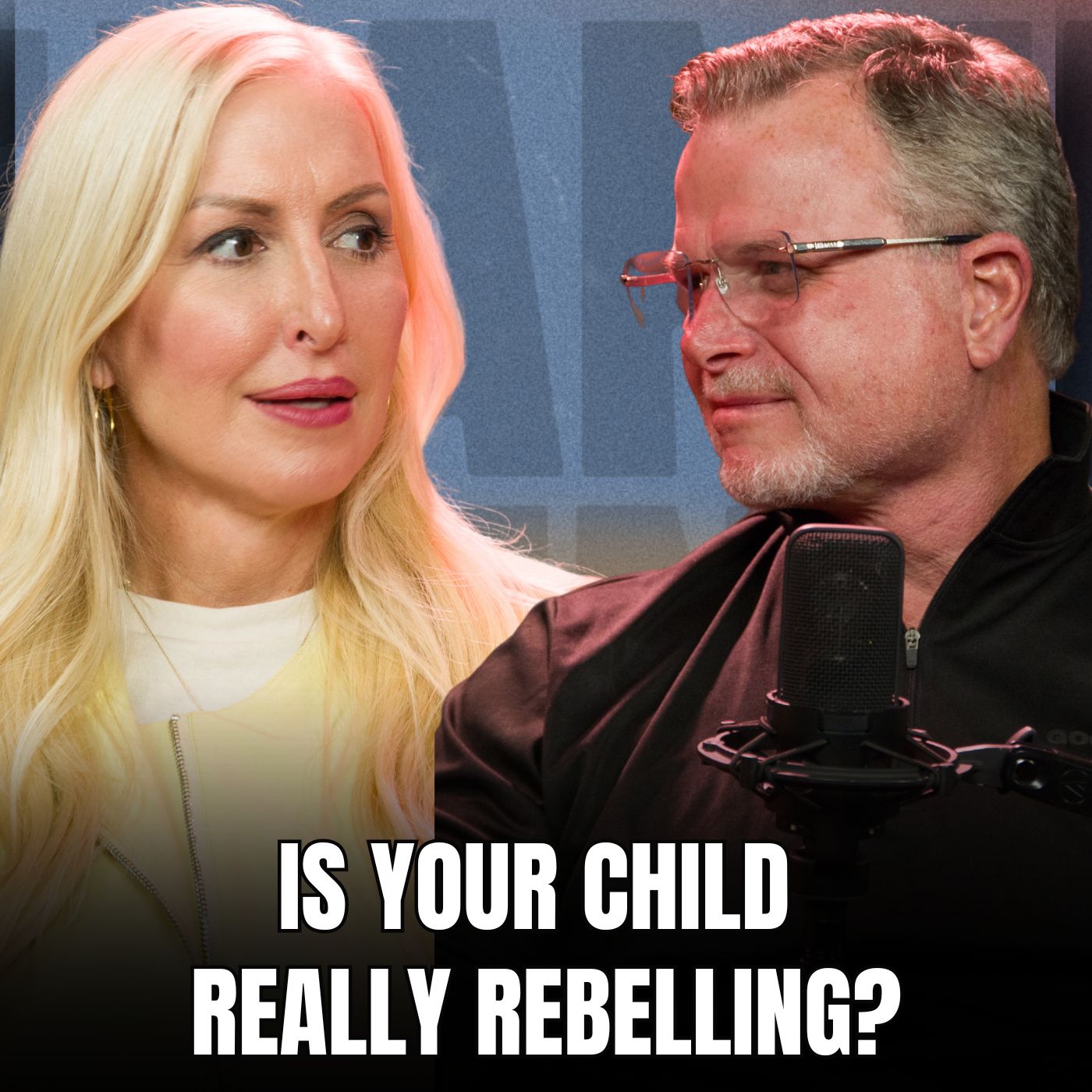
Steve and Mary Alessi unpack what rebellion really looks like in kids and teens, as they share why every child has a seed of rebellion that must be handled early, with wisdom and love—not fear or anger.


Are your kids talking back to you? Ignoring your directions? Giving you attitude?
Every child has a way of making their parents feel rejected and disrespected. But how do you know when it's getting out of hand? What are the signs that a child's behavior is crossing the line from misbehavior to a total rejection of your parental authority?
In this episode, Steve and Mary Alessi unpack what rebellion really looks like in kids and teens. You'll hear candid stories from their own parenting journey, as they share why every child has a seed of rebellion that must be handled early, with wisdom and love—not fear or anger.
You’ll see how bad behavior often hides deeper issues, from sibling jealousy to struggles with identity, and hear practical strategies for setting loving boundaries that restore, not just punish. Steve and Mary get honest about tattoos, piercings, and cultural pressures, challenging you to look past appearances and connect with what’s happening in your child’s heart.
Get ready to rethink discipline, communication, and why being proactive today sets your family up for a healthier tomorrow.
JOIN THE FAMILY BUSINESS WITH OUR NEWSLETTER
Sign Up for Our Family Business Newsletter and get more inside news from the Alessis + tips and strategies for a happier family!
Get free access to the newsletter
TEXT THE FAMILY BUSINESS DIRECTLY
You can connect with us via text to ask family questions and get updates on The Family Business!
Text FAMILY to 302-524-0800
CONNECT WITH THE FAMILY BUSINESS
- Follow Us on Instagram and Facebook
- Subscribe on YouTube
- Leave a review
MORE PODCASTS YOU'LL ENJOY
Listen to the Alessi sisters' daily devotional podcast
My Morning Devotional
Follow Our New Podcast with Mary Alessi and her twin sister Martha Munizzi
Watch The Mary and Martha Show
Join our family business every week as we talk about life, and help you build a great future with your family, no matter what business you are in.
New episodes are uploaded every Wednesday!
More Resources
Get your copy of the new book by Steve Alessi, “Forty-Two: A Guide to Finishing Well when You Thought You Were Finished”
Connect with Us on YouTube
Don't forget to LIKE and SUBSCRIBE to our YouTube channel!
Follow Us on Social!
Learn More about Metro Life Church:
00:00 - Coming up in today's episode
04:24 - Parental lessons on stealing
09:00 - Understanding child rebellion and guidance
10:24 - Understanding children's rebellion
14:25 - Addressing rebellious behavior in kids
16:59 - Parenting challenges and cultural shifts
19:19 - Reflections on parenting challenges
22:35 - Parenting and discipline balance
29:18 - Sibling arguments and resolution advice
35:57 - Teaching children discipline and values
43:00 - Discussing personal rebellion with parents
48:20 - Dealing with rebellious kids
Steve Alessi:
Let me tell you how I dealt with my four rebellious kids. Because rebellion is a big deal with kids and children today. And we're going to tell you how to deal with it on the next episode of the Family Business with the Alessi's.
Mary Alessi:
You're going to want to hear this one. We talk about tattoos, we talk about piercings, we go there and we even let you in on a little secret. Do I have a tattoo? You want to watch this one?
Steve Alessi:
Hello, and welcome to another episode of the Family Business with the Alessi. I'm Steve Alessi and I'm here today in the podcast booth with Mary Alessi.
Mary Alessi:
Again. Here we go.
Steve Alessi:
It's been a bit since we've been in here. Yeah. We've let other people sit in our seats and go ahead and pod arcasts.
Mary Alessi:
No one seats. They tried.
Steve Alessi:
Well, the good thing is, Mary, we are officially past 1 million views on YouTube.
Mary Alessi:
Wow.
Steve Alessi:
We're growing. Continue to grow. So if you're enjoying this, make sure you are subscribing, you are sharing, you are liking, and just help us get the word out, because maybe what we're talking about when it comes to family, because we know family is everybody's business, maybe it's going to be a help to someone else. So here's the deal. We're coming up on 250 episodes. That's a lot.
Mary Alessi:
Yeah.
Steve Alessi:
All right, so here's the deal. What do you think, audience? What should we do for our 250th episode? You tell us. Yeah, go ahead and let us know what you think. And we're going to go ahead and come up with some subjects that'll help us do just that.
Mary Alessi:
What do you want us to talk about? Yeah, we'll be happy to get in here and do it. It's, you know, it's also the 250th year of our nation.
Steve Alessi:
Yeah.
Mary Alessi:
How cool is that?
Steve Alessi:
That is very good.
Mary Alessi:
It lined up at the same time. So two 250 episodes. And we really want to know what they think about us. You know, I had somebody recently tell me that not only are they fans, but they. What was the word she used? They are highly dependent on our podcast for raising their kids.
Steve Alessi:
Right.
Mary Alessi:
That was such a huge compliment to know that people are waiting for an episode to drop to help them get through the season, they're in with their child and that they now, over like the last couple of years, they've applied so much of what they've learned and it's working. So that application of Knowledge.
Steve Alessi:
I'm glad you say that.
Mary Alessi:
That's pretty cool. Well, let me just say this last little bit about it. They were saying that their daughter started to lead them and came to church and got in the youth group and then they realized, wait a minute, we've got to lead her and the podcast and learning and soaking up this understanding and wisdom from us as parents and our, our kids who are in the podcast booth as well, sharing this information on raising families, that it has helped them tremendously. They, they credit a lot of their success in the last couple of years to the podcast.
Steve Alessi:
Well, it's funny because people will come up to us and they'll talk to us like they really know us. And I'm like, wow, we know you from more or less. And of course they're in our church and.
Mary Alessi:
Yeah.
Steve Alessi:
Or their friends that are on the street and they're actually listening to the podcast. So they know. Feel like they know us, which we like. Because this whole thing has been about how do we share like our struggles that or our challenges as a family with our listeners and what we've learned from it. Yeah, yeah, yeah. And these are things that you just don't share from a platform per se. But it's more intimate here in our podcast booth. So it's great that we could go ahead and encourage and be a blessing to others.
Steve Alessi:
And if you're again listening, you're liking it, please be sure to share it. Subscribe to our channel as well, because we want to continue helping others. Now, speaking of kids.
Mary Alessi:
Yes.
Steve Alessi:
We're going to talk about rebellion today. How to handle rebellion in our kids, whether it's children, youth, young adults, how do we do so? Okay, so. And the reason we believe it's so important to be able to do so is because it's, it could be a problem. If we don't get it soon enough and address it soon enough, call it what it is, then it's going to be a problem later on in people's lives.
Mary Alessi:
Yes.
Steve Alessi:
And it was like when I was growing up, my mom and dad told me I could never steal. If I ever steal shoplifted, it would lead to robbing banks in the future. So I was always afraid to go and steal a piece of candy or something from Kmart or wherever I was at the time because I didn't want something to happen later. And if it, it's about rebellion, it could be a seed of rebellion that if it's not dealt with, it can turn into full out rebelliousness in the future. And that rebellion Demonstrates itself, especially against authority. So we got to talk about this.
Mary Alessi:
And I think it's important for every parent to know that there is not a kid born to this earth that does not have a seed of rebellion. And I know we like to line our kids up and categorize them by, oh, not my daughter. She was never rebellious. Or my son was never rebellious. Somewhere along the line, somehow there is that seed in all of us that has to be dealt with. I think sometimes when we just assume it's not there. As a parent, we can be so shocked if it ever grows into something and we see that rebellion reflected in their lives.
Steve Alessi:
Well, I'm glad you say that, because rebellion is in every child.
Mary Alessi:
Yes.
Steve Alessi:
Come out of the womb, you know, with whatever they want. They're going to cry for their better right there. They're going to then get attention. We see it with our grandkids. If they're not getting attention because a new grandkids come into the family, that kid's going to do something to try to get our attention. Even sometimes if it's throwing a toy while we're sitting around a table talking and they get mad at their parents, so they reach over, grab the toy they're playing with and throw it at their dad.
Mary Alessi:
Yeah.
Steve Alessi:
So that rebellion is in each and every child. The question is, how are we going to respond as parents?
Mary Alessi:
Oh, this is.
Steve Alessi:
So are we going to do so in a mad way, an angry way that's going to create this fear in our kids, or are we going to do so with wisdom and love and be able to look at the child and think, okay, hey, I'm trying to form something in you for tomorrow, so let me consistently be able to address what's going on in you right now so that you're not rebellious.
Mary Alessi:
Yeah. And I will say that what I've seen with some moms and dads, too, but when a mom and dad are too passive about it and they see that rebellion, sometimes they respond in fear. Like, oh, my gosh, why is my child behaving the dark side? Where did that come from? And if you operate in fear as a parent, regardless of the scenario or the season you're in, you can lose real quick. So you can't operate in fear. That's why we say, expect your kid to behave this way. Go ahead and just anticipate it so that you can be proactive instead of reactive. Because when you're reactive and you see it because, oh, not my precious would never. Not my oh, never, there's not a Seed of rebellion.
Mary Alessi:
Okay, that might be true. I could tell you Christopher never had a seed of rebellion, but he was passive aggressive. So it showed up later in his life when he was always trying to keep score. Like, it's not fair. It's not fair. It's not fair. So it did not mean there wasn't something in there that had to be addressed. It just wasn't what rebellion might look like to you and me, where he was disobedient or he snuck out his window or whatever, or didn't listen to us.
Mary Alessi:
He was always obedient. But that doesn't mean that we didn't still have to kind of deal with some stuff. Cause he's a human kid, and they all have that little thing in there that has to be dealt with. His parents.
Steve Alessi:
Well, we have a fuzzy memory sometimes, especially as dads, of how we issues in the past. I think I was always very strong with the rebellion because I was afraid it was going to leak out somewhere later, maybe a little too strong. Right. But the point was here that it needed to be dealt with. It just couldn't be swept under the carpet or pretend like it's not something that is happening. So it does need to be addressed. Now, the question that we start with when it comes to rebellion, is rebellion more than just bad behavior in the long run? Is, is there something going on in our child that we can recognize as the adult? Somebody's got to be the adult in the room.
Mary Alessi:
Right.
Steve Alessi:
So we always attach rebellion to bad behavior.
Mary Alessi:
Yeah.
Steve Alessi:
And if there is that, yes, it's got to be dealt with. But is it always bad behavior? Is it something that's deeper, that's going on in a child?
Mary Alessi:
I think sometimes it is. I think we as parents, if we'll slow down even with this conversation, too. You know, like getting into the conversation about what is rebellion and what does it look like and the anger and all the manifestations of that in your kid. It's so good to just slow down a minute and look at your kid and know, is that normal? Did that just start? When did that start? And pay attention to your children. You know, you were making some videos this week of you and Marino. And we look at him in our car seat, our grandson, and we know now more than ever how fast that season goes. We know the opportunity we have to sow good seeds that teach him how to be obedient, that it reinforce what his mom and dad are teaching him. But as grandparents, we get to do it a little bit slower.
Mary Alessi:
And we're watching Our kids at that rapid pace that we went through. And. And you can. You can kind of miss the something happened that's causing this behavior. And instead of just reacting to the behavior, it's always good to go back and say, okay, wait a minute, when did this start? Why did it start? Because. And to. Based on the seasons of your life. They say that rebellion in a teenager is always somewhere.
Mary Alessi:
There's injustices that they've had to just accept.
Steve Alessi:
So in child. In children, it's one thing, but if it's not correct, corrected somewhere, then it can become something else in a team.
Mary Alessi:
I think so. And when a child is dealing with an injustice where maybe they felt like it's not fair in the home or there's something that happened at school that they feel isn't fair or they're overlooked or they're not being treated well, a lot of kids won't come home and tell their parents. Some will. But then they start acting out in rebellion, and mom and dad might not know how. They only deal with the fruit of that, rather than the root of it. And it's important to be able to stop and say that sometimes rebellion is more than just bad behavior. There is something going on in their heart, and it might just be something minor, but it's our responsibility as parents. I say this, and we did this with our kids.
Mary Alessi:
That nighttime routine, when you get them in bed at night, right before they go to sleep, that hour, that 30 minutes before they nod off, talking to your kids about the day. Hey, what's going on? Are you doing okay? They are. Their defenses are down there. They've had their bath. Their day's over. They know they're trying to slow their brains down. That is such an incredible opportunity for every parent not to miss that. If you missed everything else during the day, don't miss that.
Mary Alessi:
And I can remember as the kids started to get a little older, and I feel something was off based on their behavior. And I would go, I'm going into that room and I'm going to go, hey, what's going on? Are you feeling this? Did something like that happen? And nine times out of 10, they would open up, and the behavior that they were manifesting wasn't about the behavior. It was something that had happened.
Steve Alessi:
Yeah. Young dads, it's so good that they can slow down, not get so overwhelmed with all of their responsibilities, that when they see rebellion in their kid, they. They act out of rage. That's what my challenge was, because I was always aggressive. So I would see aggression In Chris and I would meet aggression with aggression. But yet now that I'm in my 60s and seeing the little guy, that's Marino or even Matthew, being able to see in them that, you know what? This is more than aggression. All right? He's acting out something.
Mary Alessi:
Right.
Steve Alessi:
So for Marino and Matthew, we notice this with the grandchildren, that the boys in particular act totally different in different environments. So when we get the full attention to Marino.
Mary Alessi:
Yeah.
Steve Alessi:
Marino is, like, perfect. Perfect.
Mary Alessi:
Yeah.
Steve Alessi:
And he's coming over, he's talking. Sure, he's a kid. He'll still leave things laying around, but he's talking and he's. He's getting our 100 attention. But then you bring Matthew into the room.
Mary Alessi:
Oh, my God.
Steve Alessi:
And they're adorable as all get out when they first meet each other, because they go over, they hung each hug each other, they want to play with each other, but they. Then you notice now, all of a sudden, Marino and even Matthew, they take on a different behavior.
Mary Alessi:
They start competing.
Steve Alessi:
They start competing. So when. When you're in that kind of environment, it's so good to be able to step back and. And move away from the behavior for a minute in the child and be able to say, okay, why are they acting this way?
Mary Alessi:
Yeah.
Steve Alessi:
So instead of it just being labeled as rebellion, maybe it's jealousy.
Mary Alessi:
Sure.
Steve Alessi:
Competition. They don't know what to do with those feelings just yet. But it's so good as a parent to be able to help the child walk through those feelings. Now, does it also manifest itself in, you know, youth and teenagers?
Mary Alessi:
Of course.
Steve Alessi:
Yeah.
Mary Alessi:
Yeah.
Steve Alessi:
And that's where you got to be so careful, because so many of our youth and young adults today are dealing with peer pressure from the culture.
Mary Alessi:
Oh, it's terrible.
Steve Alessi:
They. They feel like nobody's really taught them yet. They haven't learned how to. To stand up on their own for what is right.
Mary Alessi:
Right.
Steve Alessi:
And they don't have the strength because they still want to be complimented and receive and accepted by everybody. So they find themselves going with the flow. And the culture that's around them is very rebellious.
Mary Alessi:
Very rebellious.
Steve Alessi:
In our society today, there is a rebelliousness that goes against the norms, goes against the rules and the laws that's in many in our culture. So our kids pick up on it. Now, if they pick up on it, does that mean they're rebellious, rebellion, rebellious, or are they just acting in a rebellious way? So we got to step in and say, hey, listen, that's not appropriate. That's not how we live our lives. We don't Operate that way or act that way. There's a big difference between somebody who was rebellious and somebody that is just acting out with rebellious attitude or actions. And it's up to us to be able to help the kid navigate through that.
Mary Alessi:
I think it's so important as parents to be confident in parenting and assume, just assume that your child will have issues with things that you had issues with. If you dealt with insecurity, they will too. If you dealt with lack of confidence, if you were jealous, if you had issues. That's part of being a young person. Where we go wrong is when we think that somehow our child is exempt from all that.
Steve Alessi:
We just lost our TV behind us.
Mary Alessi:
Wow.
Steve Alessi:
Keep going.
Mary Alessi:
Okay.
Steve Alessi:
Ooh, Little sideways. No signal.
Mary Alessi:
This TV's being rebellious. Look at that. Something's happening.
Steve Alessi:
We'll fix it.
Mary Alessi:
So I think that with. With parents, we put so much emphasis on the child and the rebellion in their hearts and getting nervous about that and how we. How do we judge that? How do we decipher that? You said it. Are they being rebellious or is something happening? Okay, well, it's all in the same.
Steve Alessi:
Yeah.
Mary Alessi:
Because if they're being rebellious. Did we get it? No. Now it's a palm tree.
Steve Alessi:
We're losing lights in here too.
Mary Alessi:
Oh, boy. Okay, we'll stop.
Steve Alessi:
Oh. And what happened?
Mary Alessi:
Computer is.
Steve Alessi:
Are we still recording?
Mary Alessi:
We are still recording.
Steve Alessi:
Well, keep going. Let them work around the can. Keep working.
Mary Alessi:
I can turn it off because I don't think it's going to come back off. But if I touch it, it might turn off. Let's not.
Steve Alessi:
Go ahead.
Mary Alessi:
So. Might even be able to Photoshop it later.
Steve Alessi:
Oh, okay. There we go.
Mary Alessi:
We're going to Photoshop. Look at us. Okay, so I think it is really important for us to just. I don't mean to assume bad behavior on your kid. That's not what I'm saying. We all wanna assume that our children will kind of skip over some of the disadvantages we had. Or because we're good parents, they're not going to have a chance to be rebellious. Right.
Mary Alessi:
And then they are. And we go, oh, my gosh, what's going on? Are they rebellious or is something happening? I do think that's kind of one in the same, that if they're showing signs of some kind of rebellion, something's going on. And if you back up as a parent and. And you just get ahead of that rather than wait for it to come and slam into your front door with your kids. One of those things is emotional distance because we're talking about culture and our culture, your and mine raised by parents of the 50s was very different, the expectations than the culture today and how parents raise their kids. So what we deemed as disrespect. I would never, never have said that to my mother or my father. We're hearing kids talk to their parents that way, and it just.
Mary Alessi:
We go, oh, my God, how do you get by with that? And there's a line between being able to joke and having just more of a freedom in your family where you can tease and make fun, and yet you don't cross the line.
Steve Alessi:
Yeah.
Mary Alessi:
And I know that, that that's kind of hard. I would. Wouldn't you say that your mom and dad were a lot more stringent about what they saw as disrespect, as maybe you and I were?
Steve Alessi:
Yeah, well, I think I took their lead in some areas, but.
Mary Alessi:
Yeah, you did. You did. And I was a little bit more relaxed because my dad was always joking, always joking, always having a good time. So I feel like we blended that well together. But the emotional distance that we allow or the disrespect that we allow, the words that either. This is what I mean by emotional distance. They're just allowed to come home and go in their room, close the door, and you have no idea what's going on in their world. They.
Mary Alessi:
That's disrespectful.
Steve Alessi:
Sure.
Mary Alessi:
That's wrong. And that leads to rebellion. Yeah, because now.
Steve Alessi:
But is that behavior already rebellious?
Mary Alessi:
Yeah, because it's disrespectful.
Steve Alessi:
So with children, what do they do when they rebel? They're. They're throwing tantrums, scream and screaming, they're hollering, they're testing the boundaries, constantly wanting to know where they. They can live without, you know, getting in trouble. And then they manipulate a little bit. That's. That's what changes children are naturally doing. Then in teenagers, it gets a little different because now it's about secrecy, it's about disrespect. It's about this emotional distance that you talk about.
Steve Alessi:
And I'll tell you what, as a grandparent today, this is where I go back and think, I am so glad I don't have to take a child anymore. From being a child when they're children to when they're all of a sudden to teenagers, that is a lot of work. We think changing diapers gets overwhelming. Having to deal with attitudes, constantly having to figure out, okay, you got to get in there and study and you got to get through school, your grades going to all of those school events and meeting with those teachers and then having to juggle what the kid is going to, what sports they're going to play or, or what kind of hobby they going to pick up. And then you as a parent, you're the one that's still got to figure out how do I live my life? I know, let me tell you, it is not easy.
Mary Alessi:
It's not.
Steve Alessi:
But I'm so proud of the people that are doing it right.
Mary Alessi:
I know.
Steve Alessi:
That are trying it, giving it their best. They're not stopping at one child, they're going for two. And then they're crazy enough to try the three. And some of them, like you guys had four. We're going to try four. And then a friend of ours has a child who they had twins trying to get to number four. And so they ended up with five kids, two full time careers, having to manage. I take my hat off to these
Mary Alessi:
couples today because they've got some years ahead of them. They do, but you know, it's no perfect experience. There is no perfect. We are people. Your kids are people too. They're human beings. We do the very best we can. But I will say that there are some guardrails, there's some really freeing just resources of knowing who you are.
Mary Alessi:
Because a lot of times with kids, they'll bring out whatever seat of rebellion's in you. And you realize, man, I can be disrespectful. I speak in a way that I shouldn't because I can't ask them to do something that I'm not willing to do. So that's the thing that I always joke with the kids. I went, this whole thing with kids, that's all God's plan. It's really about you. God's trying to get to you, to get your heart right. Because I could say that about raising our children.
Mary Alessi:
There were more, more moments of reflection where I was disciplining them about things that they did or said or behaved in. And I'm like, right back at you, Mary, because you're, you know, you got to deal with yourself.
Steve Alessi:
You were rebellious.
Mary Alessi:
Maybe not rebellious, but there's a little rebellion in you. Not anymore.
Steve Alessi:
I beat I, I mean, I, I, I husband it out of you.
Mary Alessi:
Yeah, right. You are, you are the reason I live.
Steve Alessi:
There you go.
Mary Alessi:
Look at me.
Steve Alessi:
Oh my gosh. So proud of your advancement.
Mary Alessi:
But you know what?
Steve Alessi:
You've come a long way.
Mary Alessi:
I know you are. You restored me back to my former glory. You know, when it, when it comes to raising the children, if you are honest and open and you want to make sure you're doing things right. You do start to see yourself and your kids and your kids and you. Meaning you realize that you can't be a hypocrite, that they'll call you on that faster than just about anything.
Steve Alessi:
Yeah, your kids will.
Mary Alessi:
Your kids will. And then it's disrespectful. You're not going to call me out. How dare you. It's disrespectful. But maybe there were. Maybe there's something about that that is correct. And if not that we grovel to our children.
Mary Alessi:
And I'm all for. I agree with apologizing, but I don't think that you should get in a posture of being the apologist to your child. I think that can even breed even more disrespect and rebellion. Because as a parent, they've only got one mom and they've only got one dad. That authority figure, that rule keeping, these are the rules. Within those rules, we're humble, we apologize, but we will not be in a place of disrespect for one another. That's not going to happen.
Steve Alessi:
Yeah.
Mary Alessi:
In this house.
Steve Alessi:
Right.
Mary Alessi:
We're not going to tolerate that.
Steve Alessi:
Right. Well, when it does come to trying to respond to a child that is rebellious and a teenager, I. I do think we've. We've got to manage the anger issue.
Mary Alessi:
Yeah.
Steve Alessi:
It is something that if. If they can pull, you know, the. Pull your. Your strings and get you angry, they feel like, in a sense, they won.
Mary Alessi:
Right.
Steve Alessi:
And so a parent has to stay on the right side of this and not always come across from a standpoint of anger because it's. If you're in a restaurant or something, I know how embarrassing it can get when your kid all of a sudden throws a fork.
Mary Alessi:
Right.
Steve Alessi:
And you want to deal with that right there. And you're not dealing with it because they're doing something bad as much as you're dealing with it because you're trying to protect yourself from embarrassment. So what does that lead to? It leads to you getting angry. So when it comes to correcting, it can't be a retaliation. It has to be from the standpoint of, hey, let me show you what the right behavior is here. We don't do that.
Mary Alessi:
Yeah.
Steve Alessi:
And that's good to be able to say we don't. We set the parameters in place at that point that we have a different expectation in this household.
Mary Alessi:
Right.
Steve Alessi:
So you may see other people cursing, you may see other people getting mad and losing their temper. You may see other people, you know, just acting out, rebellious, but not here.
Mary Alessi:
Right.
Steve Alessi:
And it's up to us as a parent to be able to let that be known. So when our correction comes, it's like, all right, this is restorative. This is not how you're going to act.
Mary Alessi:
That's right.
Steve Alessi:
Let me show you what real behavior is. So we correct it from that standpoint, and I think from a parent. Our volume speaks louder than even the words that we speak.
Mary Alessi:
Right.
Steve Alessi:
We have to be calm, but at the same time, be firm.
Mary Alessi:
Be firm.
Steve Alessi:
We address it. This is not acceptable. That's right.
Mary Alessi:
But if you stay in a place of anger, and you're always angry and intense and reactionary, you do not move the needle in your kid. Because all they heard was, you're yelling, you're screaming. They're not really registering. And one of the things that I like, that I see some young parents do today that are strong with their kids, is they'll say, I see Rochelle do this. I see Steph. And they'll go, look at me. Look in my eyes. Look in my eyes.
Mary Alessi:
And they'll get down and get firm. Scary, scary. Firm, but not loud. Firm. And look at my eyes. And I just see those toddlers start to, like, humble themselves, because that's scary. Sometimes that's scarier than just being yelled at, because you're just. You're being yelled at.
Mary Alessi:
It's not purposeful. It's not really making.
Steve Alessi:
It's a quiet storm that you're afraid of something going to come out of my.
Mary Alessi:
It's the quiet part. But you know she's coming for you.
Steve Alessi:
Yeah.
Mary Alessi:
That's when you know you. You got it. As a parent, when you're not afraid to be strong and sometimes you're going to yell. That is normal. If you get out of control, get back into control. Get control again. You're the parent. Get back into control and then just fix it.
Mary Alessi:
Before you go to bed that night, don't let the sun go down. Hey, son.
Steve Alessi:
Yeah.
Mary Alessi:
I want to tell you something. I love you, but I cannot tolerate this because I love you, and I want to know that you're in a good place. Is there anything going on you can tell me?
Steve Alessi:
Yeah.
Mary Alessi:
You know, let me say this one last thing. I don't think that you should, as a parent, ask them to tell you what's going on. I think you should tell them what's going on. I really believe you should say, I'll bet you anything. Honey, is it a girl that's hurt Your feelings did you have. No. Is it another young man at the school that made you feel bad about yourself? No. Did a teacher yell at you? Just start listing the things.
Mary Alessi:
They're kids. It's going to be one of those things. It's either going to be the opposite. Opposite sex ignored me. I did not do well when I wanted to do well, and I felt like all eyes were looking on me. So it's either embarrassment.
Steve Alessi:
Yeah.
Mary Alessi:
Somebody rejection.
Steve Alessi:
Yeah.
Mary Alessi:
Or defensive.
Steve Alessi:
Yeah.
Mary Alessi:
That's it. There's not much outside of those things.
Steve Alessi:
No. I appreciate that. And a parent needs to side with their kid in that situation. I, I understand it. Well, it was yesterday we had to deal with again, Matthew Marino because they got into a fight over something and we get to watch this. And I never wanted my son to fight. I always want Chris to talk his way out of a fight.
Mary Alessi:
Meanwhile, guys, they're two and three.
Steve Alessi:
Yes. But I love watching these two in their dynamic because it's like they're learning.
Mary Alessi:
Right.
Steve Alessi:
How to deal with the tough world. So we heard all about it that there all of a sudden was a screaming and crying going on. And it was because Marino, who's the bigger of the two, just got tired of the pestering of Matthew, who is a little tougher in some areas, and he just turned around and pushed him. So I sat him down on the, the table together, had them both look at me, which they wouldn't. So I had to grab their chin, have them look right at me and have the conversation with them.
Mary Alessi:
That's good.
Steve Alessi:
So then later in the car, I have Marino with me and I'm driving alone. And I said, hey, tell me about today. What did you do? And he's trying to describe everything that happened, where he pushed him with his two hands. He. He pushed him. And I couldn't understand half of what he was saying, of course, but to hear him try to describe what it was was good. Because, Mary, they, they should talk it out.
Mary Alessi:
Right.
Steve Alessi:
Let's, let's get to what happened that caused you to act this way, because there is an underlying current. It's. If we get it young enough in kids, then it doesn't become a root. It's a seed that we have to deal with in children so that by the time they're teenagers, it's not a root, so that by the time they're young adults, it's not a full fledged tree of rebellion that is growing in their life.
Mary Alessi:
So let me, let me, let me speak to this too.
Steve Alessi:
Yeah.
Mary Alessi:
Sometimes we just want it to Stop, because I said so. And it's not always going to stop because you said so. There are times you have to get sit them down like you just described with Matthew and Marino. Yeah, they're two and three. Oh, they're little. They won't know. Well, when do you start? Yeah, when do you sit them down and start sowing the little seeds calmly? Their grandfather, hey, guys, we're not doing this. There.
Mary Alessi:
There is wisdom in that, that gets ahead of more problems that they might have, that then something happens as they're a little older, and now they don't want to play with one another because they're hurt and they're mad. But sitting them down and going, hey, guys, come on, what's going on? We love each other. I have to tell this story because I'm just remembering it. When the kids were all young and Chris was probably 12 or 13, and that means the girls were four years younger. Four years. Anyway, they were small. They were all in the car, and I was driving them home, and they all got into a fight. It was really bad.
Mary Alessi:
I'll never forget this. It was really, really bad. Lauren, who's our third child, usually stayed out of it, except when she would get mad, she knew how to zing them with just one mean insult, and it would just. She never raised her voice. She was just stealth. And boom. And they were fighting on the way home, and I was so upset, and I had asked them to stop, and I begged them. They wouldn't stop.
Mary Alessi:
They wouldn't stop. And they were disrespecting me. Now they weren't listening at all. And I remember I pulled the car over and I looked in the rearview mirror and I said, guys, do you really like hearing me like this? Because I lost it. I had had it. I was fed up. I said, why are you doing this? I didn't say to me, okay, because that's like that martyr, why are you doing this to me? I remember my mother used to say that I hated it. Like, we're not doing it to you.
Mary Alessi:
I'm doing it to her. But I remember stopping and looking in that rearview mirror and going, what are you doing this for? Like, what is this? I just picked you up from school. You haven't seen each other all day. How are you already in a fight? I mean, come on, guys, this is ridiculous. So I went, chris, look at me. And looks at. Looks at me in the rearview mirror. Do you like seeing me get this upset? Do you really like it? Because you could prevent this? And he's like, no, ma'.
Steve Alessi:
Am.
Mary Alessi:
I went, stephanie, look at me. Do you like this? And I mean, I'm upset. Do you like seeing me this way? I want to know. No, ma'.
Steve Alessi:
Am.
Mary Alessi:
So I. Gabby was the little one, and Lauren was looking down. So I went, gabby, what about you?
Steve Alessi:
No, ma', am. I don't like it.
Mary Alessi:
And I went, all right, Lauren, you're quiet. What do you think? And I just got as my witness. I said, do you like seeing me this upset yelling? And she looks up and deadpan, she goes, well, it depends. I said, excuse me, what does it depend on? And she goes, well, it just depends on who you're yelling at. Like, I could care less that you act this way. If you're yelling at them, just don't yell at me. But if you want to go crazy and go bonkers, go ahead. As long as it's pointed at those idiots, just don't point it at me.
Mary Alessi:
And I thought in that moment it was just what was crazy. And I was so upset and I felt so disrespected. I did slow down and deal with it one at a time. And before we knew, we were all cracking up because it was such a witty, funny thing to say. But it took. It took all that pressure off, and I just went, okay, whatever. And I put us in drive and I drove us home. Because sometimes they're just frustrated with each other.
Steve Alessi:
Yeah.
Mary Alessi:
And it's really not pointed at me. But I still have to teach them that we can't be disrespect one another
Steve Alessi:
as long as that is not rebellion.
Mary Alessi:
It cannot be rebellion. And is. You have your moments where you're going to lose it, but then we're going to talk about it. Because correction has to be restorative.
Steve Alessi:
Yeah.
Mary Alessi:
And it. Because if you don't restore with correction where you reach a resolve, it can't. That can lead to rebellion.
Steve Alessi:
No. I'm glad you say it that way, because punishment is. Is about more or less. You made me angry.
Mary Alessi:
Yeah.
Steve Alessi:
Now I'm going to punish you for making me angry. But when you see the behavior disciplines, like, wait a minute. I just love you too much to leave you the same.
Mary Alessi:
That's right.
Steve Alessi:
I can't. I can't let you act this way because as an adult, it's going to hurt you later.
Mary Alessi:
It's not helping you.
Steve Alessi:
No. So let me ask you this. How many times did you and I get in fights over the rebelliousness of our kids because we both dealt with it differently.
Mary Alessi:
Oh.
Steve Alessi:
Oh.
Mary Alessi:
Well, in those pre adolescent years, a Lot. A lot. Because you just wanted them more to listen or you would hear disrespect that I didn't hear.
Steve Alessi:
Yeah.
Mary Alessi:
But there was times where I felt like the girls were disrespectful and you gave them a pass. You were way harder on Chris and I was easier on him, but I wanted to be harder on the girls. And you did. You weren't as hard on them. And I just. Oh, that frustrated me to no end. But learning now, as all these years have gone by, that those are just things you get through. You love each other and you work it out.
Mary Alessi:
But the point is, you're both going to have strengths. You're both. Both going to have weaknesses. Sometimes you put your foot on the gas or on the brakes, but you're a good team to work it out. Raising kids is not easy.
Steve Alessi:
No, it's not. It's not.
Mary Alessi:
And you need one another. You need one parent to be more intense.
Steve Alessi:
Yeah.
Mary Alessi:
And one to be more laid back. But you got to work together. It's not either or. It's both. And you need both those qualities.
Steve Alessi:
Well, I wish if we looked at it from a discipline standpoint, because discipline is a good word.
Mary Alessi:
Yes, it is.
Steve Alessi:
Right. Because it means one, you can't behave this way. This is the way you should be behaving consistently.
Mary Alessi:
Yes.
Steve Alessi:
So it's a discipline. When you sit there and deal with your kids this way, which. When it is a discipline, then there's clear expectations. You're able to say to the child, this is how we behave. This is not how we behave. It's. Then consistency is very important because you want to make sure that you're addressing it. If you see it, you're on top of it on a regular basis.
Steve Alessi:
You're setting the boundaries in place. Then again, there's affection, there's this, this. Okay, we've got correction. But now where there's going to be this acceptance. Come here. I love you. Let's work through this. This is.
Steve Alessi:
You're not bad. This is just not good behavior on your part. So we're able to then create an atmosphere where there's restoration, not this rejection that is in place when kids are acting in a way that the parent has to correct. And that is so important to at least see it for what it is. Doesn't mean they're always bad. It just means there's a seed of rebellion. Let's deal with it.
Mary Alessi:
Yeah, I think too. And that is so important in this generation, watching some of the younger kids come up. Parents are so Indulgent. They give so much. Sorry. That's okay. They give so much to their children. It's like, I had this kid.
Mary Alessi:
Now, what life, what magical life do they want to live? And I'm going to give it to them. And then they're. Maybe that leads to rebellion because you're kind of creating a little bit of a. An identity issue with your child. Because they think the world revolves around them.
Steve Alessi:
Yeah.
Mary Alessi:
And you have to be. You know, that's why discipline matters more in childhood than just giving your kids the farm. Finding that healthy balance of really showing them that these are privileges that they have. And the minute they're disrespectful and you see that rebellion in them, because the more exposure they have to the outside world and to people that aren't of your value, you're going to have more problems. That's just more seed that's going to get sown in their hearts. So you've got to monitor that and be mindful of that. How many seeds do you want to have to keep plugging out?
Steve Alessi:
Right.
Mary Alessi:
And so much you can eliminate by protecting their environment.
Steve Alessi:
Yeah.
Mary Alessi:
One of those environments is. And we've talked about this on podcast before, but I. We harp on it, too. Is video games too young?
Steve Alessi:
Yeah.
Mary Alessi:
You know, you're. Here's what you give your child. You give your son. Mostly. Mostly sons. But girls are into video games, too. Now you're telling them, here's the keys to your kingdom. You can go in there and play with people, play on your video game.
Mary Alessi:
Not have to come out and talk, not have to communicate with others, not be social, not contribute to the house. You have this time in that room that I know nothing about, that I'm not a part of that I'm not in this with you. Now, if you love video games, then you play with your kid.
Steve Alessi:
Yeah.
Mary Alessi:
You play with your child. And when you don't have time, they don't have time. But we talk about rebellion, and I get it. It's not just in them all the time. Sometimes we could create environments that stir that up in them.
Steve Alessi:
Yeah. And you know, that in itself is okay. Is for some that are teenagers, teenage rebellion is sometimes this identity warfare. Who am I?
Mary Alessi:
Yes.
Steve Alessi:
And I see it with kids that put off this image of being rebellious when the truth is they're not.
Mary Alessi:
No.
Steve Alessi:
Their hearts are so pure.
Mary Alessi:
Yeah.
Steve Alessi:
Their hearts are in the right place, but they look rebellious and will then start to take on a rebellious attitude because they're just trying to find out,
Mary Alessi:
who am I that's right.
Steve Alessi:
Where do I belong? What am I here for already at such a young age? And that's where a parent is. Can provide so much direction for them. That's why I think the scripture says, train up a child in the way that they would go.
Mary Alessi:
Yeah.
Steve Alessi:
Because they need the help on the identity aspect. Who are they? Remember years and years ago with Christopher in his hair, which quite frankly, we've had problems with Christopher in his hair forever.
Mary Alessi:
He looks good.
Steve Alessi:
I guess it was those early haircuts for sure. But you remember when he would not cut his bangs because he, he had an acne problem.
Mary Alessi:
Right, right. On his forehead.
Steve Alessi:
On his forehead. So he wore those bangs so long like a little shaggy dog.
Mary Alessi:
Oh, it drove us crazy.
Steve Alessi:
And it drove us crazy. Well, it got to the point where I can look at it and think, okay, you're in rebellion here. Cut your hair, man. I've told you 10 times, let's get your hair cut.
Mary Alessi:
Yeah.
Steve Alessi:
And he's like, no, no, I don't want to. I like it, dad. So it could be perceived as rebellion on his part.
Mary Alessi:
Right.
Steve Alessi:
But in reality he was dealing with something that was affecting his identity. And it's good for a parent to see.
Mary Alessi:
Yes.
Steve Alessi:
Let me look past sometimes this behavior, what's going on in the heart. A lot of men don't do it because we just don't think long term like that. We don't have the patience for that nonsense as we would call it. Cut your hair, doggone it. Come on. We're going to the razor right barber right now. We're going to cut that head, clean up all its hair. You know, we'll do that because we don't want to put up with the nonsense.
Steve Alessi:
But a woman can help us.
Mary Alessi:
Yeah.
Steve Alessi:
And a dad needs to pump the brakes a little bit because maybe it is something that's a little deeper. As we know culture is trying to define our kids.
Mary Alessi:
Yeah.
Steve Alessi:
That's our job as parents.
Mary Alessi:
It is. And I. And let me just throw this in. I think kids instinctively believe that your dad and your mom is supposed to know what you're feeling. They don't have the mindset to go, my parents don't understand that I'm struggling. They don't know that's an adult. Most children are wired, if not all children. I know I was that I just assumed my parents were right, that they knew me, that they could understand my deepest, darkest pain.
Mary Alessi:
And so you take that boy and you go shave his head. And he's more angry than ever before. And it has Nothing to do with his hair. It has everything to do with the fact that, dad, you were impatient and you just cut his hair off. But he's hurting. He's embarrassed. And how hard is it? Sometimes it's hard to stop and go, come here, son, I know what you're doing. I was in high school too, and I know that's hard, but let me tell you, just trim it a little bit, you're going to look so much better.
Mary Alessi:
And not make it a bone of contention or a point of disobedience. It's not always that. That's the point I think you're making that's so important. Sometimes it's a reaction to something that's deeper. And your kids will get angry. A seed of anger will grow in them because that's another injustice. How come you don't know I'm hurting? You're my dad. You're my mom.
Steve Alessi:
Okay, big question. This is going to stir it up. How come not one young man or young woman in our family has a
Mary Alessi:
tattoo or wanted one. They didn't even want one.
Steve Alessi:
Has an earring. The young man. Is that a sign of rebellion? We're going to stir it up now because I personally think it is. I think it comes from a seed of rebellion. Something happened somewhere that said to that young person, anti normal. I'm now anti normal. I'm just not going to go with the normal flow of society. I'm.
Steve Alessi:
I'm leaning in to something that's a little different. And so I need this earring or I need this tattoo.
Mary Alessi:
Right.
Steve Alessi:
To show that I'm different. And it could be hurt from the past.
Mary Alessi:
Right.
Steve Alessi:
It could be lost love from the past that created this void in a person.
Mary Alessi:
Right.
Steve Alessi:
That still in society and in certain environments, that is perceived as a sign of rebellion.
Mary Alessi:
Yeah.
Steve Alessi:
Now we've got law enforcement today where at one time you could not have a tattoo. Now you've got law enforcement officers, both male and females, with sleeves.
Mary Alessi:
Yeah.
Steve Alessi:
That of tattoos.
Mary Alessi:
Pastors with tattoos.
Steve Alessi:
Oh, my Lord.
Mary Alessi:
Lots of pastors.
Steve Alessi:
Yeah. And that's a whole nother subject. But even that, I think sometimes comes out of a measure or a seed of bitterness. What I'm. I'm rejecting normal values. I want to be perceived as one of the group that's affected negatively by society and is going through it. So I got to identify with that. Is it rebellion? And if it is, you know, what do you say to your kid when they want to put an earring in? That your young man wants to have
Mary Alessi:
an earring So I don't know that it's. It's under the definition of rebellion. Like we might put climbing out the window and disobeying your parents, because there's parents that are like, cool, you want it, go get it, you deserve it, you want a thing. But I. So I think we want to define that word when we say it is a type of rebellion, maybe from the world, maybe from a very tight, more strict upbringing. So in my fight against that, my parents were so strict and the. Whatever or the church I go to, so strict, I'm going to go get earrings or I'm going to go get. And yeah, it's like a little bit of a stubborn, I'm going to go do what I want thing.
Mary Alessi:
And it just says that. It says that. And so here's my thing about colored hair, my thing about tattoos, all that. It's a cover up. Why are you trying to cover up what you already have?
Steve Alessi:
The bangs, the whole thing.
Mary Alessi:
I think that it is a way of reacting. And now you can't call it rebellion because the culture, it's so filled with people with tattoos that it's the norm now. It's not even going against culture. You know, it's not for the hippie and for the biker like it used to be. Everybody's got them, so they got to come up with something else to be rebellious with. But I think that most people that get tattoos. Most, I'm not going to say all. Most.
Mary Alessi:
As time goes by, if they got them young, they regretted it.
Steve Alessi:
Yeah.
Mary Alessi:
So why? Because when they got them, it was in some kind of pushback or cover up from the world they were living in. Maybe it was minor, maybe they didn't even think it was that big of a deal, but they regret it. They take the earrings out, they try to get the man. I wish I had never. Why? Because the truth is at the heart of all of that is immaturity. It's just being immature and not really counting the cost. Yes, that comes with childhood and it comes with teenage angst. I understand all that, but I remember when we would talk about that as a family.
Mary Alessi:
I mean, nobody in our generation in the 80s were getting tattoos.
Steve Alessi:
But not true. They did. Remember Alan? Alan, he was the youth pastor who was in my college. My buddy.
Mary Alessi:
Yeah, but.
Steve Alessi:
And Alan had tattoos here and he came over to your church, he was a youth pastor.
Mary Alessi:
Trying to get him off.
Steve Alessi:
But he was thinking in college, using Clorox and Bracket.
Mary Alessi:
Oh, it was terrible.
Steve Alessi:
He was rubbing that thing off and getting all scabby trying to get the thing off back in the day. So there were guys then, but they were bikers.
Mary Alessi:
He was a biker. That's my point. Yeah, that's my point. They were, like, what we called rough neck. So they were running with the. The bad guys.
Steve Alessi:
That was before Christ.
Mary Alessi:
And it was before Christ.
Steve Alessi:
Bc.
Mary Alessi:
This was me. Bc.
Steve Alessi:
Bc. Before Christ.
Mary Alessi:
And then he was over scrubbing that off.
Steve Alessi:
He saw it as a part of his old rebellious ways.
Mary Alessi:
He did. He did.
Steve Alessi:
That was rebellion. And he wanted to get it right.
Mary Alessi:
Yeah. And. But now culture's changed, and we don't see it that way. So what I would say is, if you are listening and you don't see it that way, that's your right to not see it that way. But when your kids are asking for it, just stop them and say, what for? Let's. Let's just dive a little deeper before you do something so permanent on your body, before you have time to really contemplate it. Is this something you know, you're 16. You really need this right now.
Mary Alessi:
I know a lot of parents say their kids can't get tattoos till they move out or till they turn 18. Fine. But prepare your kid. Whether it's a tattoo or whether it's dating the wrong person or whatever the situation might be that they don't permanently mark up their lives because of a season of rebellion. Let's just use that word. Or stubbornness or whatever, or disobedience or wanting to go against the norm. Like, what is it you're trying to cover up or act out against that. You would need that.
Steve Alessi:
Yeah.
Mary Alessi:
And if. If that's the case, and we know it's. We all know that that's kind of an edgy thing. Because if we thought it was cool we let our girls get little earrings, why don't we let them get permanent tattoos? Because we know in our heart of hearts that's not really. Yeah, that's not for children.
Steve Alessi:
Right.
Mary Alessi:
So just something to think about. Putting your hat and smoke it. I think it's pretty.
Steve Alessi:
Pretty interesting conversation in your hat and smoke it.
Mary Alessi:
That's a phrase. I don't know. Look it up.
Steve Alessi:
Look it up. So you have a tattoo?
Mary Alessi:
I do not.
Steve Alessi:
No.
Mary Alessi:
No.
Steve Alessi:
You're not tattered up.
Mary Alessi:
I do not have a tattoo.
Steve Alessi:
Really?
Mary Alessi:
Do you have a tattoo?
Steve Alessi:
No. No. But I got eyebrows.
Mary Alessi:
You talking about my eyebrows?
Steve Alessi:
What do you think?
Mary Alessi:
We will edit that out. No microblading. Microblading is not. Well, it is. Yeah, it kind of is. See what I'm saying? Okay.
Steve Alessi:
Then yours come from a season of
Mary Alessi:
rebellion, though mine came from a season of no eyebrows, of plucking in the 80s. I regretted it.
Steve Alessi:
All right.
Mary Alessi:
Do not pluck your eyebrows.
Steve Alessi:
The promotion of this, we're going to promote it. Does Mary have tattoos?
Mary Alessi:
She does not.
Steve Alessi:
She's tattered up.
Mary Alessi:
No, she does not.
Steve Alessi:
All right, well, hopefully we've been able to help you with regards to any kind of rebellion you're seeing in your kids. You know, it's something you got to address and, and you're going to be the better for it and so will your kids in the future. One day you're going to look at them and say, man, I'm glad that we did the hard thing. So thanks for joining us today on another episode of the Family Business with the Alessi's who are dealing with their own rebellion. Take care.
Mary Alessi:
Thanks so much for joining the Family Business today. If you enjoyed this episode, make sure to follow or subscribe, share it with a friend and leave us a review. We appreciate your support and can't wait to have you join us next time because family is everybody's business.