 Apple Podcasts
  YouTube
  Spotify
  Overcast
  Amazon Music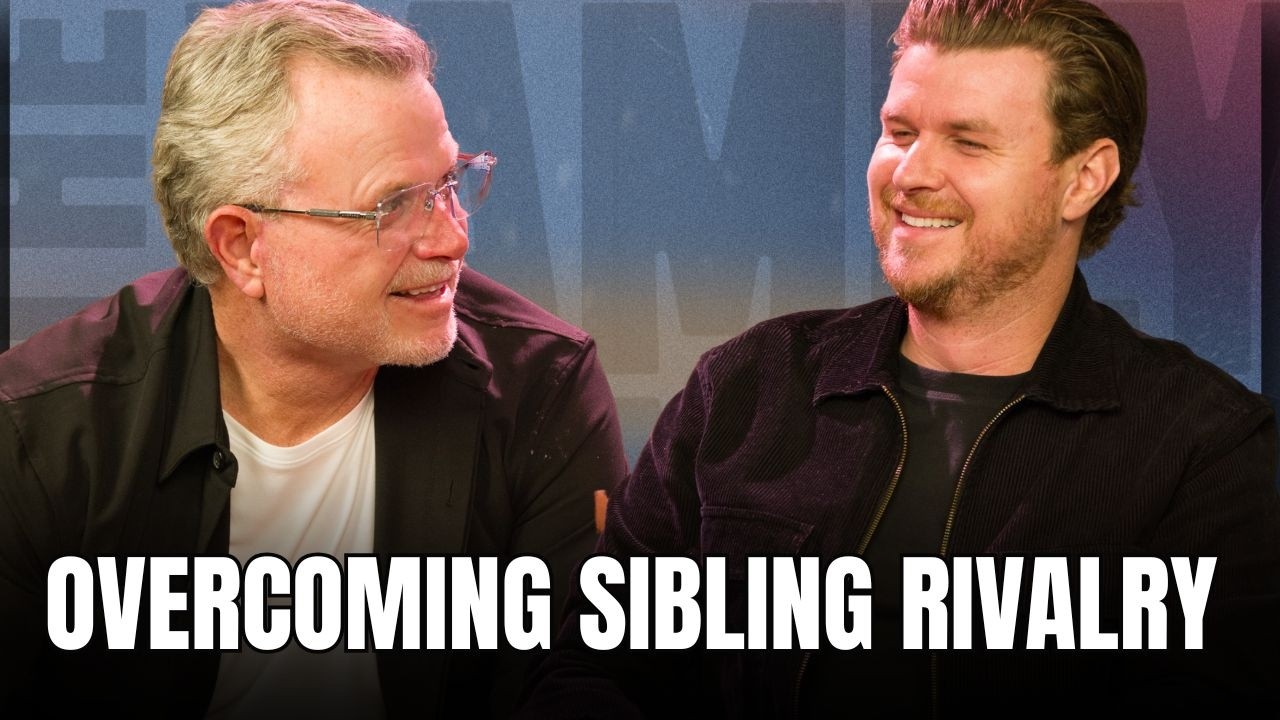


Why is it so hard to have a healthy and loving relationship with your siblings? Especially if you have to work right alongside them?
In this flashback episode from Season 2, Steve Alessi sits down with his son, Chris Alessi, to discuss how they manage the challenges of serving with talented family members and how they avoid the dangers of sibling conflict in adulthood.
In their business of ministry, the four Alessi children - Christopher, Stephanie, Lauren and Gaby - have had to learn how to navigate the day-to-day responsibilities and relational bumps in the road that can happen in an office environment.
JOIN THE FAMILY BUSINESS WITH OUR NEWSLETTER
Sign Up for Our Family Business Newsletter and get more inside news from the Alessis + tips and strategies for a happier family!
Get free access to the newsletter
TEXT THE FAMILY BUSINESS DIRECTLY
You can connect with us via text to ask family questions and get updates on The Family Business!
Text FAMILY to 302-524-0800
CONNECT WITH THE FAMILY BUSINESS
- Follow Us on Instagram and Facebook
- Subscribe on YouTube
- Leave a review
MORE PODCASTS YOU'LL ENJOY
Find more podcasts coming from our Metro Life Studios team, including:
My Morning Devotional
Men's Morning Devotional
The Mary and Martha Show
You can listen to all of these shows on our Metro Life Studios app here!
Get The Metro Life Studios app
Join our family business every week as we talk about life, and help you build a great future with your family, no matter what business you are in.
New episodes are uploaded every Wednesday!
More Resources
Get your copy of the new book by Steve Alessi, “Forty-Two: A Guide to Finishing Well when You Thought You Were Finished”
Connect with Us on YouTube
Don't forget to LIKE and SUBSCRIBE to our YouTube channel!
Follow Us on Social!
Learn More about Metro Life Church:
This is an encore presentation of the family business with the Alesssies. Here we are today in the podcast booth with Christopher and I for another episode of the Family Business Podcast, where family is everybody's business. And today it's Chris and I being able to talk about a subject matter that I promise you you will not hear us talk about on Sunday morning. And let me tell you why you won't hear this one. This one could be rough, Chris. I'm excited. You're excited about it being rough? I guess. That's why if you're watching us on YouTube, you're able to see the horns here on the table because we got a bull in the room with this subject matter. And this bull, if we don't deal with it right, could cause a lot of pain in people's lives. So welcome to the table, bull.
SPEAKER_02It's nice to have you here. He is, right? If you're watching or just listening, I would tell you to stop and put it on YouTube just so you can see who's joined us at the table today. You got a name for him? Kenny.
unknownOkay.
SPEAKER_01All right. All right. Kenny. Well, we'll manage with Kenny. We may have to get some suggestions on what to call the bull. It's a good, it's a good poll right there. There's a good bull. No, a poll that we should put on your Instagram. Really? What should we name our new friend? What should we name them? Here's the deal. We we have to have them in on the table because what it means is anytime you see them, we're going to be handling some tough subject matters. So welcome to the table, Kenny. Uh Kenny's going to be quiet. He's just here for representation. But Chris, here's what we want to talk about today. And I think it's important for us to get this right. Whenever you're dealing with a uh family business, and our family business isn't really business, it's ministry, but it still has to operate as a business. So whenever you're dealing with family working together in a family business, there's always these odd dynamics with these siblings. But that could also play out in the home. Because I think a lot of this, what we're going to talk about, starts in the home first, and then it's brought over into the environment where you've got to work together. So we can deal with this subject matter because it's going to touch everybody's life wherever there is family. Because again, family's everybody's business. So here's the thing we want to touch on today. You ready? This is where it's going to get a little bullish in here. All right, Kenny. We're going to come on, Kenny. We're going to talk about dealing with sibling sibling. Hello, get it right, Steve. We're going to be dealing with sibling rivalry and jealousy in the family.
SPEAKER_02And obviously, you want me in this episode today. So I don't know what that means.
SPEAKER_01Well, we had to get the most qualified, so maybe you're the one that starts it as the oldest. Yeah. I think that's where we mess it up, though, as parents, right away when we have the firstborn. Really? It just happens. We looked at a video not too long ago of Stephanie's birth. And you must have been two years old at the time. Oh, four, excuse me. You were bigger. And you had the hard time right away. You wanted the attention. And when you came in the room and all the attention was on your baby sister, you had big dinosaurs in your hand, and you wanted us to look at your dinosaurs and not so much at the little baby. But for four years, and it's it's you know, you can't blame yourself as a little kid because for four years you were the center of attention. Center of attention, not center of attention. It sounded like you said of attention, acting like a little center at times when you wouldn't get your way. But it it came down to um you all of a sudden now being introduced to someone else that's going to share the parents' attention. Yeah. And that right away. It's just part of the dynamics. So I want to say from the beginning, this is not, you're not wrong if you're having to deal with this.
SPEAKER_03No.
SPEAKER_01You're not in some gross error that you've you've committed this huge sin, if you will, um, when you're dealing with it in the home. I think where we fail is not addressing it, not being aware of it, thinking that our kids are just the perfect little angels and overlooking when one of them starts acting out as a little brat because they're not getting the attention. And we don't step in and start to teach them when they're young, not punish them, but just start to teach them how when they're teenagers and they're still acting bratty, maybe you need to bring the horns out and you got to deal with it a little bit more and let Kenny get into the conversation. But um, you think this is a big deal with families and working with people?
SPEAKER_02I do. You know, when you just the word jealousy, I think when you do life, I think um maybe because of the way we're taught as kids, the word jealousy really brings about this uh kind of kiddy um, I guess, culture to it. Yeah. So you don't ever really look at two adults doing life together, look at an issue and say, you know what the issue is here? It's jealousy. You don't really do that. You right, we've applied to of an immature uh label to jealousy. So we make it seem like only kids deal with jealousy. But we forget that people are operating in a spirit of jealousy all the time. We don't even see it. Social media's made it way worse. And so we we need to be able to address the elephant in the room. We need to be able to bring the bull into the table and say, let's discuss jealousy. Because I I don't I don't think if you were to look at two middle-aged men and their relationship, uh, work relationship, family relationship, uh, siblings, you probably the first thing to come to your mind is probably not, oh, well, they're dealing with jealousy. But in reality, at the core of it, it probably comes down to I want something and you seem to have it. And it could be something as simple as I've seen you handle a situation a certain way, and I wish I could. Uh, or mom and dad just treated you better as a kid, and I've just I've adapted this mentality of you're one A and I'm one B, and I just can't get past that. I it at the core of so many conflict, so much conflict, it's probably jealousy.
SPEAKER_01Jealousy. It it's something that should be dealt with. It should be recognized that it's there. Uh, a parent needs to help that. Hopefully, this podcast will help that. It it needs to be recognized that it's there, but then it needs to also be shown that that's wrong. Yeah, you don't want to give in to that because it's not just gonna hurt when you're young with your your brothers or your sisters. It's gonna show itself in every relationship that you have. It's gonna show itself in your marriage. Some have a problem with it in their marriage. That someone's getting more attention than the other, one's more talkative than the other, one's funnier, more humorous than the other, one is responsible, more responsible than the other. And there's this constant challenge of jealousy that then causes people to have this rivalry. So we have to be sensitive to that, which then brings me to this. Is there such a thing as fair when it comes to people in the family getting attention, people getting elevated, getting promoted, people using their gifts and talents more than others?
SPEAKER_02No, not a thing. Uh, it doesn't exist. Um, but it's not because we have to adopt a world that is unfair. It's because we have to recognize just the core of how healthy things work, right? Okay, so Rochelle is obsessed with plants. We have like 17 different plants right now, and they all need to be watered differently. Um, but that's because of what those plants need. When I'm staring at that plant, that plant needs ABC. It would be ridiculous to kind of uh even bring this about as an anecdote, but to make it seem like because it's getting more water, I care about it more, it's ridiculous. It just needs something different. But at the heart of of jealousy and all of this is I'm making it about me. And which means when I bring the word fair into it, I'm not only making it about me, but I'm making it about how I define fair. And the more we do that, our our math will always be wrong. Our definition of fair will always be wrong because the only eyes we've ever been able to see through is our own.
SPEAKER_03Yeah.
SPEAKER_02It's the only one. So it's not like you said, it's not crazy that people are tempted to make it about them. But we should recognize that we're crazy if we think it's only about us.
SPEAKER_03Yeah.
SPEAKER_02So there's no such thing as fair because I really do not see how much I'm being watered. I don't. Yeah. I don't, I don't see my own needs. I don't see how much I'm being watered. At the same time, I I don't see theirs. So it fair can't even be brought into the equation, just like unfair can't be, because they don't exist. It's not a thing. It doesn't compute.
SPEAKER_01Yeah. Yeah. Well, here's what jealousy is just from a definition, it's feeling resentment against someone because of that person's rivalry, success, or advantages. Feeling resentment against someone because of their gifts, their talents, whatever it may be, their advantages, their perceived advantages. And that has to be stated right away that that's just not right. It's not right. If you're feeling that, address it, know it's there, kind of talk to it. Don't let it cause you to overreact react. Because here's what we do learn about life life is not fair. No. And everybody has the right to feel the way they do in the moment, but they don't always have the right to react to the way they feel. Because if you feel jealous because someone has different gifts or different talents, and you want the attention that they're getting, um, you have a tendency to start singing this all poor me song.
SPEAKER_03Yeah.
SPEAKER_01Oh, I don't have this, I don't have that. And that's where you've got to step back and say, wait, I may want what they have, but before I let that cause me to act out something that's not healthy for the family or this moment or the organization, let me stop for a minute and recognize what I do have.
SPEAKER_03Yeah.
SPEAKER_01So there's the plant, a whole analogy. One plant needs a certain amount of light, certain care, certain water. Every plant, like every person, is just different. And they have unique needs that should be recognized. Like I had a buddy growing up, and he had big blue eyes, and he was sweet and kind, and he could talk to everybody, anybody. I wasn't that. I was the pudgy kid, I was the brown-eyed, kind of just curly brown hair, nothing special stood out. And I can remember thinking, oh man, I want to be just like him. But then I recognized, wait a minute, I I have talents and gifts of my own. Whereas he may be the kind of guy that talks to everybody. I'm the person that's out there working doing everything. And it helped bring a perspective to the gifts and the talents and skills that I had so that I would not have to be jealous.
SPEAKER_03Yeah.
SPEAKER_01Uh, and then be careful with that because the other side is you become overconfident and cocky. And then we have to bring up Kenny for a different reason. For a different reason. But um that there really isn't such a thing as fair. No. And uh let me say this about the feelings, though. If you're feeling it, let's don't don't don't feel bad. Don't don't punish yourself for feeling it. Everybody's entitled to their feelings. Um you're entitled to feel a little jealous sometimes. You're just not entitled to act out on it. That's where your self-control has to come in.
SPEAKER_02Be angry and do not sin type thing.
SPEAKER_01Yeah, put restraints on it, recognize it. Okay, I'm feeling this because it's jealousy. Let me tell you, it is what it is. But let me not act out on it. Which then, if there's no such thing as fair, then how do we keep it all balanced and trust the purpose and the destiny that's on our lives without jealousy driving a wedge between us and our siblings or us uh and those that we work with.
SPEAKER_02Well, you know, one of the things I'm thinking of as you're talking is I just realized in this moment, the plants that I water the least are the plants that are are fruit bearing. It's the it's the herbs that need to be watered every day, but it's the and maybe somebody's listening to this and is like, you're doing this all wrong, and maybe I'll get an email saying I've been watering my plants wrong. But from what we've researched, it's it's the one with fruit deep on the inside that only needs to be watered every two or three days. So you really don't know what you got in you. And I I to to try to make it all surface level, we're always gonna have issues. Um, but you know, as you're as you're talking, I'm thinking um there are there are these things that people say, and I think they they think they sound honorable. You know, I don't care what anybody thinks. Um, and then they say, I don't compare myself to anyone. And those are normally uh coming from people that care way too much about what people think and compare themselves to everybody. I don't think you can throw those out. I do think we should care what people think about us, and I I do think we should care, we should compare ourselves to certain people to a degree. And uh if people are saying that we make our lives all about us, we should care about that. We should, if that's a if that's a common thread in the people in our lives, which for complete and total clarity um and vulnerability, that was a thread in the people in my life, that that was what I kept hearing from different people. So once you kind of hear that, you're like, okay, maybe I should actually compare myself. You know, my my my friend over here, people don't say that about him. And they say that about me. I should care about that. That's something that that I should really, really work on. So I think it's I think it's very important, but you know, when you ask, how do you how do you trust that in like destiny it's all gonna be kind of you know equal? I think I think it just comes down to making life about you correctly and just not incorrectly. Um, sometimes we want to make our lives about us, but like in the eyes of other people. And we almost put ourselves in their mind hoping that they will be saying things about us. And so when I look at someone else and I'm saying about them what I want people to say about me, I tend to make that a negative about them and a negative about me. But if I would just sit back and say, you know, let me think about what I want. Let me make this about me. What do I want? Not what people are saying, not what people, whatever. I can't want people to say good things about me. I've got to want to be good and experience good more than I look good. So then let me work on that. Let me, if I look at somebody and they've got something I want, let me look at what they have and try to do that better. That's why we do the podcast. We are working to something, creating something. And if other people want that, we're kind of giving them a path to how to do that. So it's really more of I have to believe it's in me first. And if I believe that fruit bearing is in me, well, then I am going to jump at any bit of water I do get. And I'm gonna work on myself and I'm gonna, I'm gonna make that portion of it about me. I am gonna listen to what people are saying. I'm gonna take that as, hey, if two or three are saying it, it's probably true. Um, and I'm gonna take that to the bank and say, okay, maybe I need to look at this. And it's kind of just being where your feet are, not where you wish they were. Because if I could be where I'm at and I don't like where I'm at, well, then I'll use where I'm at and today to build to where I'd like to be.
SPEAKER_01Yeah. Well, you have sibling rivalry. You could also say you have gift rivalry. You got uh Alan Paul who's in here today, and John Roman is in the studio. Uh Alan Paul's on the platform, he plays the piano, and uh you got the guy across the stage who plays the drums, and then you got a guy playing the guitar. It's like somebody looking at them while they're playing their guitar, thinking, wow, I wish I can play the drums and compare themselves, wanting what they have because they sound good, look good, because drummers are cool, or whatever that might be. There's always that that rivalry that takes place. That's not bad. It makes the team better if everybody says, Well, listen, I'm not that, but I'm this. I'm a I better play good because that drummer's playing good. So let me play my keyboards good. There's race rivalry. Some look at a certain race and think, well, they have it better. There's things here that I want that I wish they had. And there's this rivalry that, in a good sense, could make us all better people because it's the iron-sharpening iron. It is it really is. And I that's not the bad part of it. It's when all of a sudden we start using that that rivalry uh to pull down other people so that we try to elevate ourselves. And years ago, there was a Broadway show mom went to with her sisters and mom. It was Joseph, the cult, the coat of many colors. And that story about Joseph is that here he had this um dream and this picture of the future and visions of what the future would look like. And yet his brothers were extremely jealous of him. So they then grabbed him, threw him in a pit. And after they had him in a pit, they then sold him as a slave, and then he ends up being imprisoned and eventually is elevated to the second in command to, in a sense, the president of that time. Uh and when he then comes later with his brothers and has this reunion with them, and he finally reveals who he is, they're of course uh overwhelmed. They think he's gonna kill him because he has this power and he would put him to death because of everything he had done to them or they had done to him, but he didn't. Instead, he provided a way for them. Now, if they had their way, he would have been dead in that pit.
SPEAKER_03Yeah.
SPEAKER_01Their jealousy caused him to be put in a place where he could have been killed, but his destiny, his purpose had that to prepare him for something even better, which would be he'd be in a position of leadership. Now, imagine if their jealousy would have killed him, then they would have missed out on being taken care of in the future when this drought hit the land, because now he provides for them what they're needing, needing. So jealousy is going to be there, but we just can't allow it to assassinate family members or the environment of our job and especially what we do. You and your sisters, our destiny. Yeah, our destiny. Because that's what he ended up representing to them. Yeah. You're you and your sisters, it's not easy that that y'all work together. All four of you are talented and gifted, and all four of you uh get the limelight when the time comes. And you are at different stages of your life with marriage and with other blessings that the Lord starts bringing your way, with education, with the work, music, books, all that kind of stuff that's at this level. And it's very easy in this environment to find jealousy, uh, saying, hey, I should have that. I deserve that.
SPEAKER_03Yeah.
SPEAKER_01And this is where mom and I come on the scene, because our role as parents is to make sure we balance out that sibling rivalry, that we make sure that we are not showing favoritism, that everything is based on merit in a sense, that, hey, your gift is making a way for you for you. And our job as parents and the leaders of our business is to make sure each of you are in the right seat on the bus, as they say. You're using your gifts and your talents for this area that's helping everybody on the bus. That's the job that we have. And it's a balancing act because there's other characters' stories who we have seen, even in a biblical text, where a mother, Rebecca, is favoring one of her sons, and it causes, because of that, favor over one of her sons over the other. Than the other, it causes there to be division and even actions that would cause a future unrest between those two brothers and families. And that's a terrible thing when parents get in the middle and cause that divide because they allow themselves favoritism. Yeah.
SPEAKER_02Well, I think when when you look at the story, uh, like you said, of of um Joseph and his brothers, you know, I you you referenced that their their jealousy really almost killed their brother. And he had the opportunity to kind of do the same thing and he chose not to. But you know, you know what I just thought of? You know, sometimes when you're a sibling and you're in the middle of it and you've been hurt by it, and you may have a chance to kind of even the score, maybe you should sit back and ask yourself what he probably had to ask himself. What do I really want to see happen here? Do I want to see 11 of my brothers die for what they did to me? Do I want to see them hungry and hurt? Is that is that my ultimate win is seeing them fail? How how how do I win as the only winner? It's not that fun. No, it's not. So, in the same way, you know, you can make it about fairness all you want, but at the same time, if things are fair, you know what that means? We're equal. It means that we're both right here. It means that there's no room for growth and you can't go higher, but I can't either. So, in reality, you know, when when siblings are going at it, truth has to be they they gotta ask themselves, do I really want my sibling to fail? Is that what I need to make me feel better? At the same time, I think a parent would have to ask themselves, you know, when they're tempted to get involved, and maybe it's to even the score, maybe it's to, because you know, this happens. There were things I was not allowed to do until I was 18. And by the time it got to Gabby, she was like 14 years old. Come on. There were some shows. Oh, sure. There were some things that that happened, but I'm not saying it's a negative thing. Right. I'm looking at it and I'm like, what do you, you know, what do you do as a parent? It's kind of like uh whatever. You kind of kind just kind of the way it happens, I guess. And I'm probably gonna do the exact same thing. Uh that's actually not true, but we'll get to that later. Um we'll get to that uh in a in a Kenny will come back out later. Oh Lord. But no, I I really do I I guess I guess it's good to say, you know, it's like that movie Talladega Nights. He lives his entire life thinking, thinking that if you're if you're not first, then you're last. And it's only towards you know the end of the movie when he's completely hit rock bottom that his father, who incorrectly instilled this belief in him, says, What are you talking about? You could be second, you could be third, you can be fourth. What are you talking about? In the same way, do I have a mentality that says the only way to win is if I'm the only winner? Yeah. Or, you know, if if we all win together. So I just look at that story of Joseph. I mean, is the only way to make up for the wrong you did to me is to have a basic slaughter of my family? Yeah. Or is it to say, hey, all right, we're gonna let that go. We're gonna, I probably don't know the whole story, anyways, because I don't know what it would be like. Yeah. As an older brother, as 11 older brothers, I don't know what it would be like to hear the youngest saying, hey, guess what? You're gonna bow down to me.
SPEAKER_01Yeah. So, well, there, there's the responsibility of the parent. And I would say from a parent's perspective, from my seat, there has to be an awareness. One, I've got to be aware that there is this tendency for rivalry. Two, a lot of it is gonna be because of my actions, the attention that I give to one and maybe not the other. And this is tough with uh blended families today. As parents try to deal with guilt, and parents try to deal with um who's mine, my blood, uh, who's a stepdaughter, stepson. This there's a lot that parents will have to deal with. So they have to recognize as I look at my family, I can't give attention to one more than the other. I have to be aware, I have to be conscious that what I'm doing for the one, I'm and as the family unit goes, I'm doing for the other. It's like the the girls uh sometimes say to us, well, you guys got so excited about Chris and Steph because they were the first two, and now we're we're not getting that same attention and that same time with you. You know what? That's possible. That that's possible by when you were born, gosh. And um we had a cat in the house, and uh not that we were cat people, but for some reason Mary and I had a cat, and that cat was cute and everything. But the day I found a hair on your a cat hair on your little sucker, uh, I'm like, cat's gone. Then by the time little Gabby got around, little Gabby's on the floor playing with Jack and Jill and they're licking all over her face. So yeah, things change as your kids go on and they sometimes miss out some of the attention, which is why we have to be really, really aware of it as parents that I have to make sure there's fairness here in the home environment, the attention. But at the same time, the children, the kids in the family, they have to recognize that as fair as it is in the home, there's some things that are gonna happen that fairness has nothing to do with it. Can I speak to that? Bear birth order has nothing to do with it.
SPEAKER_02Yeah. Do you remember back when we did have Jack and Drew? And they were indoor dogs, so they would go in the house all the time. And I remember, and I know this as a man, I know I had to take care of the dogs more than the girls did. And there was a particular night where Jack had gone in the house and I was like, I'm not picking it up. I say, girls, you know, one of you do it. And I went over to Gabby and I was like, Gabby, you pick it up. And she's like, I always pick it up. And I was like, you know what, forget it. Lauren, I always pick it up. And then I went to Stephanie and she's like, oh my gosh, I always, and the only reason we're having this dialogue is because I believe I always do it. So it's it's I I've always looked at that and and I brought that up with our girls before. I brought that up with you guys before. It's like, wow, we all have a tendency to think we're the only ones. Because even to your reference about, you know, well, the the the first two got way more attention. By sheer statistics, the last children grow up in a more affluent home than the first two. So the the vacations my sisters were taking by 12 and 13 were not the vacations I was taking at 12 and 13. True. So the truth be told, it fairness is kind of over time. Yeah. It's fair over time. So my my my I guess my last point is you we all pick up the poop. When it's in front of you, when it's in front of you. Yeah, yeah. When it's in front of you, you just gotta deal with it. No one always does anything.
SPEAKER_01Yeah. So it's being aware of it. And even now, let me tell you, because the the other part of this from a sheer work environment now, the business side of this. I've got two new kids in the family. Yeah, yes, you do. Got your wife and Stephanie's husband. Yep. The feeling is now there's there's two ways to deal with it. This is where my mind goes. One, you don't do anything, and you just let over time it play out. As they say, leadership always rises to the top. So you just wait for them to find their place of leadership and contribution here in the church. That's one thought. You just don't do anything about it, let it work its way out. The other is all right, I have to be aware of this now. So let me immediately, like I did my own kids, start making a way so they feel included in the process because this is gonna play out in the home. Because the rivalry there with the in-laws is a big deal, especially with guys. They they come to blows, man, head to head. Kenny comes in the room when guys get together and they start, you know, comparing their gift with their brother-in-law. That's a big deal. And then trying to be brought into the family and how all that stuff works, that's not easy. So we have to be aware of it. And then my style is be intentional. Yeah. So if, you know, you'll notice when we're doing things, uh, we're in our our flow of our ministry and we're closing out the service. Uh, we're gonna, I personally gonna, I want all the family on that stage with me because all of them are playing a role. So I'll go point them out and say, come on up. I'll look for them if they're not on the uh platform already, the stage with us. I look for them, say, okay, maybe you're not singing, but just stand up here with us. So they can start to feel uh the involvement where their gift will eventually make a way for them if they're singing or if they're praying, whatever it may be from our perspective. I want them up there being able to sense what it's like. Yeah, but I can't just go plug and play them just because they're a family member. No, they have to learn what the rest of the family has learned to make sure they're qualified to be in this position to help and lead. They have to take time.
SPEAKER_03Yeah.
SPEAKER_01And they can't allow that in their mind to make them feel less that they're not already up there doing what the brother-in-law or doing what the sister-in-law is already doing in the organization or even in the family. You can't do that. You can't take a person who's only been in your world for one or two or three years and then say, all right, you're equal as for contribution and involvement to the rest of the family who's been in this for over 20-some odd years. Yeah. There has to be a slow step, a an intentional step where there's learning, where there is earning, and there is, okay, you we're gonna find out where you fit in and contribute the most, partly because you're family, yeah, but partly because we know you were brought to this family, okay, to help us do what our purpose and our destiny is. So that's my job again as the parent. And even though I'm dealing with young adults, okay, I'm not dealing with kids here. Now it's young adults. This is still a constant conversation that we're all having.
SPEAKER_02Well, that's what I was gonna bring up. So the reason all of that works is because Kenny comes to the table a lot. There are a lot of buzzwords right now. You know, there's uh equal opportunity and equal outcome. These are huge buzzwords. People want to leave out equal responsibility. And that's the big thing that we understand as a family. It's like, okay, if you want to rise to this level, you're gonna have an equal opportunity as every other person in our family to do that. But you're also gonna carry equal responsibility. And so we recognize with my role, there's more responsibility than others. So they're gonna have equal opportunity, but that means you got to carry equal responsibility. And that equal responsibility means there's a lot of conversations where Kenny hits the table.
SPEAKER_01Yeah.
SPEAKER_02There's a lot of things. That's true, Chris. Yeah, you're gonna, we're gonna have to talk about this. And that means that we share in the wins and the losses. And so I think that's a big deal. What happened with Rebecca, Esau, and and Jacob? They wanted a, I guess, equal opportunity, uh, I guess not an equal outcome, and no one was willing to have a conversation about equal responsibility. That's why Esau was willing to give it up for nothing. And that's why I guess Jacob was willing to give up everything he had for it, only to realize he basically lost everything he had in order to get it. So the truth is, people aren't willing to have that equal responsibility conversation.
SPEAKER_01And to follow up on that, if people do know their Bible, know anything about the story, one of the reasons all of that even happened was because the father was blind. He couldn't see everything. Which brings back the responsibility of the parent to the parent and the leader and if you're blind. No, it's out there, sibling rivalry, jealousy. It's a thing. It's a thing. It's not a bad thing. It's only a bad thing when you start seeing it affect the future outcome of the relationship in the home because it could go downhill fast. And I would hate to see that happen. And our family, we're committed to all being used to the best of our ability. And whatever that looks like, uh, that's gonna play itself out. But all of us are gonna have, and I'm saying this because even our family listens to the podcast. And here's the deal we all have uh attitude of celebration. No matter what the gifting is on the person and where they're at with their gifting, the rest of us are gonna come alongside of them and make sure or her and celebrate what they're doing so that we can deal with jealousy. We're not gonna let it get in our heart. Amen. All right, man. I hope this has been helpful. Kenny, thanks for coming to the table with us. And we hope the Family Business podcast has been helpful today and encouraging. So thank you for joining us.
SPEAKER_00Thanks so much for joining the Family Business today. If you enjoyed this episode, make sure to follow or subscribe, share with a friend, and leave us a review. We appreciate your support and can't wait to have you join us next time because family is everybody's business.