How to Support a Family Member in Addiction Recovery Without Enabling Them
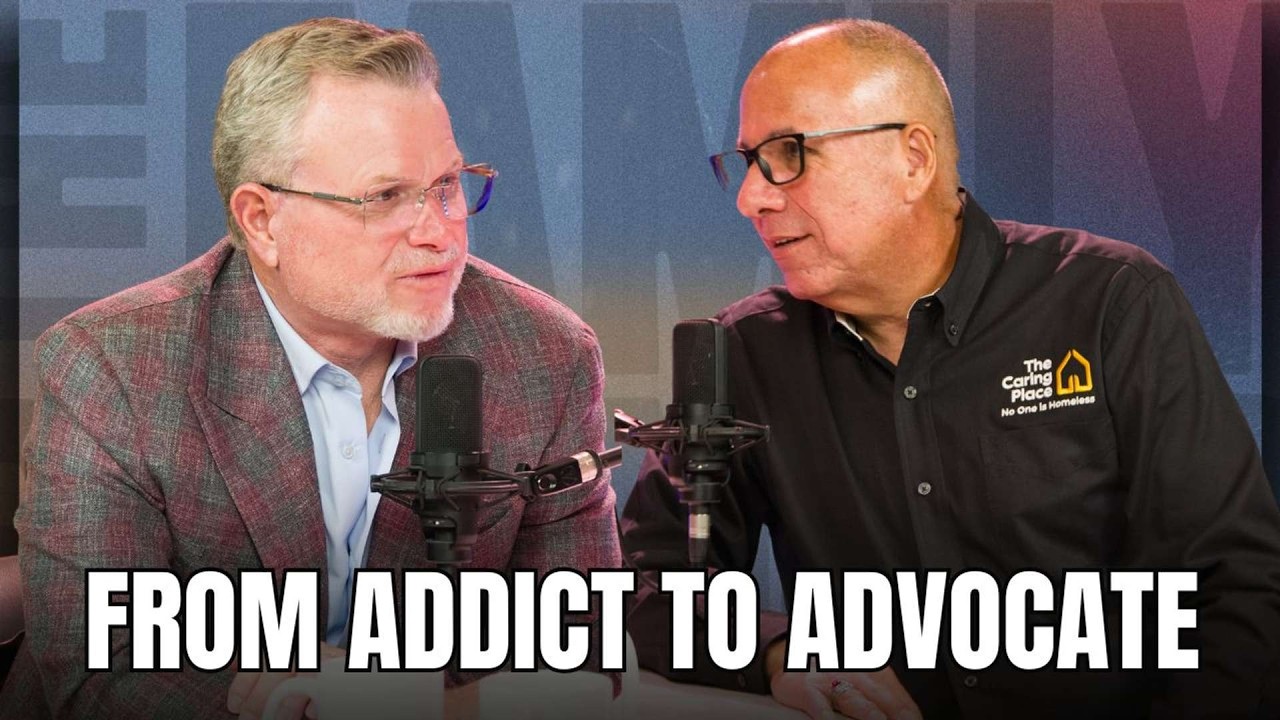
Who gets hurt by addiction? Everyone close to it. Tony Villasuso knows this from both sides. He used drugs from high school into his late twenties, went through seven rehab programs, and at his lowest was eating out of dumpsters. Today he is president of The Caring Place, a South Florida recovery and homeless services ministry. In this episode, he tells host Steve Alessi what recovery takes, why families need firm boundaries, and why no one should give up on a loved one.
Listen to the full episode: The Reality of Addiction Recovery: Why Your Family Needs You to Seek Help
Key Takeaways
- Addiction affects the whole family, not only the person using.
- Relapse is common, and it does not mean recovery has failed.
- Families need patience and firm boundaries at the same time.
- Trust is rebuilt slowly, through accountability, community and time.
- Lasting change starts when the person takes ownership and wants help.
How Does Addiction Affect the Whole Family?
Tony started with a beer and a joint at La Salle High School because he wanted to belong. It grew into cocaine and crack. He kept a job for a long time, but every paycheck went out as fast as it came in. He missed years of family photos and birthday parties.
His story is common. SAMHSA reports that 48.4 million Americans age 12 and older, about 16.8%, had a substance use disorder in 2024. Behind each of those numbers is a family dealing with the fallout.
"The family is suffering. When did you get your eyes off of Tony and start seeing the bigger impact of your decisions?" Steve Alessi
Is Relapse Part of Recovery?
For Tony, it was. He went through rehab seven times. After one program, about thirty relatives came to church to celebrate his progress. Each time he relapsed, fewer came back, until only his father was left. Even the man helping him told his dad he was done with him.
Relapse feels like failure, but research puts it in context. The National Institute on Drug Abuse reports that relapse rates for substance use disorders are 40 to 60 percent, similar to other chronic illnesses such as high blood pressure and asthma. Tony's view: each relapse can be a step toward victory if you are willing to start the road to recovery again.
Why Do Families Need Boundaries?
After almost three years away in treatment, Tony came home and his mother told him he could not stay. Earlier, she had even called the police after one of his three-day binges. It hurt at the time. Now he understands why: his family had finally found peace and needed to protect it.
Steve puts it this way: you cannot rescue an addict. You can love them, pray for them and point them to help, but you also have to set boundaries and keep them. Tony adds a hard truth for spouses: if your partner is in recovery from alcohol, you may need to give up your own nightly glasses of wine to support them.
How Is Trust Rebuilt After Addiction?
A local pastor gave Tony a place to stay. From there, Tony says, God rebuilt him "from the outside in," first through church and community, then back into his family. He earned back his keys and his responsibilities one piece at a time. It took years.
His advice to men coming home from treatment: you may be the man of the house, but you have not been paying the bills. Your wife has. Stay humble and let trust return on its own schedule.
What Families and Churches Can Do
1. Let your loved one complete treatment
Don't put a deadline on recovery. Recovery doesn't come through a drive-through, and rushing someone home rarely holds.
2. Stay present and keep people accountable
Connect Groups and church friends can pray, check in and notice when someone drops out of sight. Tony says the people who disappear are often the ones sinking.
3. Give a hand up, not a handout
Instead of cash for someone on the street corner, Tony suggests keeping toiletries or care cards in your car and pointing people to The Caring Place or another local partner.
Frequently Asked Questions
How long does addiction recovery take?
Longer than most people expect. Recovery is ongoing, and rebuilding trust and daily life can take years.
Can you force someone into recovery?
Families can set boundaries and arrange help, but Tony says the first step is the person wanting help and taking ownership.
Should I stop helping a family member who keeps relapsing?
Stop enabling, but don't stop loving them. Keep boundaries firm and keep the door to help open.
Final Thoughts
Nearly three decades after getting help, Tony has been married for almost 24 years and has seen thousands of men come through the doors of The Caring Place. His message to families: "Don't give up on your loved one." Recovery is possible, but it takes ownership, accountability, time and a community that stays close.
About Tony Villasuso: Tony is president of The Caring Place (Miami Rescue Mission), which serves people dealing with addiction and homelessness in South Florida. Learn more at CaringPlace.org.
Your Next Step: Listen to Tony's full conversation with Steve Alessi. If you missed Part 1, read about how a family intervention helped Tony Calatayud quit alcohol for good, then continue to Part 3: Using Drugs or Weed to Cope? Why You Feel Stuck and How to Get Out.
Need help now? In the U.S., call the SAMHSA National Helpline at 1-800-662-4357 (free, confidential, 24/7), or call or text 988. You can also reach out to a trusted pastor or counselor. This post is not medical advice.
This article is an AI generated summary of our podcast episode from the Road to Recovery Series, Part 2 of 3 | The Family Business with the Alessis
Pastor / Author / Speaker and Encourager
A Miami native, Steve Alessi was called into ministry at the age of 19 and has faithfully answered that call for over 40 years. After graduating from Southeastern University in 1984, he served alongside his parents as Associate Pastor of Grace Church of Kendall.
In 1997, he and his wife, Mary, founded Metro Life Church in Doral, Florida. Then, on November 10, 2013, Pastors Steve and Mary acquired and became the Lead Pastors of Grace Church, transforming it into the Dadeland Campus of Metro Life Church.
Today, Steve enjoys ministering with the help of his wife, four adult children, their spouses and their grandchildren; Christopher & Richelle Alessi with little Marino, Chris & Stephanie Muiña with little Gianna, and Lauren and Gabrielle Alessi. Under his leadership, Metro Life Church has two growing local campuses and a vibrant and innovative online campus. Part of his passion is to challenge men to Man Up in life through Metro’s Goodfellas Camps throughout the year at his Farmhouse in Southwest Georgia. The family also hosts a weekly Christian lifestyle podcast about their lives in ministry entitled The Family Business with The Alessis.
In 2007, Steve suffered a widow-maker heart attack and survived after paramedics worked on him for 42 minutes; hitting him seven times with the paddles to keep his heart pumping. The poignant lessons learned from that experience have been summed up in the book he authored, Forty Two - How To Finish Strong When You Thought You Were Finished. This powerful axiom has become his life's mission to help others … Read More